Optimizing Protein Purification Workflows at Cayman Chemical

Dr Tony Ludlam, Protein Core Manager, Cayman Chemical, tells SelectScience® about the technology improving protein production

1 Jun 2016
Alex Waite
Editorial Assistant

Editorial article

Image: gyn9037/Shutterstock

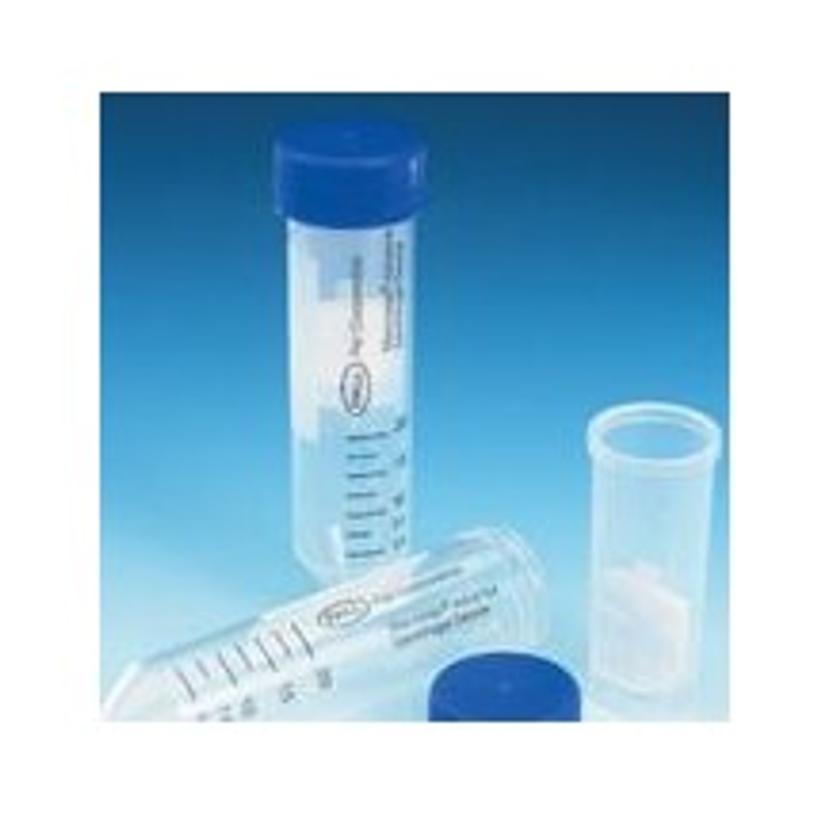
Macrosep® Advance Centrifugal Devices Quickly concentrate up to 20 ml of biological sample Pall Life Sciences Macrosep Advance Centrifugal Devices. These devices are colour coded for easy identification and have a built in deadstop to prevent spinning to dryness. 

Dr Tony Ludlam is the Protein Core Manager at Cayman Chemical, a biotechnology company involved in the synthesis, purification, and characterization of biochemicals. His role is to “oversee and manage the manufacture of protein products, primarily active enzymes, for both internal and external customers.” SelectScience® interviewed Dr Ludlam to learn how his group are implementing innovative technology to optimize protein production.

Dr Ludlam’s group are primality involved in a production-based workflow to create starting material for antibody production and kit development, “Other people need protein, my group makes it.” “We produce hundreds of products based off SOPs and are regularly implementing new processes to create new proteins.”

Pure Protein Production

Part of this workflow involved the concentration of large-volume samples. “To produce pure protein, gradient chromatography or size exclusion are often required, which can dilute a sample an order of magnitude or more”, Dr Ludlam explained. “Dilute samples tend to be less stable and are more difficult to package for direct sale, so the volume has to decrease.” To perform this concentration, the group uses Pall centrifugal devices.

Efficient Design

Dr Ludlam, who learned about Pall’s range of spin filters during a recent visit from the company to evaluate his laboratory’s needs, noted that he “appreciates the raised filter” of the centrifugal devices. “Most flow through devices utilize a concave V or funnel design, which seems intuitively like the most efficient way to pass liquid. That design produces a gradient that becomes dense near the bottom of the filter, which is just as bad if not worse for protein stability as a dilute solution. High concentrations increase the risk of aggregation or precipitation, neither of which are conducive to production of an active or biologically relevant protein product.”

“The Pall unit design has the V inverted, pointing up into the chamber. The concentration surface is a circle as wide as the tube, not funneled into a central point. This keeps the gradient dispersed over a wider area, so the extreme concentration at the center is less of an issue.” Dr Ludlam admitted that he was “skeptical that it would flow at the same rate or be able to reach the same minimal volume, but both were on par with prior experience”, concluding that “inverse flow devices offer the same dispersion, but generally lower flow rates and larger end volumes.”

Dr Ludlam explained how the Pall centrifugal devices are also useful for exchanging buffers; “many enzymes will not tolerate an overnight dialysis, but a few half-hour spins with 10-fold dilutions offer the same exchange rate, without sacrificing the activity.”

Future Perspectives

In the future the group will need “spin filtration devices of multiple molecular weight cutoffs in perpetuity”. Dr Ludlam explained how he also hopes to implement “a high-capacity tangential flow system, depending on product development needs.”

Links

Tags

Sample PreparationSample preparation can improve the quality and speed of separation techniques. Products to assist sample preparation include filtration equipment, evaporators, membranes and sieves.Size Exclusion ChromatographySize exclusion chromatography (SEC) is a liquid chromatographic technique used to separate and identify molecules based on their size, including polymers, proteins, nanoparticles & nucleic acid. SEC is further subdivided into gel filtration chromatography (GFC) and gel permeation chromatography (GPC) when an aqueous or organic mobile phase is used respectively. HPLC-based SEC systems and columns are available for analytical separation alongside SEC spin columns or filters to prep samples for many protocols. Find the best size exclusion chromatography equipment in our peer-reviewed product directory: compare products, check customer reviews and receive pricing direct from manufacturers.AntibodiesAntibodies are used in techniques such as confocal and fluorescence microscopy, flow cytometry, ELISA, ELISPOT, immunohistochemistry, western blotting and immunopreciptation. Select specific antigen reactivity, high specific affinity, low non-specific binding, monoclonal or polyclonal, primary or secondary antibodies and associated conjugates such as an enzyme or dye for visualization.ProteomicsProteomics is the systemic bioinformatics study of proteins and amino acids, including their structure, size, function and identification. Tools used in proteomics include chromatography, blotting and gels, protein arrays, mass spectrometry and ELISA and associated analysis software. Analyzers and proteomic systems should be sensitive, high resolution, fast and may be automated for high-throughput.FiltrationFiltration and microfiltration are used to separate solids, particulates or large molecules from fluids (liquid or gases) in order to purify the filtrate. Explore a range of filter formats, including filter paper, plates and membranes for your separation needs. While larger particulates may be separated by gravity filtration, smaller particulates may require additional force for timely separation. Microfiltration equipment includes vacuum filters, as well as positive pressure, crossflow and centrifugal filtration devices. Find the best filtration products in our peer-reviewed product directory: compare products, check customer reviews and receive pricing direct from manufacturers.Labware and Lab SuppliesLabware and lab supplies include various forms of glassware, plasticware, reagents and personal protective equipment (PPE) and are used across all scientific laboratories, enabling daily tasks to be performed. Explore a range of flasks and beakers, petri dishes, carboys and storage bottles. Labware such as condensers, desiccators and burettes are also available for more specific tasks. Find the best labware and lab supplies in our peer-reviewed product directory: compare products, check customer reviews and receive pricing direct from manufacturers.CentrifugesCentrifuges are used to separate particulates suspended in a liquid via the application of a centrifugal force including cells, macromolecules, nanoparticles and precipitates. Centrifuges come in three sizes: microcentrifuges, benchtop and floor-standing centrifuges, depending on the volume and number of samples that require separation. When choosing a centrifuge, consider its maximum separation power indicated by its relative centrifugal force (RCF) value. Low force centrifuges reach a maximum RCF of 8,000 g, high-force centrifuges can reach maximum RCF values of 80,000 g. For extremely high forces, consider ultracentrifuges (up to 800,000 g). Refrigerated and vacuum centrifuges also known as concentrators are available for more specialized applications. A range of volumes are available for centrifuge tubes and microfuge tubes, depending on sample sizes. Find the best centrifuges in our peer-reviewed product directory: compare products, check customer reviews and receive pricing direct from manufacturers.Sample ManagementSample management systems include sample storage devices such as freezers and plate storers, sample environment enclosures and sample organization, retrieval and sorter systems. Useful system features include high-throughput, automation, robotic arms, automated liquid handling and associated database systems. Accessories in sample management include barcode scanners, heat sealers and tubes.Protein PurificationProtein purification is a vital step in drug discovery, therapeutics, biotech and life science research. The purification process typically involves subcellular or membrane protein extraction with cell lysis kits, separation of proteins from cell debris by filtration or spin columns, and the isolation of proteins of interest from other proteins and impurities with affinity purification (including fusion protein tags and antibody binding proteins A, G and L), immunoprecipitation or chromatographic methods, such as ion exchange, size exclusion and immobilized metal affinity chromatography. All purification methods come in multiple formats for your laboratory needs, including agarose or magnetic beads, resins, columns and filter plates. Find the best protein purification equipment in our peer-reviewed product directory: compare products, check customer reviews and receive pricing direct from manufacturers.Biopharmaceutical AdvancesBiopharmaceutical advances follow the development of pharmaceuticals derived from biotechnology, also known as biotechnology medicines. Biopharmaceuticals may be produced from cell lines, plants, or microbial cells. Important considerations of biopharmaceutical use include application, cost, production process and purification.Robotic InstrumentsRobotic instruments can be used for high-throughput automation of many lab processes. Such processes use instruments for assays like cell based assays and ELISA, for sample preparation like shakers, centrifuges and incubators, and for analysis such as sequencing and western blot analyzers. Useful features of robotic instruments include speed, reproducibility, barcode readers, software and automation.PurificationPurification techniques are essential for isolating compounds of interest from complex mixtures, such as proteins, nucleic acids, and chemicals. These techniques are critical in biochemistry, drug development, and environmental studies. Explore purification systems in our peer-reviewed product directory; compare products, check reviews, and get pricing directly from manufacturers.AggregationUltrafiltrationImmunoprecipitation