
Optimized and Automated Protocols for Cancer Diagnostics
Using liquid biopsies to detect cancer mutations
14 Sept 2016
Editorial article
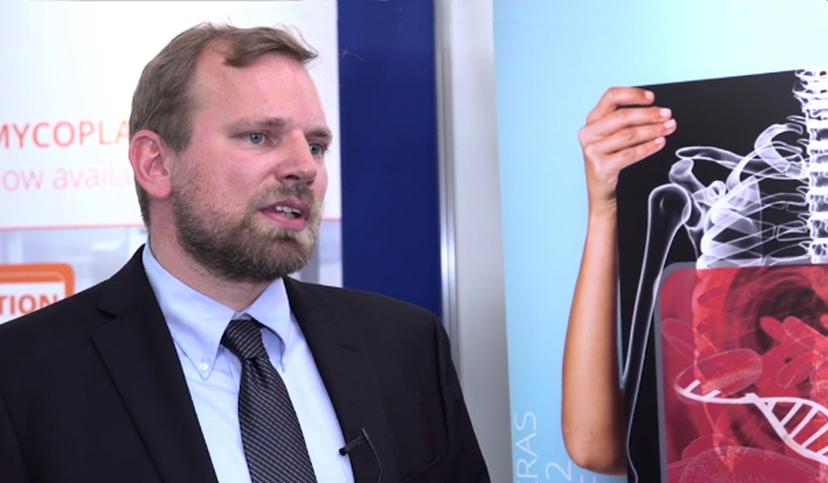
Dr Tobias Paprotka, Director Research and Development at GATC Biotech talked to SelectScience® about the company’s latest sequencing innovations for cancer diagnostics.
GATC has developed optimized and automated protocols for its products in order to maximize quality and reproducibility of results.GATC Biotech, established over 25 years ago, is Europe’s largest sequencing service provider. The company offers overnight Sanger sequencing services, as well as next generation sequencing services using different in-house Illumina and Pacific Biosciences technologies, to clients within Europe.
Liquid biopsy is a very promising area for the future of diagnostics, particularly for the analysis of circulating DNA in blood. The technique has the potential to replace many invasive diagnostic methods in upcoming years. GATC first became interested in the field of liquid biopsy in 2010, following a publication of Dr Dennis Lo’s data, showing that foetal DNA from the mother’s bloodstream was sufficient for reliable prenatal diagnostic testing. In 2012, GATC helped develop a blood-based test for non-invasive prenatal testing in Europe.
Liquid biopsy testing can also be applied to cancer diagnostics, as necrotic and apoptotic mechanisms cause tumors to release DNA into the bloodstream. This tumor DNA is present as highly fragmented DNA, in very low amounts in plasma, and can be isolated using optimized protocols. GATC has developed GATCLIQUID as a toolbox to analyze tumor mutations in circulating tumor DNA from blood plasma. The tumor DNA is present in a high background of host DNA, so highly sensitive assays are essential. The GATCLIQUID service family includes three ultra-sensitive assays that detect tumor DNA with a high degree of confidence.
GATCLIQUID ONCOEXOME enables the characterization of mutations in the coding regions of a cancer patient's DNA. Enrichment of the exome enables much higher coverage and therefore more sensitive detection of single nucleotide polymorphisms (SNPs), compared with whole genome sequencing. This product is recommended for detection of the whole range of cancer specific SNPs, including novel mutations, in cancer patients.
GATCLIQUID ONCOPANEL targets approximately 200 cancer relevant genetic hotspots, in 50 genes, with over 5000 tumor mutations listed in the COSMIC (Catalogue Of Somatic Mutations In Cancer) database. This service can give a comprehensive analysis of tumor-specific mutations and has higher sensitivity than ONCOEXOME, as this assaymakes use of efficient combination of single molecule PCR and next-generation sequencing (NGS).
GATCLIQUID ONCOTARGET is the most sensitive approach for analyzing single or a few important mutations in an individual cancer case. Based on droplet digital PCR (ddPCR), a specific mutation can be tracked with sensitivities as low as 0.1%. For some cancer entities, this superior sensitivity might enable earlier detection of cancer relapse and could be used for monitoring treatment response.
ALL GATCLIQUID services can be used to compare circulating tumor DNA (ctDNA) mutations with those present in the tumor. This comparison may contribute to identification of the origin of the circulating tumor DNA and enable the detection of important tumor markers. Concordance studies between ctDNA and tissue tumor DNA are also essential for the validation of liquid biopsies in a clinical setting.
These GATCLIQUID services are of particular benefit to clinical research and may lead to more precise cancer diagnostics. Recent studies have indicated that analysis of cell free DNA could revolutionize the detection and diagnosis of a variety of tumor entities. The GATCLIQUID service line for detection of cancer specific SNPs, in cell free DNA is available to scientists all over the world. These services will facilitate collection of standardized data that can easily be compared between different, independent labs.