
Optimize your microbiome research workflow with a gold standard sample prep solution
Join us on Wednesday, June 17, to find out how to optimize sample preparation for a range of complex microbiome samples
8 Jun 2020
Expert insights

Microorganisms dominate the biosphere and carry out the majority of biochemical activity on the planet. Diverse and complex communities of bacteria, archaea, fungi, and viruses inhabit earth’s many environments, from the human body to plants, as well as soil, oceans and even the atmosphere.
These microbiomes maintain the healthy function of the ecosystems they inhabit and their dysfunction is often associated with human disease, crop failure, and environmental disaster. Despite the variety of microorganisms out there, most of them have not yet been identified, and our understanding of the composition and function of microbiomes is still in its infancy. As a result, advancing microbiome research has become a major focus for many life sciences, environmental, and clinical researchers.
In this webinar, MP Biomedicals will explore a series of case studies that illustrate how to optimize sample preparation for a range of complex microbiome samples and will go on to discuss how the FastPrep System and FastDNA SPIN Kit for Soil are designed to enhance these methods.
Register hereKey learning objectives
- Find out how to obtain thorough homogenization and lysis of any microorganism
- Explore case studies of research teams that are optimizing sample preparation techniques for microbiome research and compare more than 10 DNA isolation methods
- Discover how the FastPrep-24 bead beating system provides reproducible results in just a matter of seconds
- See how the FastDNA SPIN Kit for Soil obtains high yields and good DNA quality for downstream metagenomics experiments
- Discover the wide range of specimens successfully processed with the FastPrep System and FastDNA SPIN Kit for Soil
This webinar will run on Wednesday, June 17, at:
- 15:00 BST
- 16:00 CEST
- 07:00 PDT
- 10:00 EDT
Register to watch the full webinar here>>
This webinar is part of the SelectScience Advances in Microbiology Webinar Series >>
SelectScience runs 3-4 webinars a month across various scientific topics, discover more of our upcoming webinars>>
Related products
Request Quote for All Products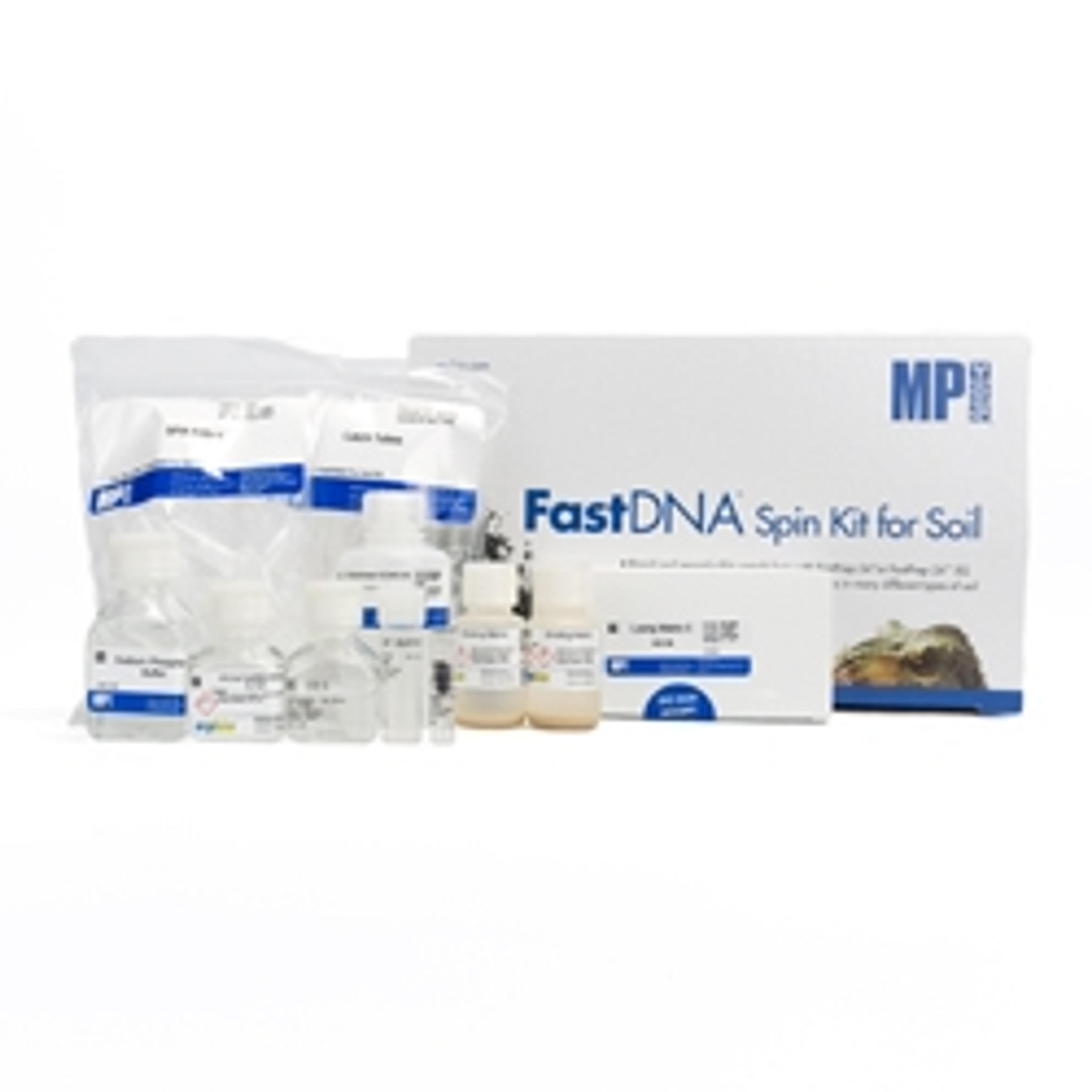
FastDNA SPIN Kit for Soil™
MP BiomedicalsIsolate Pure DNA from Cells Present in Soil or Other Environmental Samples! Thorough lysis in seconds of any microorganism present in environmental samples. Ready-to-use DNA for quantitative and qualitative characterization of microbial soil communities. Excellent reproducibility for an optimum assay-to-assay consistency. Total removal of humic acids and PCR inhibitors for a successful investigation of microbial diversity. The FastDNA™ SPIN Kit for Soil is designed to efficiently isolate bacterial, fungal, plant and animal genomic DNA from soil and environmental samples. Up to 500 mg soil are processed by the FastPrep®-24 5G or and any bead beating homogenizers with the Lysing Matrix E tubes designed to efficiently lyse all microorganisms including difficult sources such as eubacterial spores and endospores, gram positive bacteria and yeast. The released DNA is purified by a silica-based spin filter method and is suitable for PCR and other downstream applications.
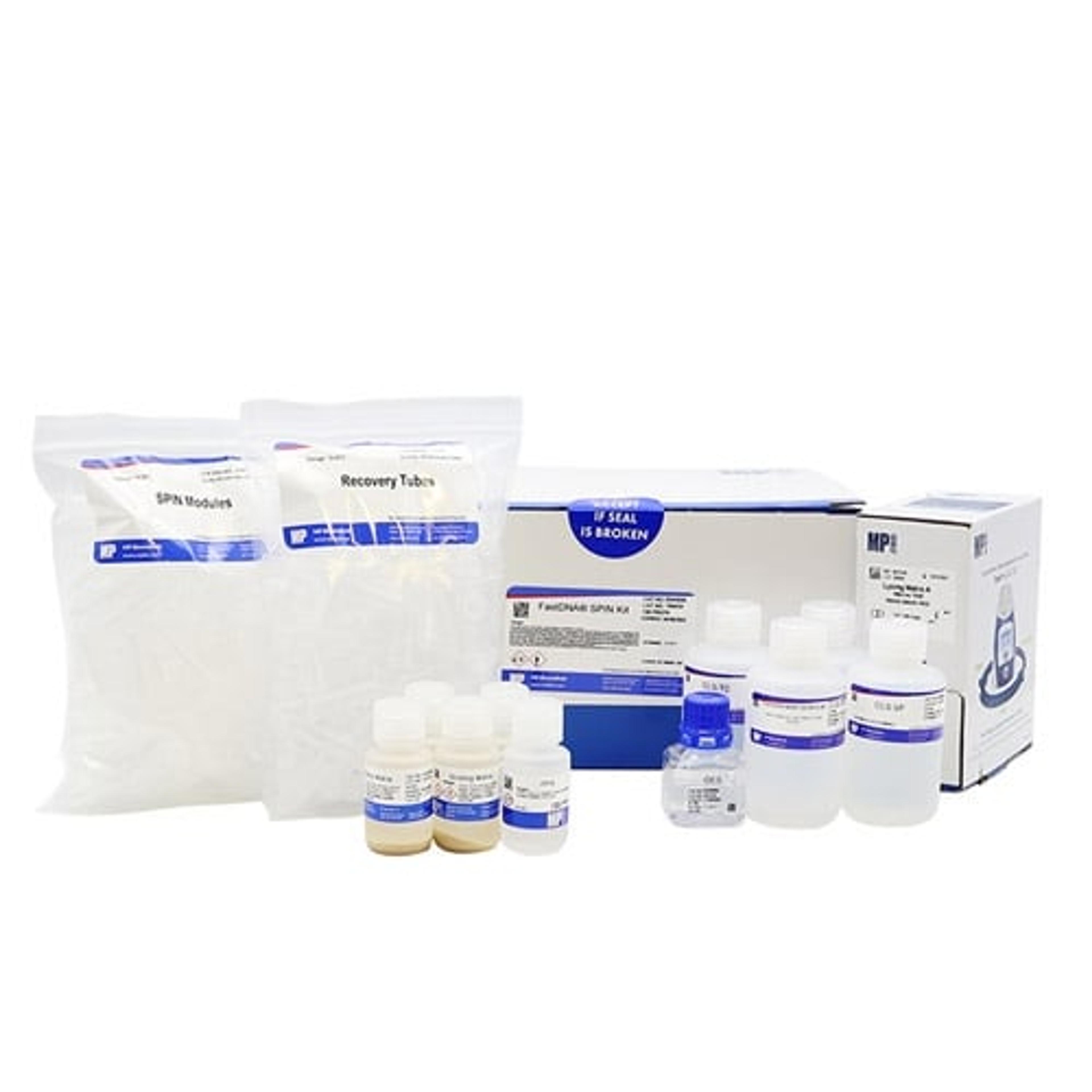
FastDNA SPIN Kit™
MP BiomedicalsRapid Method of Isolating Pure Genomic DNA from a Wide Variety of Sources! Isolate PCR-ready DNA from a variety of sample types No hazardous organic reagents are required The FastDNA™ SPIN Kit quickly and efficiently isolates genomic DNA from almost any sample (plant and animal tissues, cultured cells, bacteria, yeast, fungi, insects, etc). Up to 200 mg of tissue or cells are processed by the FastPrep-24™ 5G, FastPrep FP120™, FastPrep-96™ or SuperFastPrep-1™ with the Lysing Matrix A tubes. The kit includes 3 different chaotropic buffers for the homogenization of a wide variety of sample types and the released DNA is purified by a silica-based spin filter method. Purified DNA is ready for enzyme digestion, electrophoresis, PCR and any other desired application.