
Optibrium's StarDrop 5.3 Offers Intuitive Virtual Library Design
20 Nov 2012Product news
Optibrium™, developer of software solutions for drug discovery, has announced a new version of its StarDrop platform. Version 5.3 introduces new features focused on the design of virtual libraries, guided by StarDrop’s unique multi-parameter optimization capabilities to prioritize compounds with the best balance of properties for synthesis and testing.
Version 5.3 introduces its virtual library design capability as part of StarDrop’s Nova™ module, providing flexible and easy scaffold-based enumeration of a virtual library to allow drug discovery teams to rapidly explore new chemistry ideas. After drawing the scaffold on which the library will be based, users can select multiple functional groups, atoms or fragments to vary at each point of modification. These lists may be selected from a user-defined or centrally managed library, or sketched on an individual basis. A fully combinatorial library may be generated for detailed investigation or, alternatively, a subset of compounds can be automatically selected based on a predicted property or StarDrop’s unique Probabilistic Scoring algorithm for multi-parameter optimization.
These new capabilities are supported by further enhancements to StarDrop’s core features, including easy-to-use tools for clustering, filtering based on substructure or properties and extensions to its interactive data visualization. StarDrop offers a comprehensive desktop environment that saves time and reduces costs in drug discovery by guiding compound design and selection to quickly target high quality chemistry. These include plug-in modules providing: rigorously validated ADME QSAR models; quantum mechanical prediction of P450 metabolism; automatic generation of robust QSAR models; compound idea generation; application of 3D SAR based on Cresset’s™ Field technology; and the ability to integrate seamlessly with other informatics and modeling platforms.
Matt Segall, CEO of Optibrium, commented, “StarDrop offers a seamless workflow allowing our users to go from design and enumeration of a virtual library, through property prediction to prioritizing the resulting compounds against the profile of properties they require for their project objective. Supported by interactive visualizations in StarDrop’s intuitive user interface, chemistry teams can quickly identify novel compounds with a high chance of success.” Matt goes onto explain, “Many of the enhancements to StarDrop come as a direct result of working collaboratively with our users, which now include over 50 companies world-wide and seven of the top-ten pharma.”
Related products
Request Quote for All Products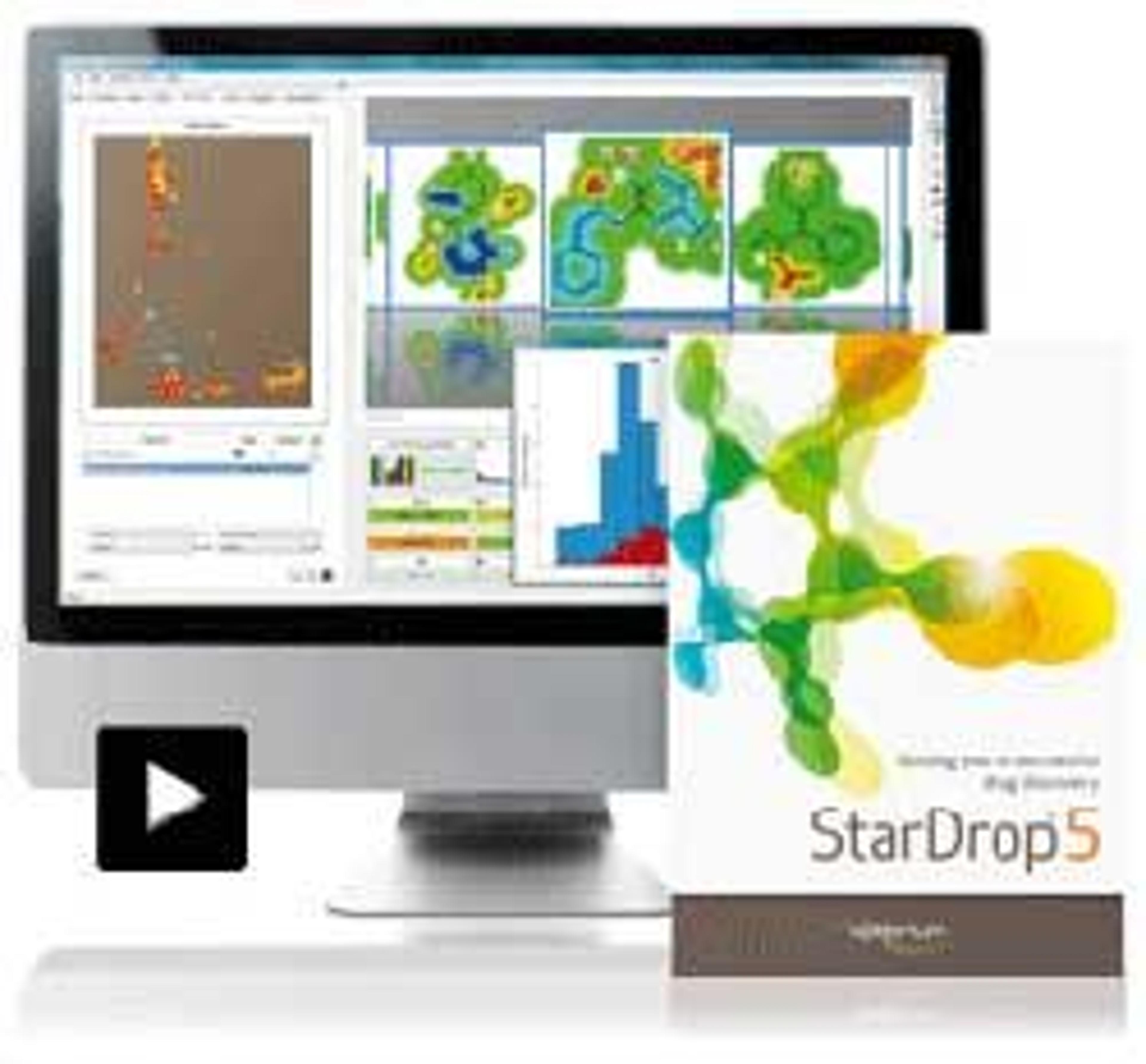
StarDrop 5 - Drug Discovery Software
OptibriumStarDrop is a suite of software that helps you to deliver optimally balanced, effective drugs - fast StarDrop works by evaluating complex data, which is often uncertain because of experimental variability or predictive error. In scoring this data, it brings confidence and intuitive simplicity to decision-making: guiding and validating the direction you take and which compounds you prioritise. Its instantly interactive tools then enable you to efficiently explore ways to further improve your chosen chemistries.Highly visual and easy-to-use, StarDrop also works with your existing IT systems to integrate a multiplicity of data sources. The latest release, version 5.5, comes with extensive data visualisation tools, which now include interactive 3D scatter and chemical space plots.StarDrop's modules include predictive ADME models, P450 metabolism prediction, automatic model building, application of 3D SAR based on Cresset's Field technology, knowledge based toxicity prediction through Derek Nexus while the Nova module can be used for automatically generating new compound ideas in parrallel with the BIOSTER database.StarDrop 5 - Drug Discovery Software Features: Probabilistic Scoring Chemical space Glowing Molecule Data visualisation R-group analysis StarDrop 5 Optional Modules: ADME QSAR Auto-Modeller Nova BIOSTER P450 torch3D Derek Nexus MPO Explorer