Optibrium to Preview New In Silico Drug Discovery Platform at Molecular Med Tri-Conference 2011

31 Jan 2011
bridget bridget
Laboratory Director

Product news

Optibrium™, a provider of software solutions for drug discovery, will be providing a sneak preview of the next generation of StarDrop™ at the Molecular Medicine Tri-Conference in San Francisco, CA, 23-25 February, 2011. The exclusive preview of this ground-breaking platform will be available on booth #501, at San Francisco’s Moscone North Convention Centre prior to its official launch at the American Chemical Society (ACS) National Exposition, 27-31 March, 2011, Anaheim, CA.

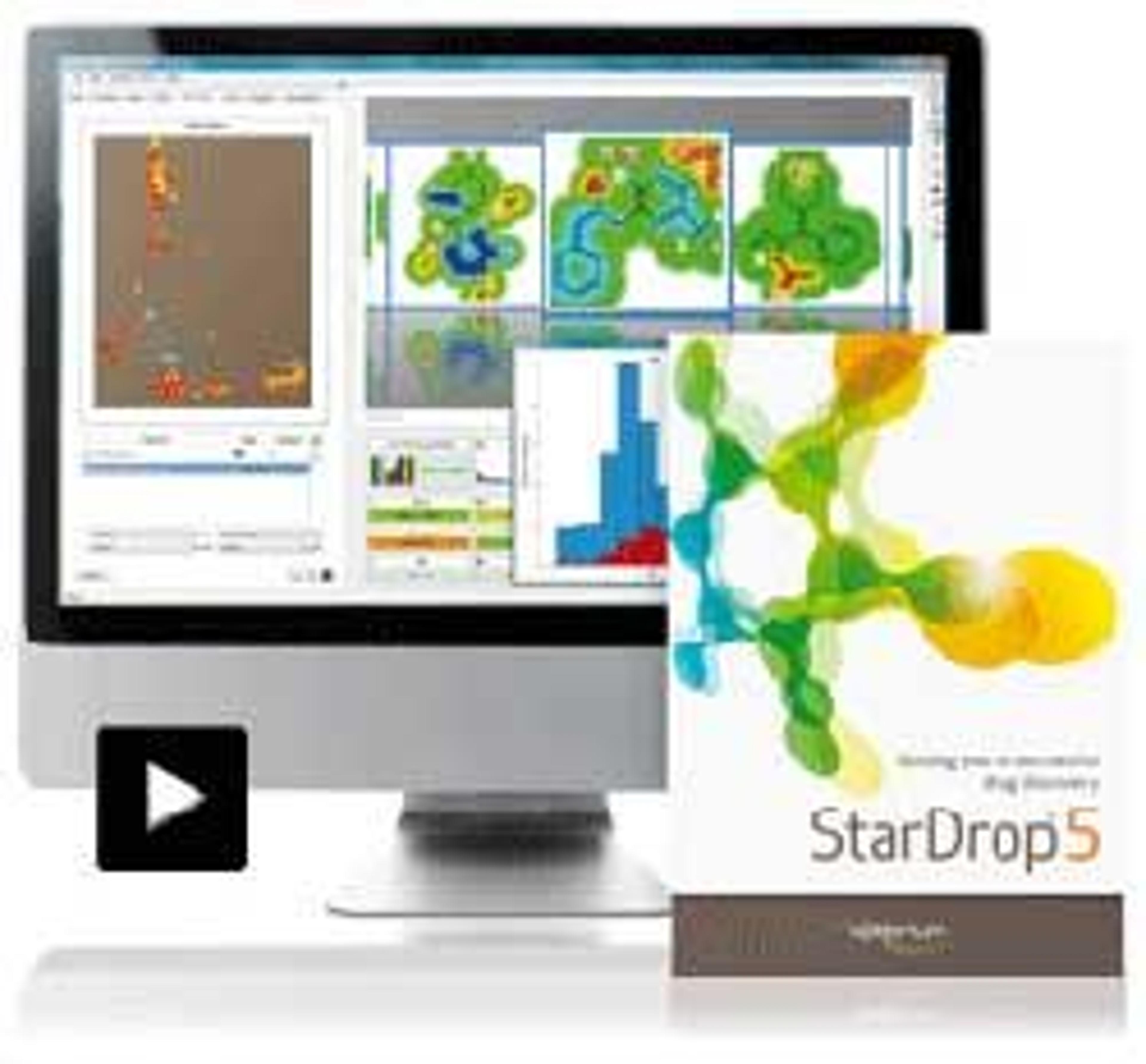
StarDrop 5 includes new features focusing on compound idea generation, enhanced visualizations and mathematical data transformations. To schedule a booth meeting with Optibrium and learn more about the new features of enhanced StarDrop 5 please email info@optibrium.com or visit: www.optibrium.com/stardrop5.

Quickly identifying the best potential drug molecules is a major challenge; the right balance of multiple, often conflicting, property requirements must be achieved, while the uncertainty in the available data makes effective decision-making difficult. Good compounds are often thrown out in error, or missed by not searching widely enough, meaning wasted productivity, higher costs and reduced opportunity to discover new drugs.

StarDrop is a revolutionary software platform that supports pharmaceutical and biotech companies to guide their decisions while designing and prioritising molecules for progression in drug discovery. It integrates all of the available data and explicitly takes into account the underlying uncertainty to provide scientists with intuitive analyses on which to make rational decisions. It has an advantage over traditional decision support and modelling platforms, as it quickly targets compounds in the regions of chemical space that are most likely to yield successful results. Its interactive, user friendly environment brings together a comprehensive range of drug design features including ADME QSAR models, P450 metabolism models and automatic predictive model building, along with StarDrop’s unique probabilistic scoring, chemical space and Glowing Molecule™ visualizations, to improve the efficiency and productivity of the drug discovery process.

StarDrop 5, scheduled for release at ACS 2011, is a major upgrade bringing many significant enhancements and new features to further expand its capabilities. An innovative new module stimulates the search for high quality drugs by generating new chemistry ideas, prioritised against the user’s property profile requirements. This expands the chemistry around an initial compound, based on medicinal chemistry transformation rules derived from the literature or in-house chemistry expertise, to generate chemically relevant compounds and fuel a rigorous search for strategies to improve properties. In addition, extended data visualisation capabilities allow automatic generation of a wide range of interactive histograms, graphs, radar plots and chemical spaces. Combined with new functionality for performing mathematical calculations, StarDrop will help users to manipulate and explore their data without leaving the integrated StarDrop environment.

“We are extremely excited to preview StarDrop 5 during Mol Med Tri-Con 2011”, commented Ed Champness, CSO at Optibrium. “In addition to the previous generations’ features, which have been very well received by our rapidly expanding customer base, version 5 is equipped with powerful new data analysis tools and a revolutionary new capability to push drug discovery further and enable scientists to guide decisions in an intuitive way.”

The only exclusive preview of StarDrop 5, prior to the official release date, will be at the Molecular Medicine Tri-Conference in San Francisco, CA, 23-25 February, 2011 on booth #501. To learn more about StarDrop 5 please visit the company article page.

StarDrop 5 - Drug Discovery Software

Optibrium

StarDrop is a suite of software that helps you to deliver optimally balanced, effective drugs - fast StarDrop works by evaluating complex data, which is often uncertain because of experimental variability or predictive error. In scoring this data, it brings confidence and intuitive simplicity to decision-making: guiding and validating the direction you take and which compounds you prioritise. Its instantly interactive tools then enable you to efficiently explore ways to further improve your chosen chemistries.Highly visual and easy-to-use, StarDrop also works with your existing IT systems to integrate a multiplicity of data sources. The latest release, version 5.5, comes with extensive data visualisation tools, which now include interactive 3D scatter and chemical space plots.StarDrop's modules include predictive ADME models, P450 metabolism prediction, automatic model building, application of 3D SAR based on Cresset's Field technology, knowledge based toxicity prediction through Derek Nexus while the Nova module can be used for automatically generating new compound ideas in parrallel with the BIOSTER database.StarDrop 5 - Drug Discovery Software Features: Probabilistic Scoring Chemical space Glowing Molecule Data visualisation R-group analysis StarDrop 5 Optional Modules: ADME QSAR Auto-Modeller Nova BIOSTER P450 torch3D Derek Nexus MPO Explorer

(0)

Links

Tags

Combinatorial ChemistryCombinatorial chemistry, also known as combichem, is a technique used in drug discovery to create libraries of structurally related compounds. A library is generated by synthesis with a chemical reactor system or by computer-based modeling of compound combinations. When undertaking combinatorial chemistry consider reagents, buffers, resins and standards.Lab-on-a-ChipLab-on-a-chip (LOC) technology uses microfluidic chips, such as microarrays, to perform biochemical assays on a small scale. Benefits of lab-on-a-chip include the small volume of sample required as well as the speed of analysis. In selecting lab-on-a-chip devices consider the assay, cost, reliability, sensitivity and signal to noise ratio.High-Throughput ScreeningHigh-throughput screening (HTS) is an automated drug discovery technique for identification of active compounds against a compound library. Use HTS readers and integrated assay preparation / analysis workstations to screen your compounds. Identify active compounds against various HTS libraries, including membranes, proteins and peptides and HTS cell lines. Find the best high-throughput screening products in our peer-reviewed product directory: compare products, check customer reviews and receive pricing direct from manufacturers.Data AnalysisData analysis hardware and software is available to make data processing straight-forward yet powerful. Data software can be used for math and stats, technical graphing and image analysis. In addition, software is available for specific data analysis of electrophoresis, densitometry, ELISA and DNA sequencing.Chem / BioinformaticsCheminformatics and bioinformatics are computational techniques used in chemistry and biology, respectively, for data acquisition, processing and storage. Cheminformatics focuses on compound information, whereas bioinformatics is mainly applied to analysis and modeling of genomics, genetic and sequencing information. Hardware and software is available for data acquisition, analysis, management and storage.Data MiningData mining is an important process for extracting information, patterns and trends from data. Data mining software, databases, reference materials and storage packages are available to process lab data.ADME-ToxicologyADME-toxicology (ADME-Tox) studies are used in pharmacology and pharmacokinetics to assess the activity/toxicity of drugs <i>in vivo</i> or <i>in vitro</i>. Find bioassays for absorption, distribution, metabolism, and excretion of drug molecules including cytotoxicity, transporter/permeability, metabolism and activity assays as well as hepatocytes and cell lines for ADME. Find the best ADME-toxicology products in our peer-reviewed product directory: compare products, check customer reviews and receive pricing direct from manufacturers.Molecular Recognition SoftwareMolecular recognition software is widely used to analyze DNA, RNA, proteins and chemicals. The software can be useful for graphical viewing, comparative analyses, high-throughput screening, genomics, proteomics and phylogenetics. Molecular recognition software uses bioinformatics tools and analyses such as BLAST searches and generates structural predictions, 3D structures and sequencing information.Assay AssemblyAssay Assembly is technique used in drug discovery to develop assays to test the cytotoxicity, genotoxicity, or other activities of a compound on a cell. Assay assembly requires chip assembly, a delivery system and a detection and analysis method. Beneficial features of assay kits or automated systems include high-throughput, high speed and sensitivity and low signal to noise ratio.Compound LibrariesCompound libraries, or chemical libraries, are used in drug discovery for the identification of potential therapeutics compounds. Used in conjunction with high-throughput screening, the libraries of stored compounds are often generated for specific purposes as a drug target or disease model. Cheminformatics are commonly used when designing a compound library and software can be used to analyze the screening process.  Medicinal ChemistryMedicinal chemistry is a broad discipline encompassing the design, identification, synthesis and development of chemicals in drug discovery. It includes a number of techniques covering structural biology, synthetic chemistry and molecular biology. Technologies used in medicinal chemistry include ADME, lab-on-a-chip, high content screening and assay assembly.Microarray AnalysisMicroarrays, also known as biochips, are used for the detection and analysis of multiple genes, proteins, antibodies, or biomarkers on a single microchip. This can reveal information on protein or gene expression, single nucleotide polymorphism (SNP), copy number variation (CNV), epigenetics and patient health in clinical diagnostic tests. Discover a range of microarray scanners and prefabricated antibody, protein, RNA and DNA microarrays for your analysis or consider creating your own custom microarrays with a microarray printer. Find the best microarray products in our peer-reviewed product directory: compare products, check customer reviews and receive pricing direct from manufacturers.Process ChemistryProcess chemistry is an important stage of drug development for scaling-up drug production or chemical synthesis reactions. It is useful for optimizing economical and efficient drug production. Process chemistry uses reactors and pump systems as well as reagents, standards and buffers.SNPs TechnologySingle nucleotide polymorphisms (SNPs) are individual base variations in a DNA sequence. SNPs are used in research to study predispositions to disease and drug discovery. Products for studying single nucleotide polymorphisms include SNP arrays and detection systems to detect polymorphisms, SNP typing systems for genotyping DNA, and PCR to amplify specific SNPs.High-Content ScreeningHigh-content screening (HCS), also known as high-content analysis (HCA), is a high-throughput technique used in drug discovery to identify substances that alter the phenotype of cells. HCS uses fluorescent microscopic imaging and automated image analysis to investigate cellular events such as apoptosis, cell viability, GPCR activation, oxide production, neurite outgrowth, and cell signaling. Find the best fluorescent labeling reagents, cellular assays, and high-content imaging systems in our peer-reviewed product directory: compare products, check customer reviews and receive pricing direct from manufacturers.
Optibrium to Preview New In Silico Drug Discovery Platform at Molecular Med Tri-Conference 2011