
Optibrium adds augmented intelligence for compound design to its StarDrop small molecule drug discovery software
New Inspyra module combines chemists’ expertise with exploratory capabilities of automated compound
1 Mar 2022
Industry news
Optibrium Ltd, a leading developer of software for drug discovery, has announced the release of the latest version of StarDrop™, its comprehensive software platform for small molecule design, optimization, and data analysis. More than 160 organizations currently use StarDrop, including many of the world’s leading pharmaceutical companies. The new release introduces Inspyra™, a module that dynamically learns from chemists’ expert knowledge and feedback to guide automated compound design methods, creating a powerful ‘augmented intelligence’ to accelerate the discovery of high-quality drug candidates.
The impact of ‘generative chemistry’ algorithms for automated compound design is often limited in practice by a lack of alignment with chemists’ existing workflows and know-how, resulting in irrelevant compound suggestions. StarDrop’s new Inspyra module addresses this limitation by combining exploratory capabilities of automated compound design with chemists’ expertise, helping to focus on the most relevant chemistry spaces and suggest optimization strategies with the highest potential for project success.
Inspyra has been developed in collaboration with global pharmaceutical companies and has already been applied successfully across several hit-to-lead and lead optimization projects. The module leverages StarDrop’s predictive modeling and data visualization capabilities, multi-parameter optimization, and 2D and 3D structure-activity-relationship (SAR) analysis, delivering a comprehensive solution for small molecule optimization that reduces cost and time while increasing the chance of successful drug discovery.
Dr. Peter Hunt, Director of Computational Chemistry at Optibrium, said: “Having led groups at Novartis and MSD, access to an intuitive tool like the new Inspyra module for StarDrop would have been invaluable. While I am a firm believer in the benefits of automated compound idea generation, time and time again, colleagues were frustrated looking at compound suggestions that were not relevant to them for one reason or another. Inspyra is the first approach to address this challenge, and we are proud to release this new StarDrop version with unprecedented automated compound design support.”
Want the latest science news straight to your inbox? Become a SelectScience member for free today>>
Related products
Request Quote for All Products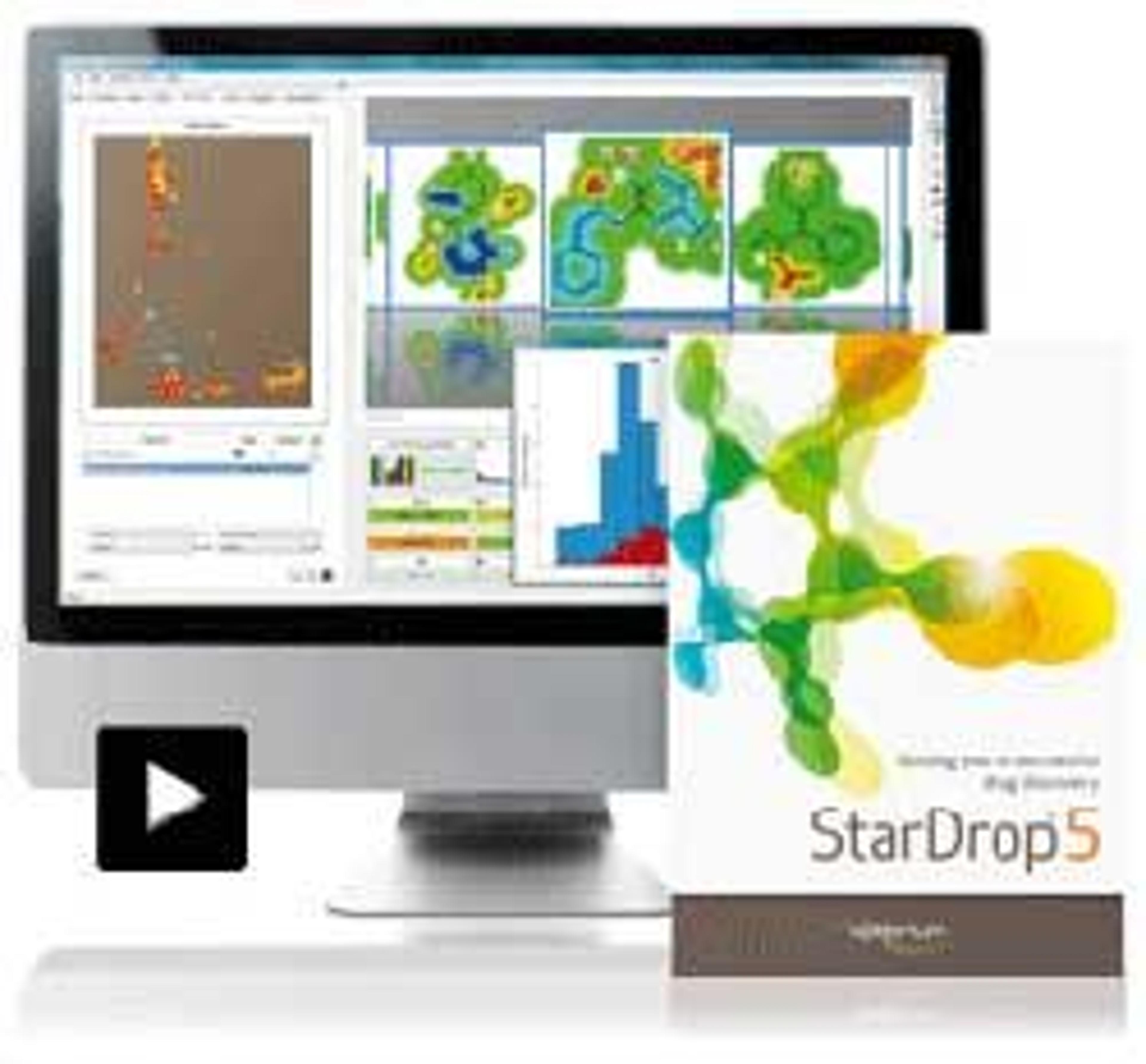
StarDrop 5 - Drug Discovery Software
OptibriumStarDrop is a suite of software that helps you to deliver optimally balanced, effective drugs - fast StarDrop works by evaluating complex data, which is often uncertain because of experimental variability or predictive error. In scoring this data, it brings confidence and intuitive simplicity to decision-making: guiding and validating the direction you take and which compounds you prioritise. Its instantly interactive tools then enable you to efficiently explore ways to further improve your chosen chemistries.Highly visual and easy-to-use, StarDrop also works with your existing IT systems to integrate a multiplicity of data sources. The latest release, version 5.5, comes with extensive data visualisation tools, which now include interactive 3D scatter and chemical space plots.StarDrop's modules include predictive ADME models, P450 metabolism prediction, automatic model building, application of 3D SAR based on Cresset's Field technology, knowledge based toxicity prediction through Derek Nexus while the Nova module can be used for automatically generating new compound ideas in parrallel with the BIOSTER database.StarDrop 5 - Drug Discovery Software Features: Probabilistic Scoring Chemical space Glowing Molecule Data visualisation R-group analysis StarDrop 5 Optional Modules: ADME QSAR Auto-Modeller Nova BIOSTER P450 torch3D Derek Nexus MPO Explorer