Optibrium Adds 3D Structure-Based Design with Introduction of StarDrop 6.3

Seamless link between 2D and 3D structure-activity relationships guides more efficient compound optimization

10 Mar 2016
Alex Waite
Editorial Assistant

Product news

Optibrium, a developer of software for small molecule drug discovery and optimization, announce the launch of version 6.3 of the StarDrop platform.

The release introduces a new module providing seamless access to best-in-class structure-based design technologies, based on BioSolveIT's SeeSAR™ package, and follows the companies' recently announced collaboration. The addition of intuitive visualization of 3-dimensional (3D) protein-ligand interactions to StarDrop results in a fully integrated environment for analysis and visualization of compound data, coupled with a comprehensive range of ligand- and structure-based design capabilities that guide the optimization of high-quality compounds.

The new SeeSAR™ module for StarDrop provides a state-of-the-art and scientifically rigorous approach to understanding the binding of compounds in their protein targets in 3D. Users can import ligand and protein structures, derived from crystal structures or predicted with any docking software, and visualize the key interactions driving potency. This is seamlessly linked to StarDrop’s cheminformatics methods based on 2-dimensional (2D) compound structure and its unique Card View™ approach to interpreting the resulting structure-activity relationships (SAR). This combination enables chemists to better understand and rationalize the SAR within their project chemistry. StarDrop's suite of predictive modelling and de novo design capabilities guide further improvements in a truly multi-parameter optimization environment.

In addition to the new module, StarDrop 6.3 will also bring further enhancements to its existing capabilities, including powerful chemical sub-structure searching, an interactive designer for StarDrop's Card View and updates to both the Derek Nexus™ module for toxicity prediction and the BIOSTER™ database of precedented chemistry transformations.

Dr Matthew Segall, Optibrium's CEO, commented: "We are delighted to announce this exciting new version of StarDrop, including the SeeSAR™ module developed with our partners at BioSolveIT. In the short time since its announcement, our collaboration has already produced enhancements to both SeeSAR™ and StarDrop. This latest addition to StarDrop provides users with a complete compound design and optimization platform in a fully integrated, intuitive user interface."

"We are proud to collaborate with Optibrium on this powerful combination of 2D and 3D worlds. Merging our user-friendly technologies will save project team's time and enable better research as visually informed decisions literally guide scientists to design the best molecules to be synthesized next," commented Dr Christian Lemmen, BioSolveIT's CEO.

A preview of StarDrop 6.3 will be on show at the American Chemical Society National Meeting, 13th-17th March 2016, in San Diego with demonstrations on booth #1227. Attendees at this meeting can also gain 'hands on' experience of these new capabilities during an interactive workshop at 3.30 pm on Monday 14th March.

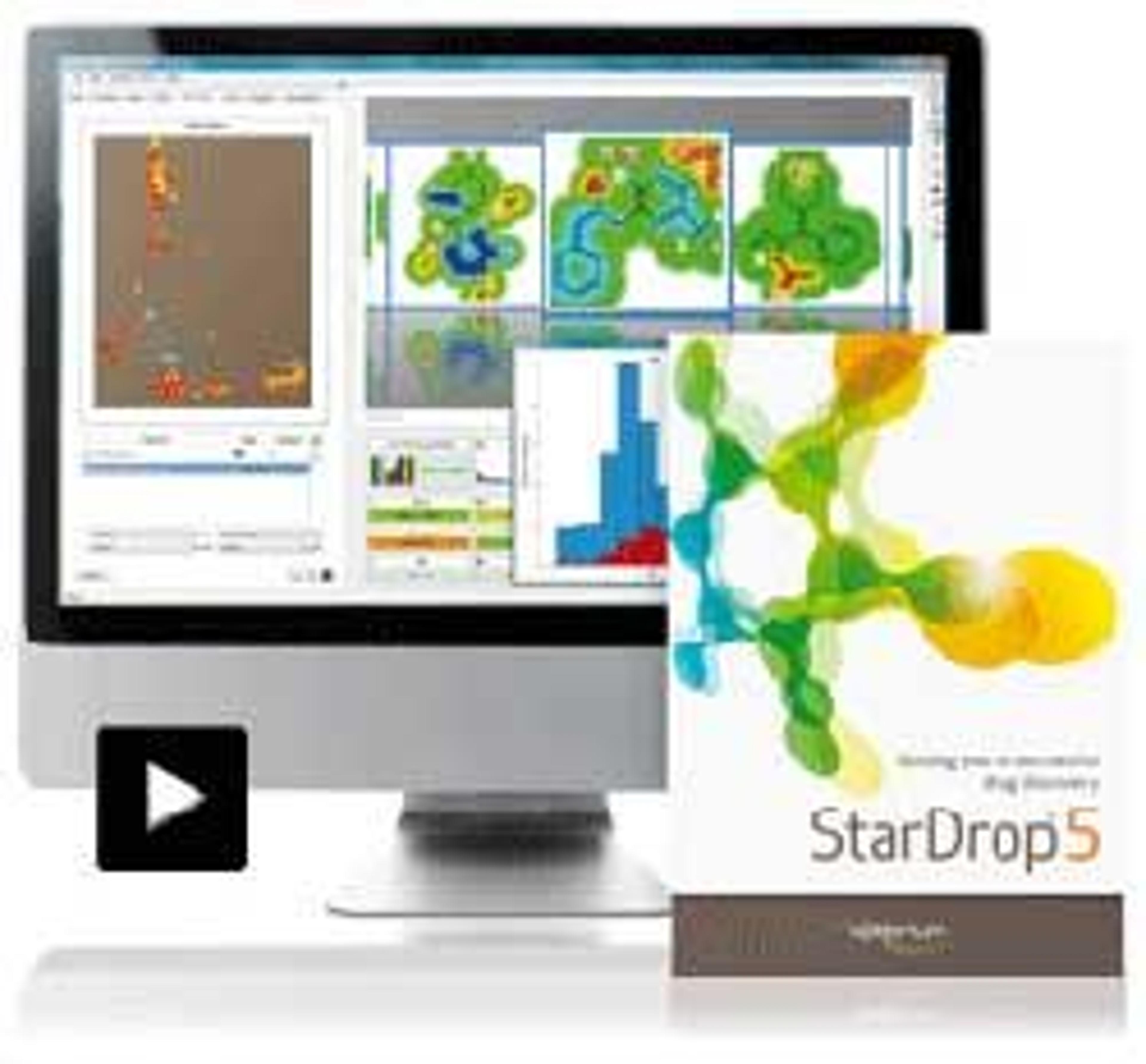
StarDrop 5 - Drug Discovery Software

Optibrium

StarDrop is a suite of software that helps you to deliver optimally balanced, effective drugs - fast StarDrop works by evaluating complex data, which is often uncertain because of experimental variability or predictive error. In scoring this data, it brings confidence and intuitive simplicity to decision-making: guiding and validating the direction you take and which compounds you prioritise. Its instantly interactive tools then enable you to efficiently explore ways to further improve your chosen chemistries.Highly visual and easy-to-use, StarDrop also works with your existing IT systems to integrate a multiplicity of data sources. The latest release, version 5.5, comes with extensive data visualisation tools, which now include interactive 3D scatter and chemical space plots.StarDrop's modules include predictive ADME models, P450 metabolism prediction, automatic model building, application of 3D SAR based on Cresset's Field technology, knowledge based toxicity prediction through Derek Nexus while the Nova module can be used for automatically generating new compound ideas in parrallel with the BIOSTER database.StarDrop 5 - Drug Discovery Software Features: Probabilistic Scoring Chemical space Glowing Molecule Data visualisation R-group analysis StarDrop 5 Optional Modules: ADME QSAR Auto-Modeller Nova BIOSTER P450 torch3D Derek Nexus MPO Explorer

(0)

Links

Tags

ProteomicsProteomics is the systemic bioinformatics study of proteins and amino acids, including their structure, size, function and identification. Tools used in proteomics include chromatography, blotting and gels, protein arrays, mass spectrometry and ELISA and associated analysis software. Analyzers and proteomic systems should be sensitive, high resolution, fast and may be automated for high-throughput.Data AnalysisData analysis hardware and software is available to make data processing straight-forward yet powerful. Data software can be used for math and stats, technical graphing and image analysis. In addition, software is available for specific data analysis of electrophoresis, densitometry, ELISA and DNA sequencing.Gel Doc / Image AnalysisGel documentation (gel doc) or gel imaging systems are used for the analysis of proteins, antibodies and nucleic acid immobilized in polyacrylamide or agarose gels, membranes or microarrays. Explore a range of a gel imaging systems, densitometers, scanners, transilluminators or UV lamp + CCD cameras for your image analysis solutions. Colorimetric, fluorescent and/or radioisotopic samples can be visualized and documented for further analysis. See gel doc / Image analysis software for quantitative 1D and 2D analysis of your samples. Find the best gel doc / image analysis products in our peer-reviewed product directory: compare products, check customer reviews and receive pricing direct from manufacturers.Chem / BioinformaticsCheminformatics and bioinformatics are computational techniques used in chemistry and biology, respectively, for data acquisition, processing and storage. Cheminformatics focuses on compound information, whereas bioinformatics is mainly applied to analysis and modeling of genomics, genetic and sequencing information. Hardware and software is available for data acquisition, analysis, management and storage.Integration ServicesIncorporate lab systems, software and equipment with integration services.Molecular Recognition SoftwareMolecular recognition software is widely used to analyze DNA, RNA, proteins and chemicals. The software can be useful for graphical viewing, comparative analyses, high-throughput screening, genomics, proteomics and phylogenetics. Molecular recognition software uses bioinformatics tools and analyses such as BLAST searches and generates structural predictions, 3D structures and sequencing information.Protein PurificationProtein purification is a vital step in drug discovery, therapeutics, biotech and life science research. The purification process typically involves subcellular or membrane protein extraction with cell lysis kits, separation of proteins from cell debris by filtration or spin columns, and the isolation of proteins of interest from other proteins and impurities with affinity purification (including fusion protein tags and antibody binding proteins A, G and L), immunoprecipitation or chromatographic methods, such as ion exchange, size exclusion and immobilized metal affinity chromatography. All purification methods come in multiple formats for your laboratory needs, including agarose or magnetic beads, resins, columns and filter plates. Find the best protein purification equipment in our peer-reviewed product directory: compare products, check customer reviews and receive pricing direct from manufacturers.Protein CrystallographyProtein crystallization is the process of crystallizing purified proteins for 3D structure analysis by x-ray crystallography. The main methods of protein crystallization include sitting drop, hanging drop and microbatch. It is important to control parameters such as pH, temperature and concentration. Following crystallization, detectors and software are used for data collection and analysis.Software PlatformsSoftware platforms are useful for various stages of laboratory experiments from data collection to data storage and processing. For instance lab software is available for system control, data management, data analysis and qualification / validation.Particle CharacterizationParticle characterization instruments are used to determine particle size distribution, shape, surface area, zeta potential, density and porosity of particles and materials. Multiple tecchniques are available for determining particle size, shape and count including dynamic light scattering (DLS), laser diffraction, electrozone (Coulter technique), imaging particle analysis and single particle optical sensing. Determine the density of your material with a gas pycnometer or examine its surface area and porosity with gas adsorption analyzers and mercury porosimeters. Find the best particle characterization instruments in our peer-reviewed product directory: compare products, check customer reviews and receive pricing direct from manufacturers.Molecular BiologyMolecular biology is the branch of biology that focuses on the molecular mechanisms that underlie cellular functions. It involves studying DNA, RNA, and proteins to understand gene expression, replication, and regulation. Molecular biology is fundamental to biotechnology, medicine, and genetic research. Explore molecular biology products in our peer-reviewed product directory; compare products, check reviews, and get pricing directly from manufacturers.BioinformaticsBioinformatics uses computational models and methodologies to study biological processes and to understand biological data.Protein InteractionsProtein interactions are essential for understanding cellular processes, as proteins work together to carry out biological functions. Studying protein interactions can provide insights into disease mechanisms, drug development, and cell signaling pathways. Explore the best tools for protein interaction research in our peer-reviewed product directory; compare products, check reviews, and get pricing directly from manufacturers.3D Sample ObservationDrug DiscoveryDrug discovery is the process of identifying potential new medications, involving stages such as target identification, compound screening, and preclinical development. It relies on cutting-edge technologies like high-throughput screening, artificial intelligence, and molecular modeling to accelerate the identification of drug candidates. Drug discovery plays a pivotal role in developing new therapies for diseases ranging from cancer to rare genetic disorders. Browse our peer-reviewed product directory to find the latest drug discovery technologies, compare options, check customer feedback, and get pricing directly from manufacturers.