
Olympus and evorion join forces to advance cell therapy research
Partnership combines microfluidics, 3D live-cell imaging and AI in an accessible workflow solution
10 Mar 2022
Industry news
Olympus, a global manufacturer of optical and digital precision technology, has announced a partnership with evorion biotechnologies, a manufacturer of advanced single-cell analysis using unique microfluidic systems. By merging evorion’s 3D hydrogel bead technology and Olympus’ microscope systems, the collaboration promises a seamless and largely automated workflow solution to capture functional phenotypes of individual cells´ behavior over time. This workflow enables researchers to reveal novel insights into thousands of cell-cell interactions in a 3D microenvironment—facilitating advanced single-cell research across applications such as adoptive cell therapy, cancer research and immunology.
The combination of Olympus’ IXplore™ microscope systems and cellSens™ software with evorion’s innovative CellCity System and CellCity Scout-AI software makes high-resolution live-cell analysis applications both easy and accessible. By encapsulating thousands of single cells or cell pairs into hydrogel beads and immobilizing them on evorion’s CellCity Array Chip, researchers can monitor and image the functional phenotypes of cells in a physiologically relevant 3D microenvironment. High-resolution images of thousands of individual live cells are made possible by Olympus’ IXplore microscope systems, and the workflow can accommodate the IXplore Live, IXplore Spin or IXplore SpinSR system for exceptional 3D super-resolution imaging. Fast data analysis is facilitated by evorion’s advanced CellCity Scout-AI software, which uses AI algorithms to automatically select positions of interest on the CellCity Array Chip and send the trackable coordinates to the IXplore system for further in-depth imaging.
A powerful aspect of the workflow is the ability to perform multi-modal analyses at single-cell resolution, enabling researchers—for the first time—to correlate time-resolved functional phenotypes with immunostaining, single-molecule RNA FISH analysis in a highly parallelized manner. Biomedical researchers can now obtain a more holistic understanding of dynamic cell behavior to drive advances in therapeutics.
Dr. Sebastian Bühren, CEO of evorion biotechnologies, commented, “Early on we recognized the revolutionary impact that the CellCity platform could have on research fields like adoptive cell therapy, cancer immunotherapy and solid tumor treatment. We are excited to partner with Olympus, a renowned company with a global reach. Our partnership will allow us to bring our innovative platform to a wider audience and work together in advancing single-cell research by integrating the world-leading imaging systems of Olympus into our innovative CellCity workflow.”
Olympus has a history of designing imaging systems to drive healthcare research forward. Both the IXplore microscope systems and cellSens software are designed to be modular, flexible and forward-thinking. That modularity and advanced engineering are mirrored in evorion’s CellCity platform, making the integration a natural fit. Olympus’ software and imaging platforms adapt to meet evolving research needs, while evorion’s AI-powered software solutions support single-cell tracking and facilitate the analyses needed to gain insights from simultaneous, multiparametric time-course data on thousands of cells.
Jan Barghaan, Strategic Marketing Manager at Olympus Europa, shared, “At Olympus, we recognize the rapid pace at which life science technology evolves. To match this progression, we have designed imaging systems that not only stay ahead of the curve but also synergize with cutting-edge technologies like those evorion has pioneered. Hand-in-hand with evorion, we want to create imaging and analytics platforms that bring innovations to the forefront—innovations that will serve the biomedical research community and ultimately accelerate healthcare.”
Want the latest science news straight to your inbox? Become a SelectScience member for free today>>
Related products
Request Quote for All Products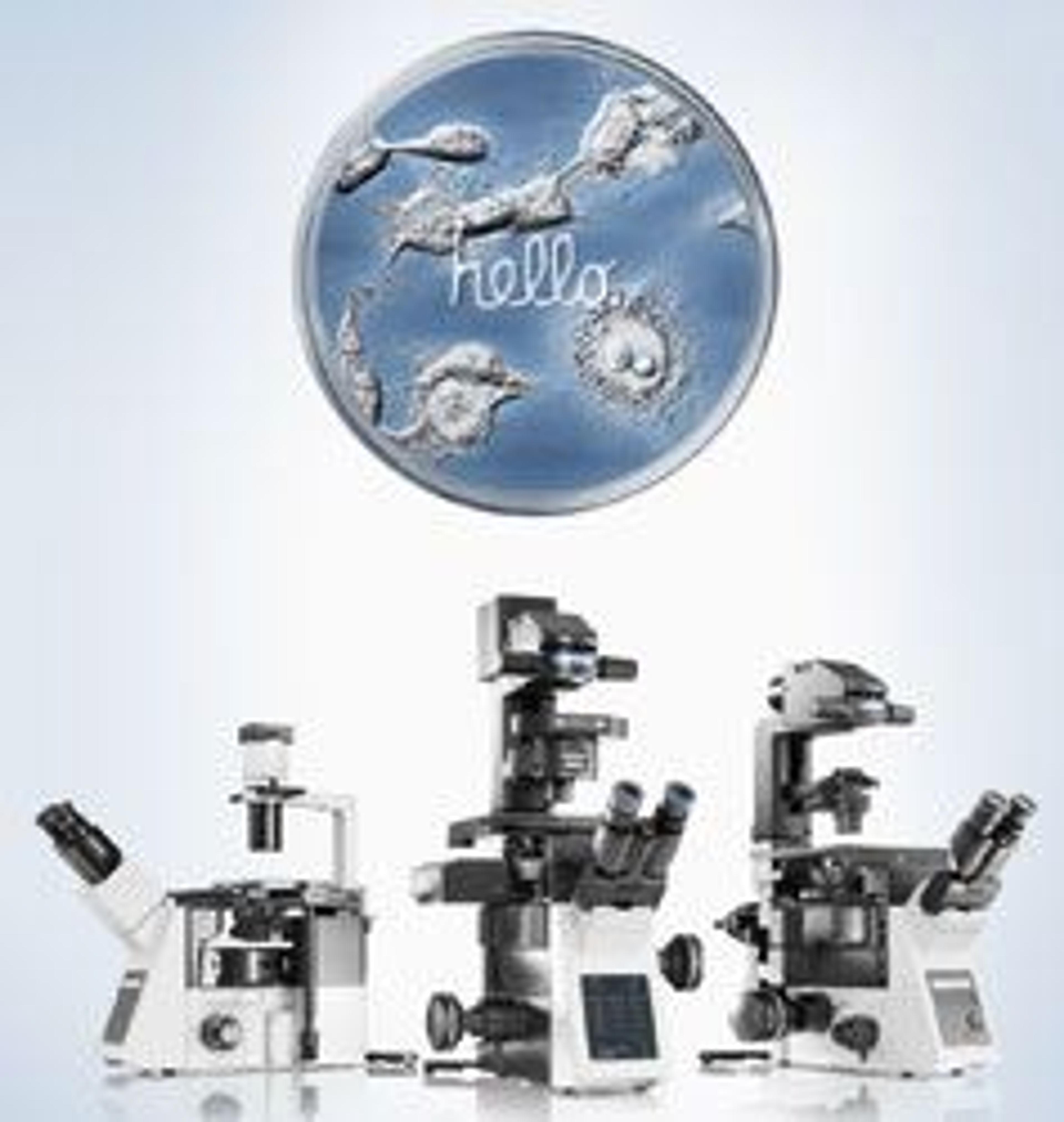
IX3 Series - Intuitive & open source Microscope Systems
EVIDENTThe series of flexible inverted microscope frames for live cell imaging