
Novel Nucleic Acid Amplification Method is Ideal for Point-of-Care Applications
Dr. Luis A. Tortajada-Genaro, Polytechnic University of Valencia, discusses recombinase polymerase amplification (RPA) in bioanalytical chemistry
30 Oct 2017
Editorial article
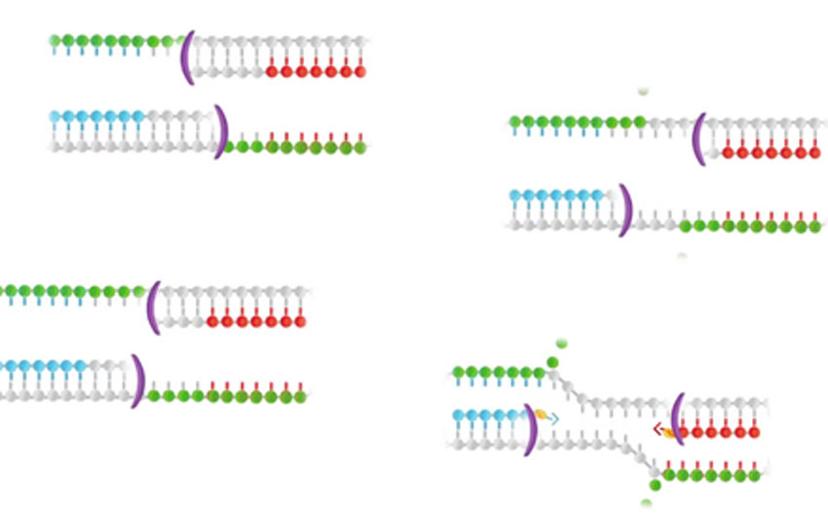
“Society demands technological solutions for processing samples and obtaining information as close as possible to sample collection. These point-of-care methods need to be simple, fast, easy-to-use and at low cost. The scientific challenge is to develop the reagents and devices suitable for this scenario,” says Tortajada-Genaro. “Isothermal techniques, such as RPA, are an interesting approach for minimizing the required resources for DNA-based assays.”
RPA, unlike PCR, doesn’t require unique accessories such as a thermal cycler. The method performs nucleic amplification even at room temperature with results generated in 3-10 minutes. These unique abilities — coupled with its PCR-like specificity — enable the use of RPA in field studies, for infectious diseases research and biodefense projects as well as in bioanalytical chemistry, an area of focus for Tortajada-Genaro. “My current research interests are in biosensors and bio-sensing. I’m currently working on the development of optical biosensors based on immunoassays and DNA methods,” says Tortajada-Genaro.
Isothermal techniques, such as RPA, are an interesting approach for minimizing the required resources for DNA-based assays.
Dr. Luis A. Tortajada-Genaro Polytechnic University of Valencia
“One of our projects is focused on genotyping mutations and identifying polymorphisms related to colorectal cancer prognosis, as well as the pharmacogenomics of coronary diseases. We are investigating allele-specific methods that discriminate between populations differing in a single base nucleotide using isothermal techniques, including RPA. The kinetic behavior of the amplification reaction is important to control assay selectivity,” explains Tortajada-Genaro on the use of RPA technology in his lab.
“We are also involved in the development of optical transduction phenomena compatible with RPA. Using a selection of adequate optical markers such as chromophores or fluorophores, the goal of this study is to register the changes in optical properties when a DNA target molecule is present in the sample.”
Cited over 200 times and adapted for diverse projects, RPA can replace PCR in a variety of applications. By adding reverse transcriptase to the reaction mix, RPA technology can also be used to amplify and detect RNA when needed. “There are few approaches based on RPA where we can monitor reaction kinetics and obtain quantitative information,” says Tortajada-Genaro. “Further research on quantitative real-time RPA is important. It would be interesting to see how RPA technology can be adapted towards molecular beacon probes.”
In the future, Tortajada-Genaro and team will work on improvement of optical markers as well as better methods to identify genetic mutations by selecting reagents compatible with the RPA mechanism. “An analytical challenge in the future,” Tortajada-Genaro says, “is the development of integrated assays combining isothermal techniques such as RPA with simple, portable, low-cost detectors such as optical or electrochemical detectors.”
Do you use the TwistDx RPA reagents in your lab? We want to hear from you. Share your expert opinion here.
