Novel Microfluidic Platform for Cancer Research

19 Feb 2018
Lui Terry
Administrator / Office Personnel

Industry news

AMSBIO, a transatlantic life sciences company, and the University of Strathclyde (Glasgow, UK) have pioneered a multidisciplinary approach combining expertise in microfluidics and 3D culture to develop a novel microfluidic platform for cancer research.
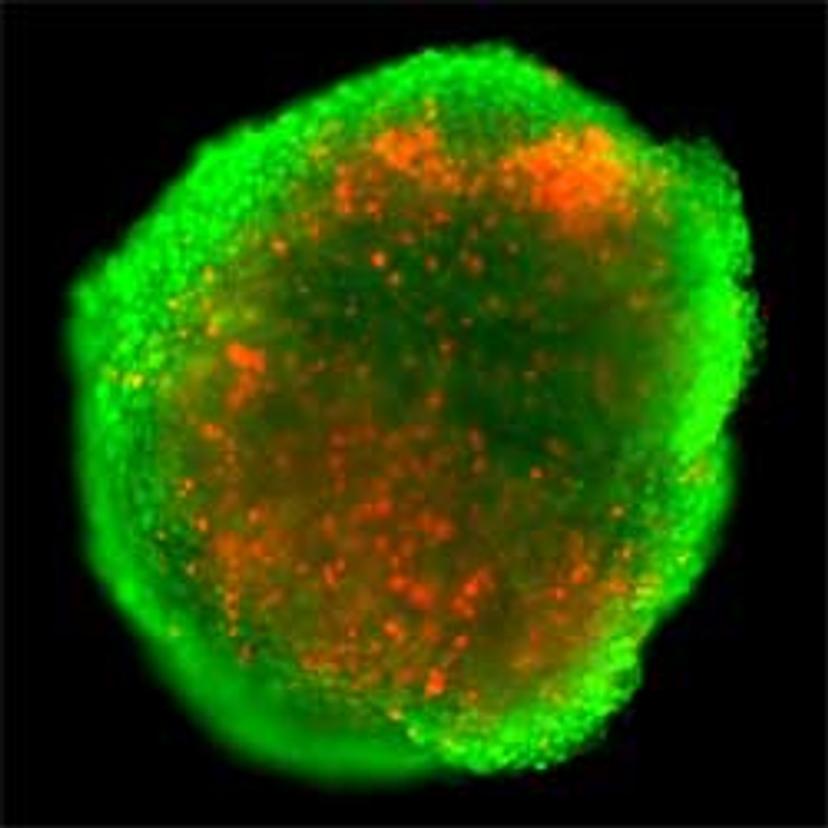
Microscopy epifluorescence image of a glioma multicellular spheroid. (green = fluorescein diacetate, red = propidium iodide). Image credit: Michele Zagnoni

The new platform combines microfluidic lab-on-a-chip technology with physiologically relevant 3D spheroids to enable formation and long-term culture of 3D multicellular tumors / organoids for drug screening and individualized chemosensitivity testing

Extensive testing shows that micro sizing drug-cell interactions reduces cost of experiments significantly as well as increasing productivity as it enables more experiments to be done on the same platform at the same time.

The microfluidic platform delivers precise control over the cellular microenvironment and beneficially through miniaturization, maximizes use of precious limited human cancer samples. Developed using leading-edge microsystem engineering, the platform delivers high-throughput analysis and is fully compatible with automated robotic dispensing systems. To enable customized data analysis of the results from the microfluidic platform, our academic team has also developed a suite of easy-to-use software.

The new microfluidic platform shows great promise to provide a cost-effective approach to applications including high-throughput drug screening and analysis and bioassays to assess spheroid function and morphology. In the area of personalized medicine, it is highly pertinent to not only predict the drug response at early time points during the therapy, but also to be able to identify the optimal drug combination for an individual patient. Within the scope of personalized medicine, this technology presents immense possibilities for testing patient-derived multicellular tumor spheroids/organoids (comprising cancer cells, stromal cells, cancer stem cells and/or immune cells) for disease/biomarker-oriented drug activity and profiling using single- and pair-wise standard/targeted drug combinations.

Links

Tags

Cell / Tissue CultureCell culture or tissue culture is used to study the biology of cells or tissues and to isolate cellular products in an environment which can be manipulated and well defined. Accurately control your culture environment with bioreactors or culture incubators, bind your cells to a surface or together with an extracellular matrix. Distinguish cell types with differential media or proliferate cells with certain characteristics using selective media. Enrich your media with supplements such as growth factors, sera and vitamins. Find the best cell and tissue culture products, kits and equipment in our peer-reviewed product directory: compare products, check customer reviews and receive pricing direct from manufacturers.BiomarkersBiomarkers are biological markers which can be measured and evaluated to indicate a biological state. The use of biomarkers in research and diagnosis can indicate a normal or disease state or drug response of cells / tissues. Biomarkers include genetic markers, cell surface markers such as antigens, antibodies or receptors and secreted molecules such as cytokines. An assay system is required for identification of biomarkers. :MicrofluidicsMicrofluidics is the science of manipulating small volumes of fluids in micro-sized channels. It is widely used in diagnostics, drug development, and lab-on-a-chip technologies. Microfluidic devices can enable rapid, cost-effective, and high-throughput analysis of biological samples. Browse our peer-reviewed product directory to find the best microfluidic devices, compare products, check reviews, and get pricing directly from manufacturers.Cancer ResearchAlthough cancer is often referred to as a single condition, it actually consists of more than 100 different diseases. Microscopy, mass spectrometry, high throughput sequencing and flow cytometry are some of the most common techniques employed in cancer research labs.
Novel Microfluidic Platform for Cancer Research