
Novel bioluminescent Lumit™ Dx SARS-CoV-2 Immunoassay enables simple, scalable antibody detection
21 Jun 2021
Product news
A SARS-CoV-2 antibody test developed by Promega Corporation, the Lumit™ Dx SARS-CoV-2 Immunoassay, has received CE marking and is now available in Europe. The novel bioluminescent immunoassay is a qualitative in vitro diagnostic test intended to detect antibodies to SARS-CoV-2 in serum.
Promega designed the Lumit™ Dx SARS-CoV-2 Immunoassay to be reliable, simple and scalable, enabling labs to:
- Detect antibodies against the receptor-binding domain (RBD) antigen within the SARS-CoV-2 spike (S) protein in serum in less than one hour at room temperature.
- Conserve resources with a simple add-incubate-read workflow with no wash steps.
- Accelerate testing of large patient populations by adapting the assay to high throughput on many automated platforms.
The assay leverages Promega NanoBiT® bioluminescence complementation technology to emit a measurable glowing signal when SARS-CoV-2 antibodies are present. NanoBiT® technology has received awards from The Scientist and the European Laboratory Research and Innovation Group.
“Bioluminescence, when applied to antibody detection, offers laboratories several advantages including a simple and fast workflow,” says Promega Chief Medical Officer Ashley Anderson, MD.
The Lumit™ Dx SARS-CoV-2 Immunoassay is also available in the US under a policy allowing developers of serological tests to make them available while awaiting US Food and Drug Administration (FDA) review.
Promega COVID-19 Support
Promega reagents, assays and benchtop instruments are being used around the world for COVID-19 testing, research, and vaccine development.
- Reagents to enable testing an estimated 800 million samples: Since January 2020, Promega has rapidly increased production to support labs testing for SARS-CoV-2 worldwide.
- Products in the US Centers for Disease Control (CDC) Influenza SARS-CoV-2 (Flu SC2) Multiplex Assay for emergency use: Maxwell® RSC 48 and CSC 48 instruments; Maxwell® RSC Viral Total Nucleic Acid Purification Kit
- Products in the CDC 2019-Novel Coronavirus Real-Time RT-PCR Diagnostic Panel for emergency use: GoTaq® Probe 1-Step RT-qPCR System; Maxwell® RSC 48 and CSC 48 instruments; Maxwell® RSC Viral Total Nucleic Acid Purification Kit
- Technology to accelerate COVID-19 testing: XpressAmp™ Direct Amplification Reagents allow labs to skip the RNA extraction step of the workflow.
Tools used for COVID-19 applications are a small subset of the 4,000 products Promega manufactures and distributes globally, serving research, pharma, clinical, forensic and applied markets. These products are used for a myriad of applications in human health, disease, genetic identity, drug development, clinical diagnostics and more.
Do you use Promega Corporation products in your lab? Write a review today for your chance to win a $400 Amazon gift card>>
Related products
Request Quote for All Products
Maxwell® RSC Instrument
Promega Corp.Automated Nucleic Acid Purification with Integrated Quantitation
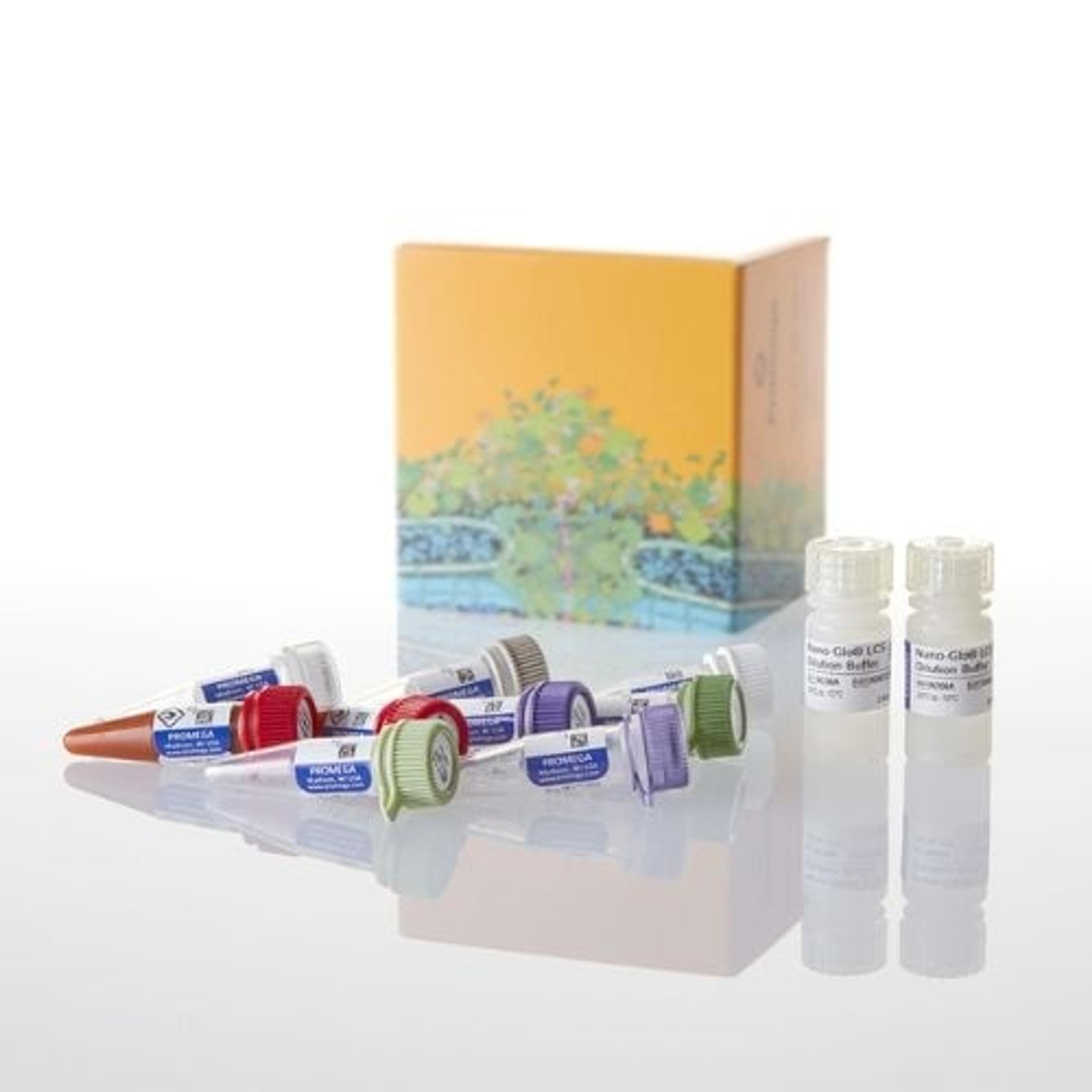
NanoBiT® PPI Starter Systems
Promega Corp.NanoLuc® Binary Technology (NanoBiT) is a two-subunit system based on NanoLuc® luciferase that can be applied to the intracellular detection of protein:protein interactions (PPIs) in live cells. The NanoBiT® system is composed of two small subunits, Large BiT (LgBiT; 18kDa) and Small BiT (SmBiT; 11 amino acid peptide), that are expressed as fusions to target proteins of interest. The LgBiT and SmBiT subunits have been independently optimized for stability and minimal self-association. Interaction of the target proteins facilitates subunit complementation to give a bright, luminescent enzyme. The NanoBiT® PPI Starter Systems provide the vectors required to create the LgBiT and SmBiT protein fusions, a PRKACA:PRKAR2A constitutively interacting positive control pair and a negative control vector. Starter systems also include the Nano-Glo® Live Cell Assay System, a single-addition, non-lytic detection reagent used for monitoring NanoBiT® luminescence in living cells. The reagent is prepared by diluting the Nano-Glo® Live Cell Substrate with the Nano-Glo® LCS Dilution Buffer to make the Nano-Glo® Live Cell Reagent. Both substrate and buffer solutions are optimized to provide enhanced stability and reduce autoluminescence in the presence or absence of serum, increasing the sensitivity for detection of low levels of NanoBiT® luminescence. The FKBP:FRB pair is provided separately as an inducible positive control. Expression is driven by HSV-TK promoter, providing constitutive, low-level expression in mammalian cells. Using the NanoBiT® MCS Starter System, you can generate N- and C-terminal LgBiT and SmBiT fusions to proteins of interest using traditional cloning with a multiple cloning site (MCS). Using the NanoBiT® Flexi® Starter System, you can generate N- and C-terminal LgBiT and SmBiT fusions using the Flexi® Vector Cloning System, a directional cloning method based on two rare-cutting restriction enzymes, SgfI and PmeI, that provides a rapid, efficient and high-fidelity way to transfer protein-coding regions between Flexi® Vectors without the need to resequence. Utilize Find My Gene™ to obtain your ORF clones already in Flexi® format for simple creation of fusions. Features: Obtain Greater Sensitivity: Bright signal and reduced background improve sensitivity, signal:background ratio and dynamic range. More Accurately Model PPI Biology: Minimize artifacts with small tags and low, natural expression levels; perform real-time kinetic analysis in live cells. Precisely Measure Interaction Dynamics: Low affinity of tags minimizes spontaneous LgBiT:SmBiT association; complementation is easily reversible allowing accurate analysis of protein association and disassociation. Perform Simple Measurement: Bright luminescent output is ideal for any luminometer with no specific filter or injector requirements. Scale Your Assays: Assays can be scaled from bench to HTS, allowing use with any plate size up to 1,536-well format; detection reagent has been optimized for benchtop stability. Applications: Real-time measurements of PPI dynamics. Single-copy or single-cell measurements of PPI. PPI modulator screens in 384- or 1536-well formats.