
Non-Targeted Screening of Chinese and Herbal Medicine
Increasing speed and sensitivity with 2D-LC
26 Aug 2015
Editorial article

Prof. Oliver J. Schmitz, University of Duisberg-Essen
From the 3rd century BC, Chinese herbal medicine has been used to treat everything from psoriasis to depression, and has been continually developed in response to changing clinical conditions. Even with the development of modern medical diagnostic techniques and knowledge, Chinese herbal medicine is relatively widely used, making accurate analysis of its components and active ingredients vital.
At the University of Duisburg-Essen, Germany, Prof. Oliver J. Schmitz is pushing the boundaries of high-throughput, non-targeted screening of complex natural products. The compounds found in Chinese medicine and other natural products are difficult to analyze using conventional means, he explained, because they can be isobaric – several different compounds that have identical molecular masses. "It is fascinating that we found so many isobaric compounds in these natural samples − it seems that it is not the exception, but the rule," he said.
2D-LC 2D-LC is a commonly used HPLC multidimensional chromatography technique, also called "LC×LC". LCxLC achieves significantly higher separation than normal one-dimensional chromatography.
LCxLC gives a wonderful increase in separating power
Prof. Oliver J. Schmitz
University of Duisburg-Essen
Increasing analytical requirements
"In my lab, we are interested in the analysis of industrial products, herbal drugs and metabolomics and there are numerous applications of analytical chemistry in many other areas, but all have some challenges in common,” explained Prof. Schmitz. "There has been an increase in sample throughput, samples are becoming more complex, and more information is being required from one sample." To address these points, Prof. Schmitz employs several analytical platforms together.
This combinational approach has provided two key benefits – increased sensitivity and increased speed. For example, in normal 1D-LC, around 200 compounds can be analyzed per hour. With LCxLC, "around 600 analytes can be separated, and LC+LC with IMS allows several thousand analytes to be separated in a one hour analysis," revealed Prof. Schmitz, "a wonderful increase".
The future of non-targeted analysis
The Agilent 6560 IMS Q-TOF is "a wonderful tool", allowing analytes to be identified using a CCS database and the exact mass of the fragments, and Prof. Schmitz believes this technology is "the future of non-targeted analysis". It offers "the possibility to separate isobaric compounds" and mixtures in a complex matrix. For example, "the analysis of surfactants in cleaners or dish washing detergents normally takes up to five days. With LCxLC-MS, this time could be reduced to 1.5 hours."
For routine industrial applications, Prof. Schmitz believes run times of around 15 minutes may eventually be possible. With "faster separations, better or reduced sample preparation, and faster 2D-LC platforms", Prof. Schmitz hopes to reduce LCxLC modulation times to 10s or less. "I hope we will be successful to bring the LCxLC to industrial labs," he explained. "It is a great challenge, but the separation power is outstanding."
Watch our interview with Prof. Schmitz or learn more about HPLC 2015 here.
Related products
Request Quote for All Products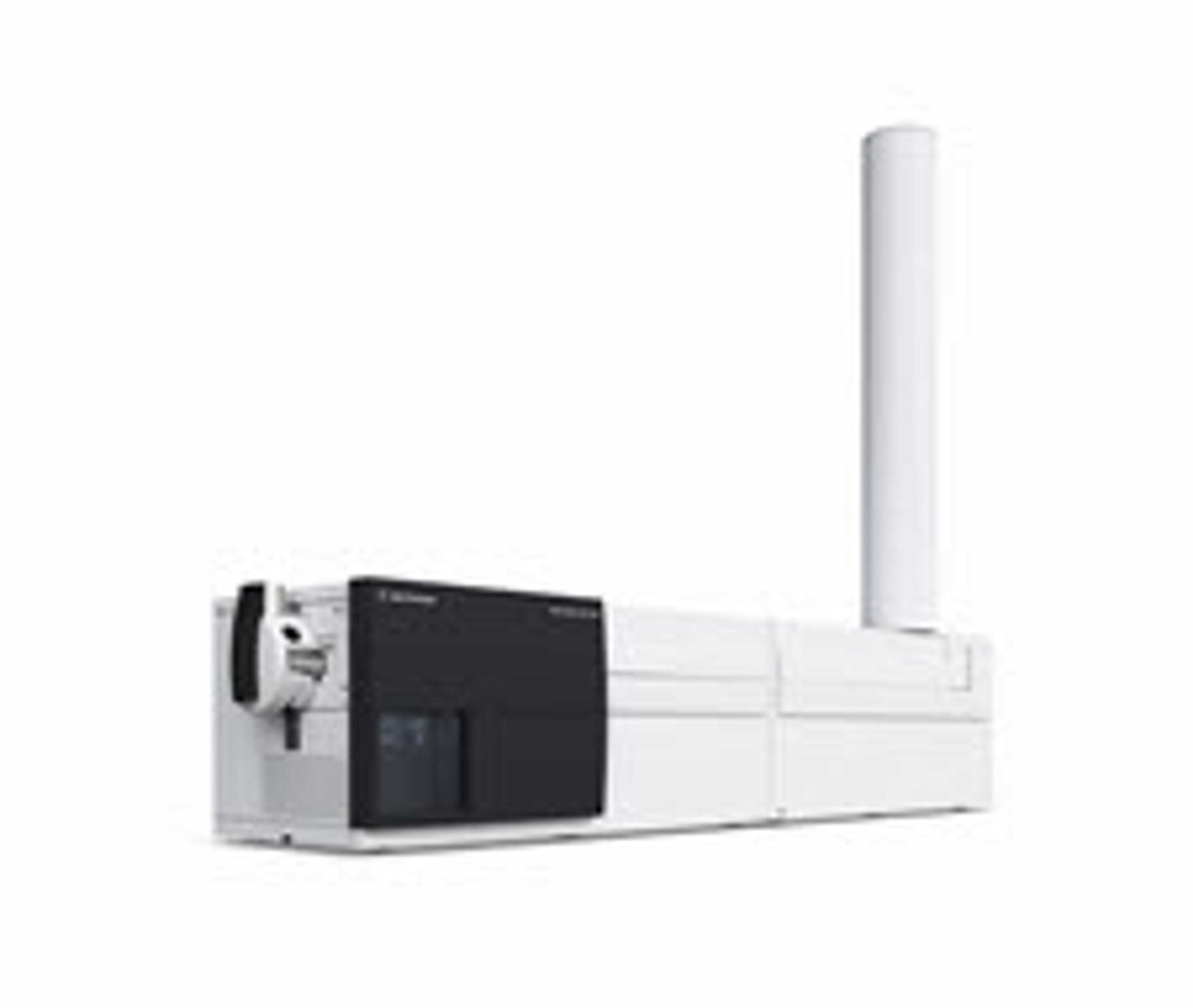
6560 Ion Mobility Q-TOF LC/MS
Agilent TechnologiesThe NEW Agilent 6560C ion mobility Q-TOF LC/MS system delivers unrivaled separation and selectivity by combining chromatography, ion mobility, and mass spectrometry. The 6560C Q-TOF LC/MS can even uncover structural information that cannot be seen with traditional LC/MS systems, including separation of in-class isomers via high-resolution demultiplexing (HRdm).
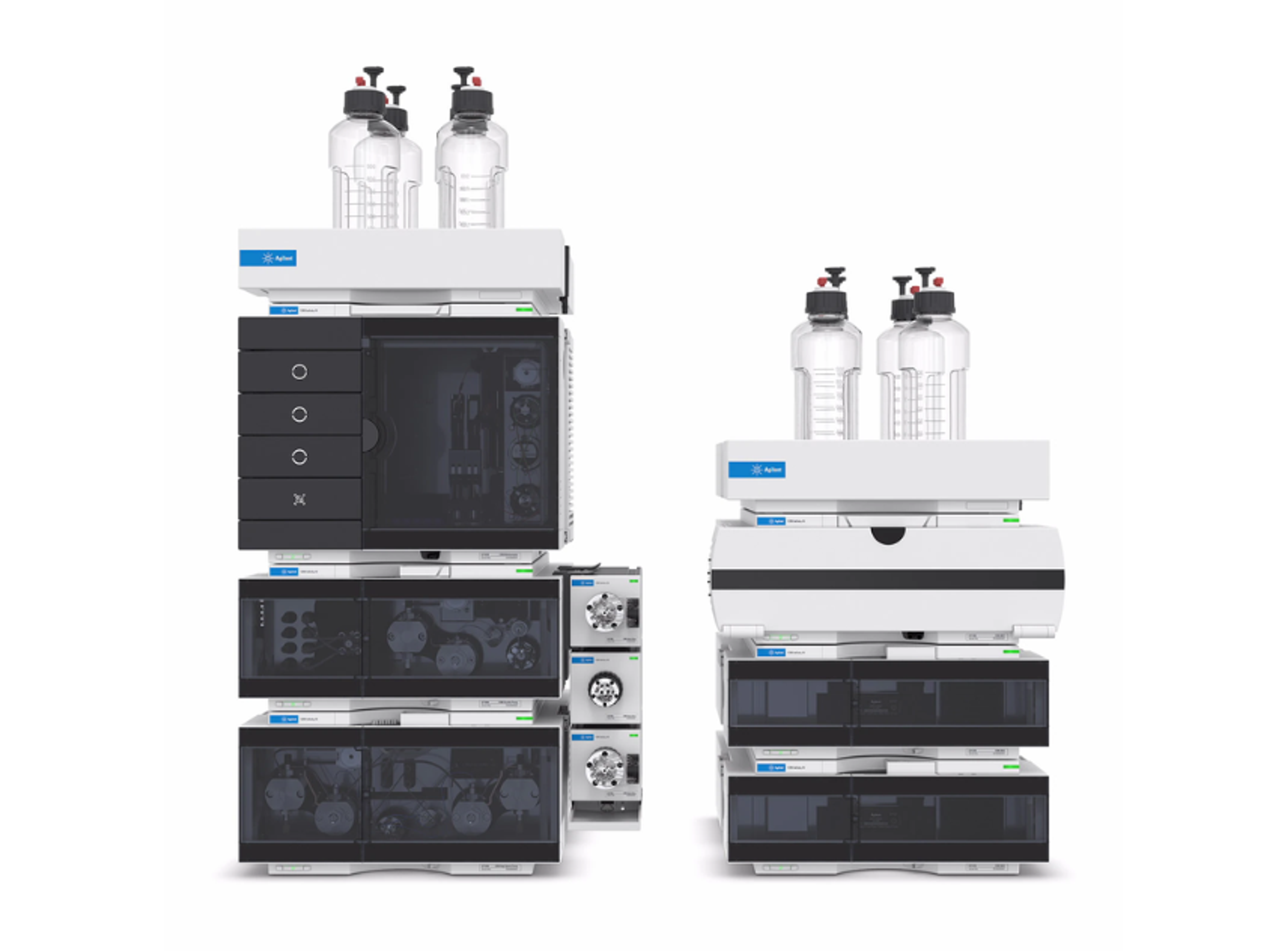
Agilent 1290 Infinity III 2D-LC System
Agilent TechnologiesIncrease resolution where you need it with the 1290 Infinity III 2D-LC System, which offers comprehensive two-dimensional liquid chromatography (2D-LC), (multiple) heart-cutting 2D-LC analysis, and high-resolution sampling. This system allows you to use 2D-HPLC for making buffer separations compatible to MS detection, while easy-to-use software enables fast method setup and refined data analysis.