
Non-invasive Skin Cancer Screening
18 Dec 2011Product News
Andor have released the Newton camera which powers a combined RS-OCT probe capable of both morphological and biochemical characterization of skin cancers.
Skin cancer is the most common form of human cancer with annual rates continuing to climb from their current estimate. Although all skin cancers share the likelihood of a favourable outcome if early diagnosis and complete resection are achieved, diagnosis is invasive, subjective, lengthy and expensive involving expert visual inspection, biopsy and histopathology.
Now, a joint US-Dutch team under the direction of Anita Mahadevan-Jansen, Vanderbilt University, US, has developed a non-invasive probe capable of both morphological and biochemical characterization of skin cancers. The portable instrument combines a Raman spectroscopy (RS) system with an Optical Coherence Tomography (OCT) device and enables sequential acquisition of co-registered OCT and RS data sets. An Andor high resolution, near-infrared-enhanced Newton camera was chosen as the core element of the Raman diagnosis module. The probe will screen large areas of skin up to 15 mm wide to a depth of 2.4 mm with OCT to visualize micro-structural irregularities and perform an initial morphological analysis of lesions. The OCT images are then used to identify locations to acquire biochemically specific Raman spectra.
“Due to the inherently weak nature of Raman scattering and the relatively intense background autofluorescence from tissue, collection efficiency is a critical factor in the design of clinical RS probes,” says Chetan A. Patil, Vanderbilt University, US. “Unlike confocal approaches that emphasize axial resolution, our probe is designed to prioritize collection efficiency. The high sensitivity of the Andor Newton CCD’s back-illuminated, deep-depletion, thermo-electrically cooled design is well suited to the stringent demands of in vivo Raman spectroscopy.
“Having demonstrated the clinical potential of the RS-OCT instrument to rapidly screen at risk patients, we are continuing to develop the dual-modal technique for other applications where non-invasive assessment of both microstructure and biochemical composition are critical to accurate assessment of pathology. The Labview software development kit, which is supplied with the camera and supported directly by Andor, was crucial in the development of our first probe and in our on-going research,” concludes Patil.
According to Antoine Varagnat, Product Specialist at Andor, “With its high sensitivity in the NIR enabled by high Quantum Efficiency and deep TE-cooling interface, the Newton Deep-Depletion CCD platform is just the right detector for demanding clinical NIR spectral diagnosis. One also gets the benefit of long-lasting detection performance and reliability with Andor’s UltraVac™ vacuum technology, alongside high speed acquisitions and ease of integration.”
Related Products
Request Quote for All Products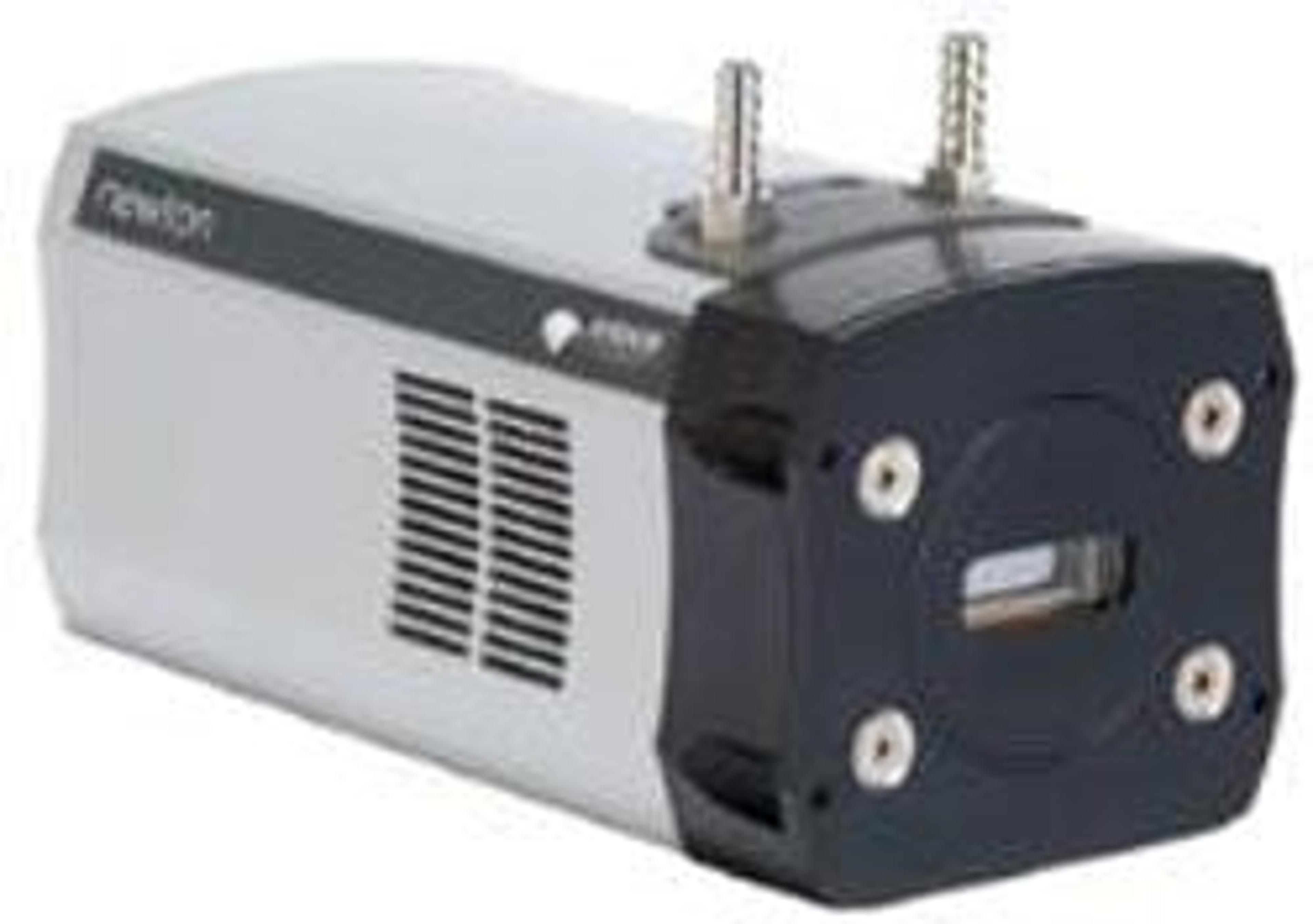
Newton CCD Camera
Oxford Instruments AndorThe Newton CCD camera is ideally suited to high-performance spectroscopic applications. The high-resolution sensors deliver up to 95% QE. Combined with Andor Technology’s low noise electronics, it provides convenient multi-Megahertz readout and USB connectivity. The camera utilizes a 1024 x 255 array of 26μm² pixels with thermoelectric cooling down to -100°C resulting in negligible dark current. The system offers the best performance for a wide range of spectroscopic applications across VUV-NIR wavelengths.
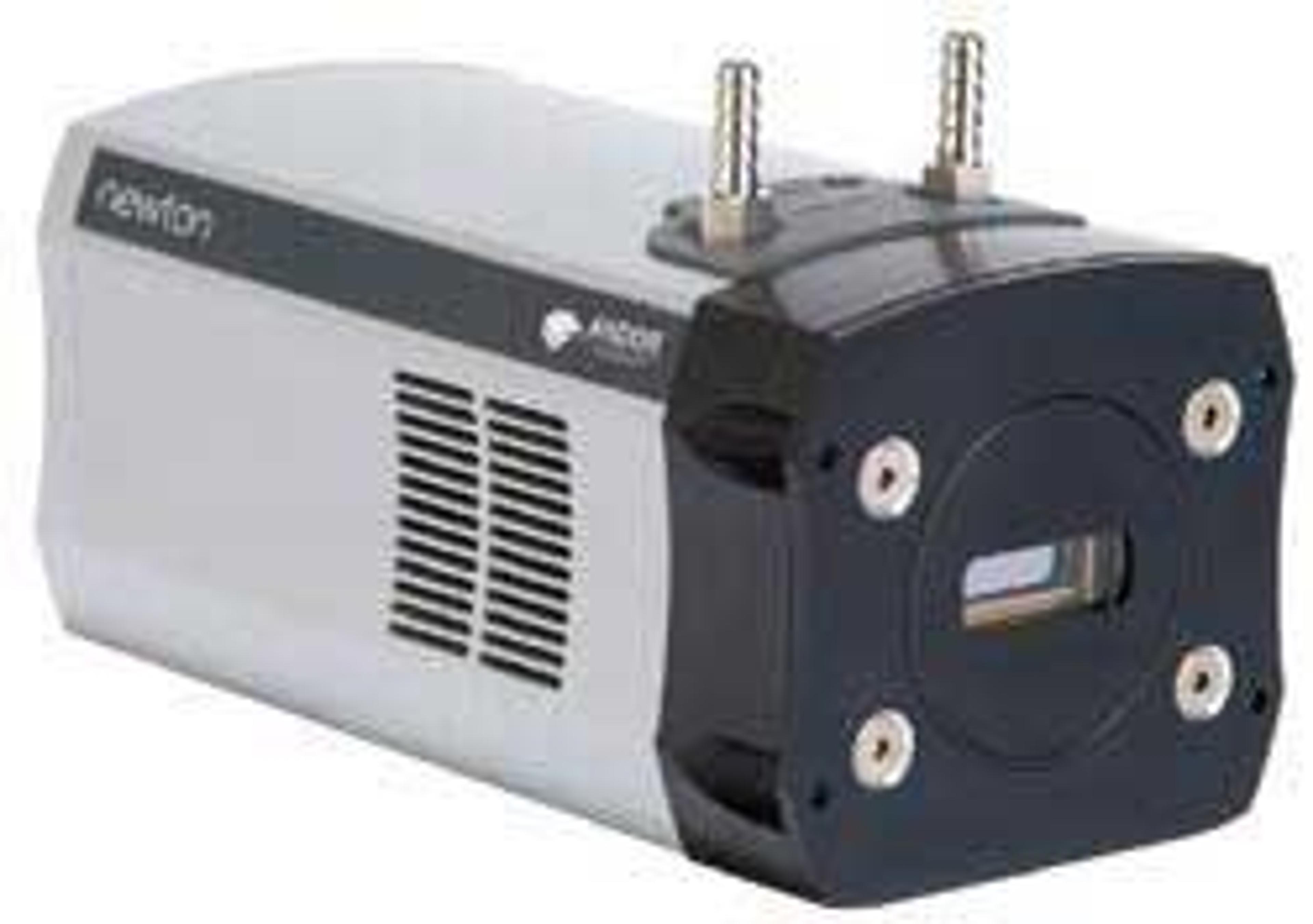
Newton EMCCD Detector
Oxford Instruments AndorBoth the Andor NewtonEM EMCCD and Newton conventional CCD detector systems have been optimized for high performance spectroscopic applications. All Newton detector systems employ low noise electronics, cooling to -100°C, up to 95% peak Quantum Efficiency (QE), multi-MHz readout, USB 2.0 connectivity and versatile readout modes. The NewtonEM employs Andor's electron multiplying CCD technology in an exclusive sensor format optimized for ultra-low light, level spectroscopy applications. The combination of the Newton's low noise electronics, high QE, fast readout, and the on-chip amplication (electron multiplication) makes this detector unbeatable for the most demanding ultra-low light level spectroscopy applications, including single photon light level spectra. Dual output amplifiers also allow the detector system to operate in both the electron-multiplication mode and the conventional low noise readout modes, making the detector even more versatile for a wider variety of applications. The Newton series of conventional CCD detectors employ industry leading low noise CCD sensors such as the 2048 x 512 and the 1024 x 256 pixel formats optimized for spectroscopy along with the standard features of ultra low noise electronics, deep cooling, high QE, multi-MHz readout, and USB 2.0 connectivity. The Newton CCD detector also provides dual output amplifiers for user selection of high sensitivity or high capacity operating modes. High performance, and extreme versatility make this the ideal CCD detector to use with Andor's line of Shamrock imaging spectrographs to form a very powerful spectroscopy measurement system for use in even the most demanding applications.