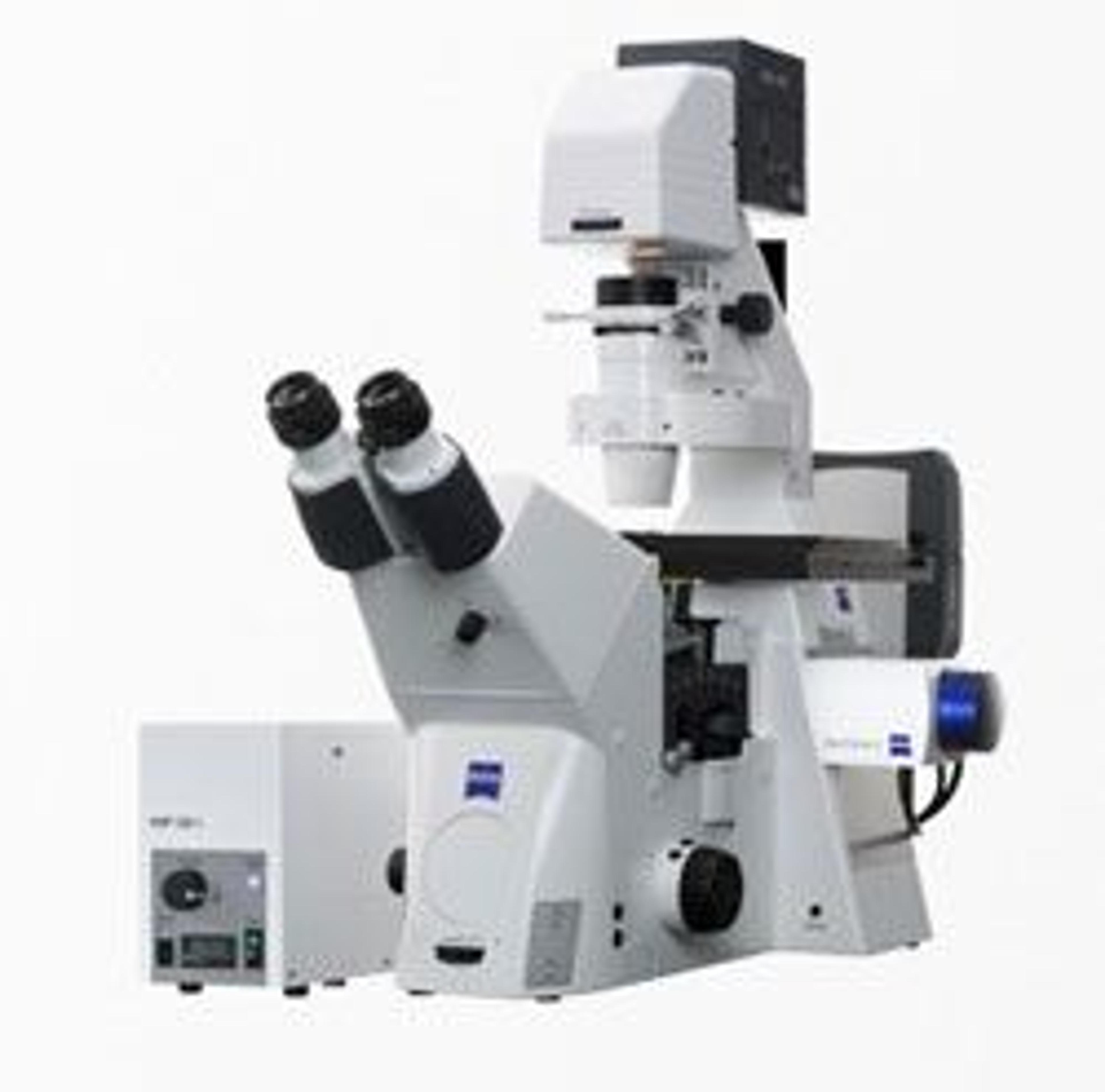
New ZEISS Axio Observer Microscopes for Life Sciences

The open and flexible inverted microscope platform for living and fixed specimens

9 Feb 2017
Weylan Kiam-Laine
Microbiologist

Product news

ZEISS have introduced a new inverted microscope platform for life science research. The ZEISS Axio Observer family consists of three stable and modular microscope stands for flexible and efficient imaging. Scientists benefit from reproducible results from their experiments and high quality image data from a whole range of samples in a variety of conditions. ZEISS Axio Observer combines the proven quality of ZEISS optics with new automation features, allowing researchers to perform demanding multimodal imaging of living and fixed specimens.

Among these features is Autocorr, a technology that allows adaption of immersion objectives to varying sample carriers and imaging conditions. The correction of spherical aberrations results in improved image contrast, higher resolution and more efficient fluorescence detection. The new Autoimmersion option that builds up and maintains stable water immersion without traditional problems such as evaporation or air bubbles is compatible with multiple water immersion objectives in the nosepiece.

Definite Focus.2 is a novel hardware focus that automatically compensates for focus drift and enables long-term time-lapse imaging and demanding multi-position experiments. ZEISS Axio Observer can be combined with the new multicolor LED light source Colibri 7 that delivers up to seven excitation wavelengths. In combination with the new Virtual Filter technology users can perform ultrafast fluorescence imaging with high spectral flexibility.

ZEISS Axio Observer features a wealth of interfaces for imaging technologies, ranging from widefield transmitted light to 3D sectioning with Apotome.2, fast and sensitive confocal superresolution imaging with ZEISS LSM 880 and Airyscan, and structured illumination as well as photoactivated localization microscopy with Elyra PS.1.

The new ZEISS Axio Observer platform is controlled by ZEN imaging software. The current release 2.3 integrates all new features seamlessly and offers convenient experiment setup with dedicated wizards, large-data acquisition, and data processing in 2D and 3D, including a powerful graphics card-enabled 3D deconvolution. ZEN supports open interfaces and scripting, thus allowing setup and integration of ZEISS Axio Observer into even complex lab workflows. Experiment data can easily be exported to a multitude of file formats and third-party software.

2016 marks the 200th birthday of the company founder Carl Zeiss. To celebrate this, the first 1.000 ZEISS Axio Observer microscopes will be delivered in a limited 200 Years Anniversary Edition with a commemorative signet and an exclusive biography of Carl Zeiss.

For more details and contact visit our website: www.zeiss.com/axioobserver

Links

Tags

Data AnalysisData analysis hardware and software is available to make data processing straight-forward yet powerful. Data software can be used for math and stats, technical graphing and image analysis. In addition, software is available for specific data analysis of electrophoresis, densitometry, ELISA and DNA sequencing.Molecular Recognition SoftwareMolecular recognition software is widely used to analyze DNA, RNA, proteins and chemicals. The software can be useful for graphical viewing, comparative analyses, high-throughput screening, genomics, proteomics and phylogenetics. Molecular recognition software uses bioinformatics tools and analyses such as BLAST searches and generates structural predictions, 3D structures and sequencing information.Cell-Based AssaysCell-based assays are used to monitor the presence, quantity and activities of a desired cellular analyte including drug molecules or biomarkers. This can reveal information on cell health (apoptosis, cytotoxicity, viability and proliferation assays), cell metabolism, cell migration and cell signaling mechanisms. Find the best cell-based assay products, kits and equipment with our peer reviewed product directory: compare products, check customer reviews and receiving pricing direct from manufacturers.Light MicroscopyLight microscopes or optical microscopes are used to visualize microscale objects under magnification, including cells, clinical specimens and materials. Lab equipment for light microscopy includes confocal microscopes, fluorescence microscopes, zoom and stereo microscopes. Microscope slides and imaging reagents are available for visualizing samples, as well as various microscope stages and incubators for large or temperature-sensitive samples. Find the best light microscopes in our peer-reviewed product directory: compare products, check customer reviews and receive pricing direct from manufacturers.Software PlatformsSoftware platforms are useful for various stages of laboratory experiments from data collection to data storage and processing. For instance lab software is available for system control, data management, data analysis and qualification / validation.ImagingImaging techniques are essential for obtaining visual representations of samples to understand structures, processes, and function in biological, chemical, and physical research. These tools range from traditional light microscopy to advanced imaging modalities like MRI and electron microscopy, providing researchers with valuable data for diagnostics, drug discovery, and material analysis. Explore imaging solutions in our peer-reviewed product directory to compare products, check reviews, and get pricing directly from manufacturers.MicroscopyMicroscopy is a technique used to observe small objects in detail, from cells to materials, using light or electron microscopes. It enables researchers to examine structures with high resolution, aiding in fields such as biology, medicine, and materials science. With advanced microscopy techniques, scientists can gain insights into cellular processes, tissue structures, and material properties. Explore the best microscopy solutions in our peer-reviewed product directory, compare products, read customer reviews, and get pricing directly from manufacturers.Cell BiologyCell biology studies the structure, function, and behavior of cells. Understanding cellular processes is essential for research in areas such as cancer biology, stem cell research, and neurobiology. Techniques like flow cytometry, microscopy, and cell culture enable researchers to explore cellular mechanisms in detail. Browse our peer-reviewed product directory to find the best cell biology tools and equipment, compare products, check customer reviews, and get pricing directly from manufacturers.
New ZEISS Axio Observer Microscopes for Life Sciences