New Ultra-Stable Microscope Platform for a Neuroscience and Electrophysiology Experiments

2 Apr 2017

Lois Manton-O'Byrne, PhD
Executive Editor

Product news

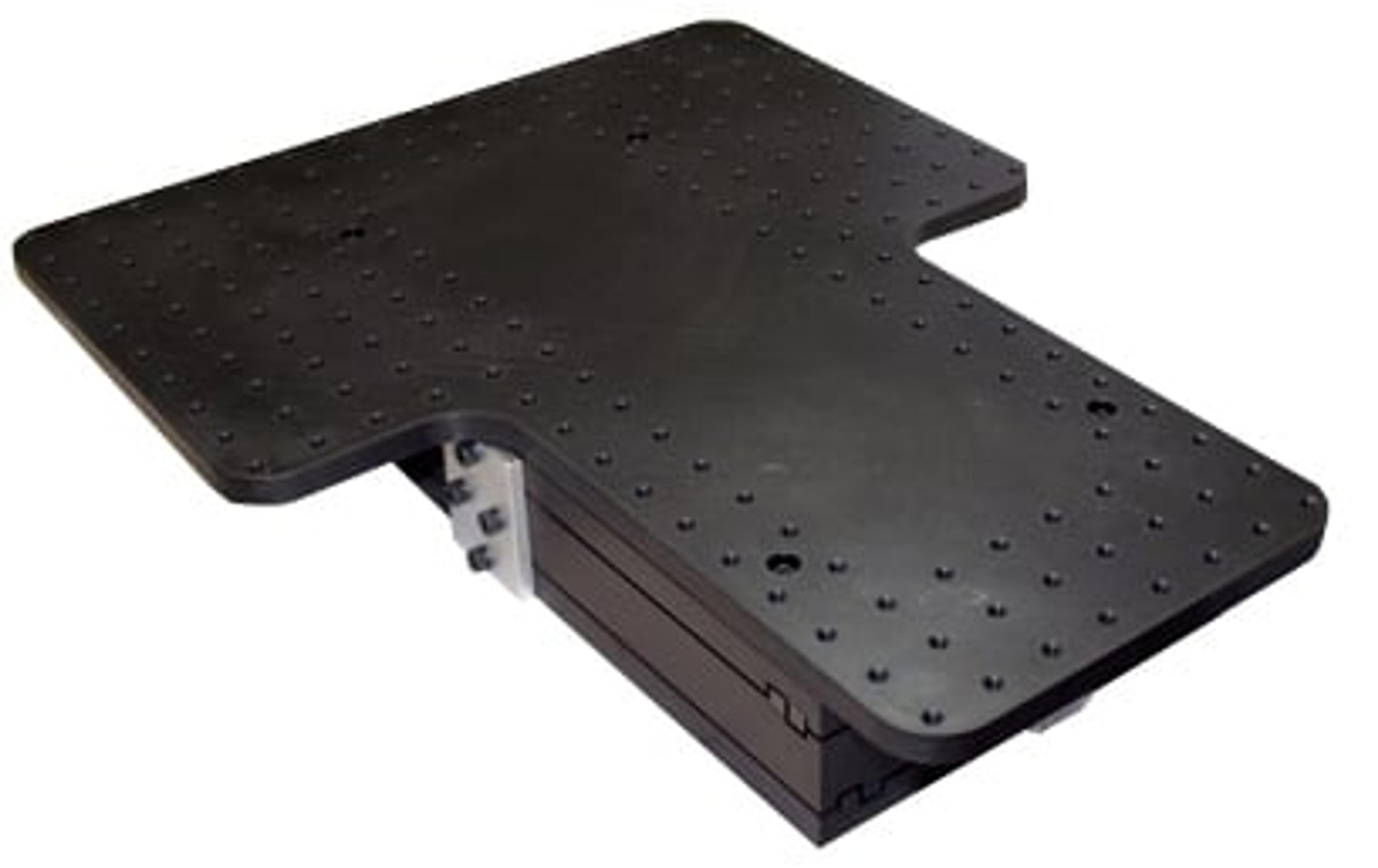
Prior Scientific announces V-Deck, an ultra-stable platform for neuroscience and electrophysiology that offers you the ability to quickly and precisely adjust sample height. The new V-Deck sets a new benchmark for operational stability. Versatility to optimally image from thin sections right through to whole animal samples is ensured through the available of a wide range of height adjustable, lockable platform posts.

The V-Deck offers a large sample area, with a M6 x 25 breadboard, that allows heating, cooling, perfusion and incubation chambers, micromanipulators, stereotaxic instruments and other equipment to be precisely mounted. Consequently, setting up microscopic imaging of an electrophysiology or neuroscience experiment to your exact specifications is quickly and routinely achievable.

Dovetail slides on the V-Deck enable the horizontal position of your sample to be simply and rapidly adjusted. The entire V-Deck platform is compatible with almost any commercially available vibration isolation table.

The V-Deck is designed to be used on conjunction with the recently released Prior Scientific Translation stage. The Translation stage allows an entire microscope to be quickly yet precisely moved, allowing your sample to remain immobile - essential for precision electrophysiology and neuroscience experiments where it is vital for the sample to stay completely still and as vibration free as possible.
Links

Tags

Light MicroscopyLight microscopes or optical microscopes are used to visualize microscale objects under magnification, including cells, clinical specimens and materials. Lab equipment for light microscopy includes confocal microscopes, fluorescence microscopes, zoom and stereo microscopes. Microscope slides and imaging reagents are available for visualizing samples, as well as various microscope stages and incubators for large or temperature-sensitive samples. Find the best light microscopes in our peer-reviewed product directory: compare products, check customer reviews and receive pricing direct from manufacturers.ElectrophysiologyElectrophysiology is the study of biological voltage changes, from a single ion channel through to a whole organ scale. Voltages can be measured using patch clamping, automated workstations, electrophysiology rigs or cell based assays. Specific cell lines, manipulators and microinjectors are also available for electrophysiology research.NeuroscienceNeuroscience research investigates the neurological mechanisms underlying behavior, neurodegenerative diseases, and other brain conditions. Learn about the innovative technologies for bioimaging, electrophysiology, cell culture, chromatography and other techniques used in this field.NeurobiologyNeurobiology studies the biology of the nervous system, including the structure and function of neurons, glial cells, and their interactions. It is a key field in understanding neurological disorders such as Alzheimer�s, Parkinson�s, and schizophrenia. Research in neurobiology is essential for developing therapies for these conditions. Browse our peer-reviewed product directory to find the best neurobiology research tools, compare products, check reviews, and get pricing directly from manufacturers.MicroscopyMicroscopy is a technique used to observe small objects in detail, from cells to materials, using light or electron microscopes. It enables researchers to examine structures with high resolution, aiding in fields such as biology, medicine, and materials science. With advanced microscopy techniques, scientists can gain insights into cellular processes, tissue structures, and material properties. Explore the best microscopy solutions in our peer-reviewed product directory, compare products, read customer reviews, and get pricing directly from manufacturers.