New Study Reports Bio-Rad’s TGX Stain-Free Gels Streamline GeLC-MS Workflow

29 Oct 2012

Product news

Bio-Rad Laboratories, Inc. has announced that proteomics researchers LeeAnn Higgins and Todd Markowski have demonstrated the utility of Bio-Rad’s TGX Stain-Free™ gels for higher-throughput GeLC-MS analysis. The results, which were presented at the 2012 American Society for Mass Spectrometry (ASMS) annual conference, showed that the stain-free approach has the potential to reduce the sample preparation time of this mass spectrometry workflow from two days to one.

“Our research showed that not only does the stain-free approach work, it can save valuable time without sacrificing the quality of mass spectrometric results,” said Higgins, one of the lead authors of the poster presented at the conference.

GeLC-MS is a modern proteomics workflow widely used for analyzing complex proteomes. The technique involves electrophoretically resolving protein mixtures on an SDS-PAGE gel, staining for visualization, cutting lanes into discrete fractions, processing for in-gel protein digestion, and analyzing the purified peptides by LC-MS/MS.

Previous reports have demonstrated that when compared with in-solution protein digestion and fractionation, GeLC-MS enables more total protein identification and enhances hydrophobic membrane protein identification. However, traditional gel staining methods are time-consuming and laborious, and these drawbacks have limited the adoption of GeLC-MS among proteomics researchers.

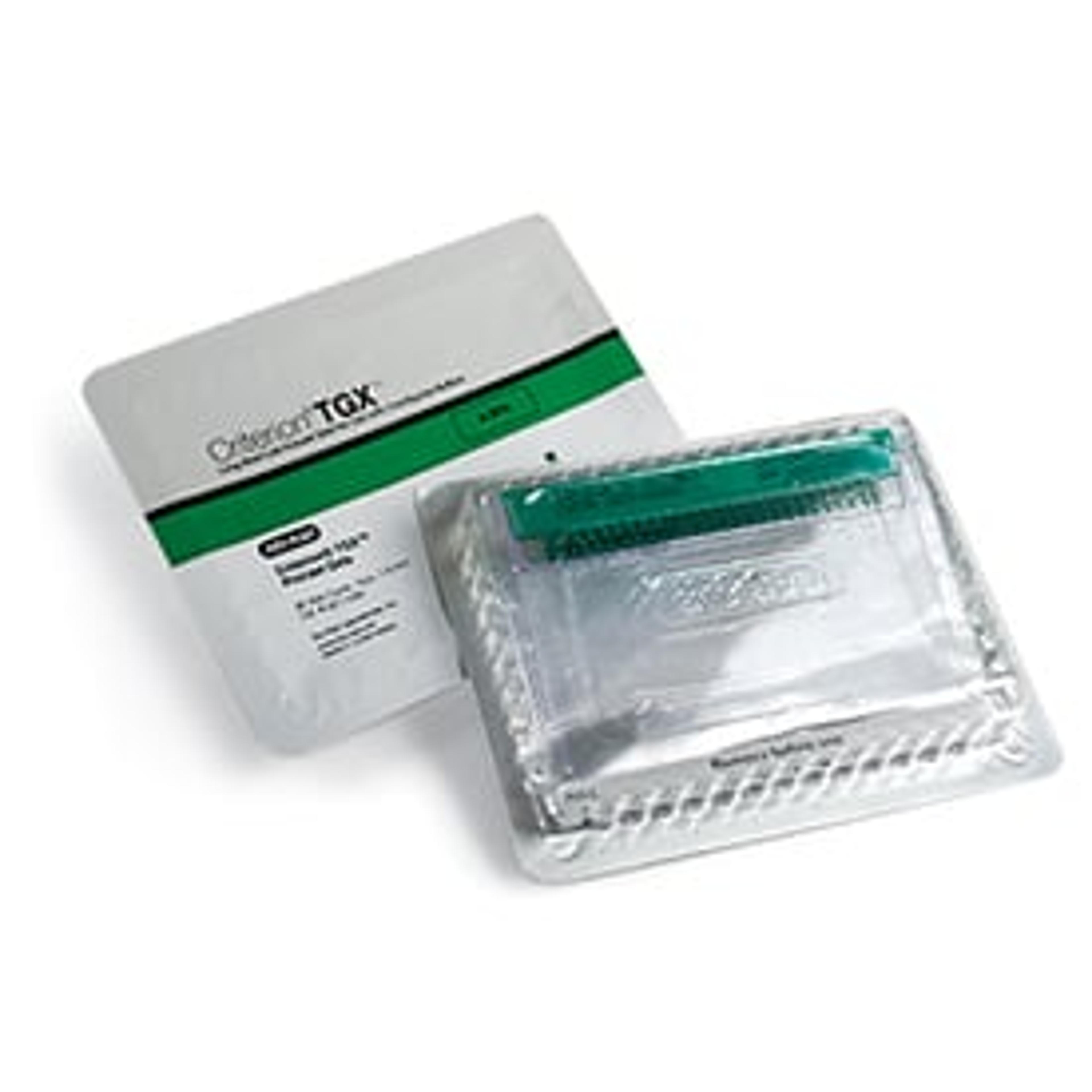
Bio-Rad’s TGX Stain-Free precast gels include a unique trihalo compound that enables rapid fluorescent detection of proteins in gels, eliminating the need for gel staining and destaining. For proteomic labs where high throughput is a priority, the stain-free approach conceivably allows researchers to cut protocol times in half. The instant feedback also helps to verify that the protocol is proceeding as intended.

Research Findings

First, the researchers reduced gel electrophoresis times from ~1 hour (using traditional Tris-HCL gels) to 30 minutes with the faster running TGX Stain-Free gels. Next, they eliminated their usual Coomassie Blue staining/destaining steps and used stain-free technology to visualize and cut the protein lanes into discrete fractions. The scientists visualized the proteins in as little as 30 seconds using Bio-Rad’s stain-free enabled imagers (Gel Doc™ EZ and ChemiDoc™ MP). Altogether, these changes saved at least three hours of processing time without causing any losses of protein, peptide, or spectral identifications by mass spectrometry.

“Our research demonstrated that Bio-Rad’s TGX Stain-Free gels improve the speed and ease of processing for the GeLC-MS workflow,” said Markowski, one of the lead authors of the poster. “This knowledge will hopefully enable the wider adoption of GeLC-MS for investigations of complex proteomes.”

Links

Tags

ElectrophoresisElectrophoresis equipment is used to separate mixtures of protein, DNA or RNA, based on their electric charge, size and other physical characteristics, by passing them through a medium such as a polyacrylamide gel, an agarose gel or a capillary tube. Electrophoresis equipment includes horizontal and vertical gel electrophoresis chambers, isoelectric focusing systems, 2D electrophoresis and capillary electrophoresis instruments. Precast gels with a gradient can be used or gels can be hand cast. Samples are run alongside ladders or markers to identify the approximate size of a molecule. Separated proteins and nucleic acids in the gel can be stained or probed with fluorescent markers and then imaged and detected using gel documentation instruments, transilluminators, densitometers and scanners. Find the best electrophoresis equipment in our peer-reviewed product directory: compare products, check customer reviews and receive pricing direct from manufacturers.LC-MSLC-MS (liquid chromatography-mass spectrometry) systems and equipment are used for separation and quantitative analysis of complex mixtures, combining liquid chromatography and mass spectrometry. Quantify proteins, contaminants, pesticides or screen for drug metabolites with a high level of sensitivity. LC-MS systems and equipment include reverse phase, normal phase and specialized columns integrated with various MS detectors such as time-of-flight (TOF), quadrupole, orbitrap or ion trap mass analyzers. LC-MS/MS instruments equipped with a qTOF or triple quadrupole analyzer give greater sensitivity and resolving power to your analysis. Find the best LC-MS equipment in our peer-reviewed product directory: compare products, check customer reviews and receive pricing direct from manufacturers.Mass SpectrometryMass spectrometry (MS) is a powerful analytical technique used to identify and quantify molecules based on the mass-to-charge ratio of gas-phase ions. It provides detailed information about the structure, composition, and properties of compounds and is widely used across fields such as environmental monitoring, materials science, drug discovery and development, food and beverage testing, and wider chemical research. Key MS techniques include tandem mass spectrometry (MS/MS), liquid chromatography–mass spectrometry (LS-MS) and inductively coupled plasma (ICP-MS). Choosing from these wide range of techniques and technologies can be a daunting task, so keep up to date with scientific applications, performance expectations, and customer reviews here all in one place. Visit our product directory to receive quotes direct from the manufacturer. ProteomicsProteomics is the systemic bioinformatics study of proteins and amino acids, including their structure, size, function and identification. Tools used in proteomics include chromatography, blotting and gels, protein arrays, mass spectrometry and ELISA and associated analysis software. Analyzers and proteomic systems should be sensitive, high resolution, fast and may be automated for high-throughput.Gel Doc / Image AnalysisGel documentation (gel doc) or gel imaging systems are used for the analysis of proteins, antibodies and nucleic acid immobilized in polyacrylamide or agarose gels, membranes or microarrays. Explore a range of a gel imaging systems, densitometers, scanners, transilluminators or UV lamp + CCD cameras for your image analysis solutions. Colorimetric, fluorescent and/or radioisotopic samples can be visualized and documented for further analysis. See gel doc / Image analysis software for quantitative 1D and 2D analysis of your samples. Find the best gel doc / image analysis products in our peer-reviewed product directory: compare products, check customer reviews and receive pricing direct from manufacturers.Labware and Lab SuppliesLabware and lab supplies include various forms of glassware, plasticware, reagents and personal protective equipment (PPE) and are used across all scientific laboratories, enabling daily tasks to be performed. Explore a range of flasks and beakers, petri dishes, carboys and storage bottles. Labware such as condensers, desiccators and burettes are also available for more specific tasks. Find the best labware and lab supplies in our peer-reviewed product directory: compare products, check customer reviews and receive pricing direct from manufacturers.Protein PurificationProtein purification is a vital step in drug discovery, therapeutics, biotech and life science research. The purification process typically involves subcellular or membrane protein extraction with cell lysis kits, separation of proteins from cell debris by filtration or spin columns, and the isolation of proteins of interest from other proteins and impurities with affinity purification (including fusion protein tags and antibody binding proteins A, G and L), immunoprecipitation or chromatographic methods, such as ion exchange, size exclusion and immobilized metal affinity chromatography. All purification methods come in multiple formats for your laboratory needs, including agarose or magnetic beads, resins, columns and filter plates. Find the best protein purification equipment in our peer-reviewed product directory: compare products, check customer reviews and receive pricing direct from manufacturers.ASMSThe American Society for Mass Spectrometry (ASMS) is an organization dedicated to advancing the science and application of mass spectrometry. ASMS supports professionals through events, publications, and research initiatives, promoting innovation in areas like proteomics, metabolomics, and environmental analysis. Gel StainingProtein BiologyThe analysis of protein expression, identity and function is vital for many areas of life science research and drug discovery. Some of the most commonly used techniques in protein analysis include Western blotting, electrophoresis and mass spectrometry.
New Study Reports Bio-Rad’s TGX Stain-Free Gels Streamline GeLC-MS Workflow