New spatial imaging system enables researchers to enter the field of spatial tissue proteomics

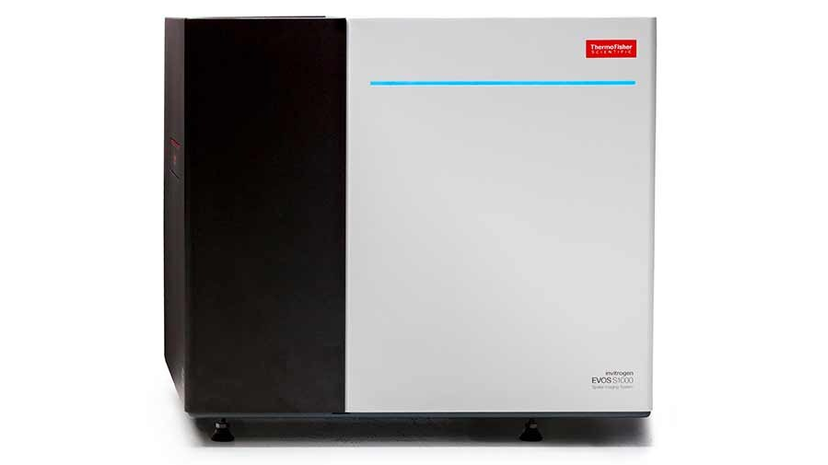
The Invitrogen™ EVOS™ S1000 Spatial Imaging System features intuitive software that empowers researchers to achieve more with their tissue samples while reducing sample processing time

17 Feb 2025
Product news

Invitrogen™ EVOS™ S1000 Spatial Imaging System

Invitrogen™ EVOS™ S1000 Spatial Imaging System

Thermo Fisher Scientific Inc., has announced that its Invitrogen™ EVOS™ S1000 Spatial Imaging System addresses the limitations of current fluorescent microscopy technologies by enabling researchers to generate a multiplexed high-quality image for multiple samples within several hours, thereby lowering the barrier to entry into spatial tissue proteomics.

The EVOS S1000, part of Thermo Fisher's line of cell imaging microscopes and systems, leverages advanced and patented spectral technology, allowing researchers to capture images of up to nine different targets simultaneously, which helps reduce the need for multiple rounds of imaging and preserves tissue integrity.

The system’s compatibility with a wide range of reagents and antibodies enables seamless integration into existing laboratory setups, helping meet the growing demand for multiplex imaging.

Available in the United States and Europe, the EVOS S1000 Spatial Imaging System provides researchers with the tools they need to help advance the understanding of complex biological systems and develop new treatments for various diseases.

"Understanding tissue structure and function is crucial for developing new treatments for solid tumors and neurodegenerative diseases," said Trisha Dowling, vice president and general manager for flow and imaging technologies at Thermo Fisher Scientific. “The EVOS S1000 delivers a detailed snapshot of tissue microenvironments and architecture in their native state, helping researchers accelerate their experiments, achieve more with their tissue samples and drive advancements in critical research areas."

For research use only. Not for use in diagnostic procedures.

Want the latest science news straight to your inbox? Become a SelectScience member for free today>>

Links

Tags

ProteomicsProteomics is the systemic bioinformatics study of proteins and amino acids, including their structure, size, function and identification. Tools used in proteomics include chromatography, blotting and gels, protein arrays, mass spectrometry and ELISA and associated analysis software. Analyzers and proteomic systems should be sensitive, high resolution, fast and may be automated for high-throughput.Spatial BiologyCell ImagingCell imaging can be achieved using a number of techniques including confocal microscopy, transmission electron microscopy, atomic force microscopy, and light sheet microscopy.TumorsTumor research focuses on understanding abnormal cell growth that leads to cancer. Identifying biomarkers, studying tumor microenvironments, and developing targeted therapies are critical for advancing cancer treatment. Early detection and personalized treatment options are key to improving outcomes for patients. Browse our peer-reviewed product directory to explore tools for tumor research, diagnostics, and cancer therapies; compare products, read customer reviews, and get pricing directly from manufacturers.Cancer CellsCancer cells are abnormal cells that divide uncontrollably, leading to the formation of tumors and the spread of cancer. Studying cancer cells is crucial for developing new treatments and understanding tumor biology. Explore cancer cell research products in our peer-reviewed product directory; compare products, check reviews, and get pricing directly from manufacturers.Cancer ResearchAlthough cancer is often referred to as a single condition, it actually consists of more than 100 different diseases. Microscopy, mass spectrometry, high throughput sequencing and flow cytometry are some of the most common techniques employed in cancer research labs.NeurodegenerationNeurodegeneration refers to the progressive deterioration of the structure and function of the nervous system, often seen in diseases like Alzheimer's and Parkinson's. Research focuses on early detection and potential therapies. Explore neurodegeneration research tools in our peer-reviewed product directory; compare products, check reviews, and get pricing directly from manufacturers.