New SelectScience Seals of Quality Get Science Industry Talking

Program is 'invaluable' for scientists needing to make informed purchasing decisions for their lab

24 Aug 2017

Bede MacGowan
Online editor

Editorial article

A new SelectScience® program aimed at helping scientists make important purchasing decisions for their laboratories is making waves across the global science industry. A month ago, we launched the Seals of Quality, which recognize the top 0.1% of products that have consistently received the best customer reviews, and revealed the first 28 products to receive a Seal.

Since then, the response has been remarkable:
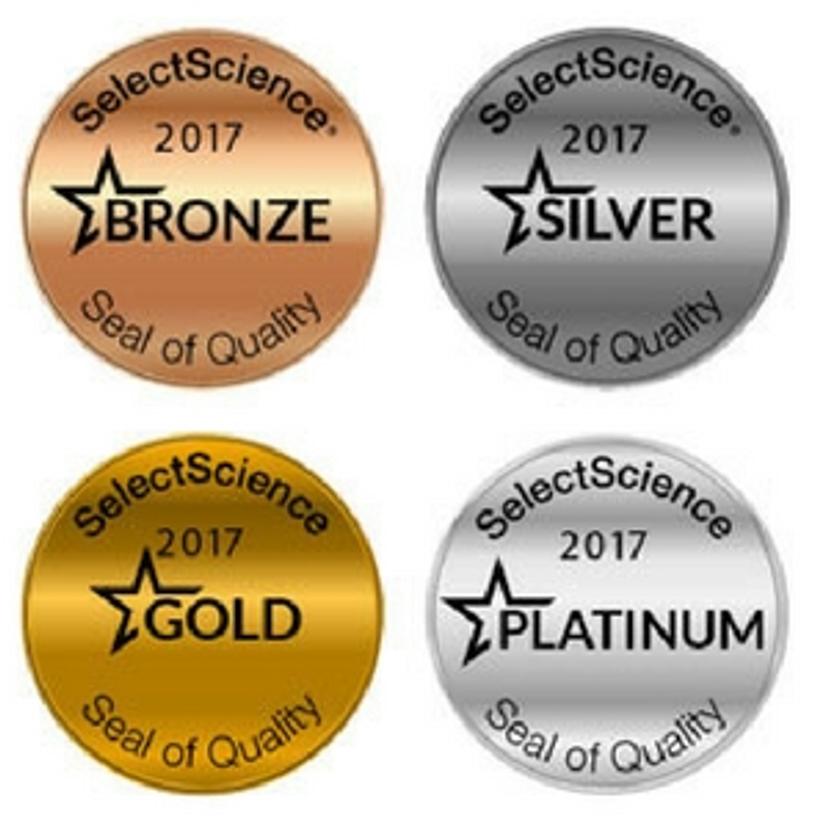
What is a Seal of Quality? The Seal of Quality program recognizes products that have consistently received the highest review ratings and aims to assist scientists in making purchasing decisions. Seals are allocated in line with strict criteria based on the quantity of reviews a product has received and their average rating. There are four levels: Platinum, Gold, Silver, Bronze.

Golden touch

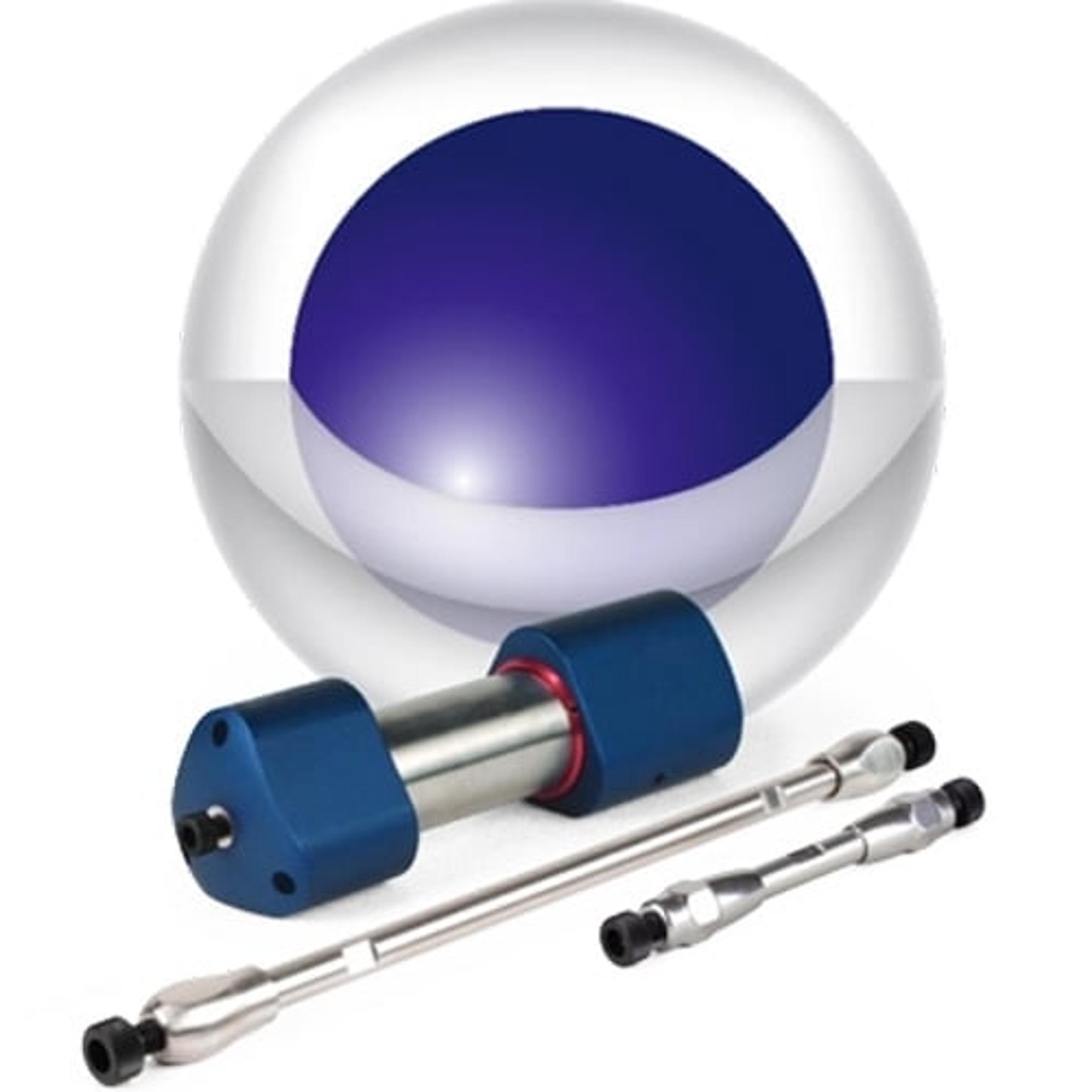
Phenomenex, a global leader in analytical chemistry, pulled out all the stops when it decorated its offices in California in gold after scooping a Seal of Quality for its Kinetex Core-Shell HPLC/UHPLC Columns. In an article celebrating the achievement, President of Phenomenex, Shane Lyons, said: “This Gold Seal of Quality reflects our focus on customer satisfaction and the fast pace at which we are able to bring innovative technologies to market.”

The team also produced an eye-caching animation for social media, which can be viewed here.

Peer validation

Sequencing services provider GATC Biotech was delighted to become the very first recipient of a SelectScience Platinum Seal of Quality, scooping not one, but two of the accolades: for its LIGHTRUN and SUPREMERUN.

GATC’s Head of Marketing & Communications, Detlef Janssen, said: “We are incredibly excited to receive this honor not just from SelectScience, but also from the reviewers who take the time to go on the website and leave their feedback. The Seal is especially important to us, as it serves as peer validation of the quality of our Sanger sequencing services.”
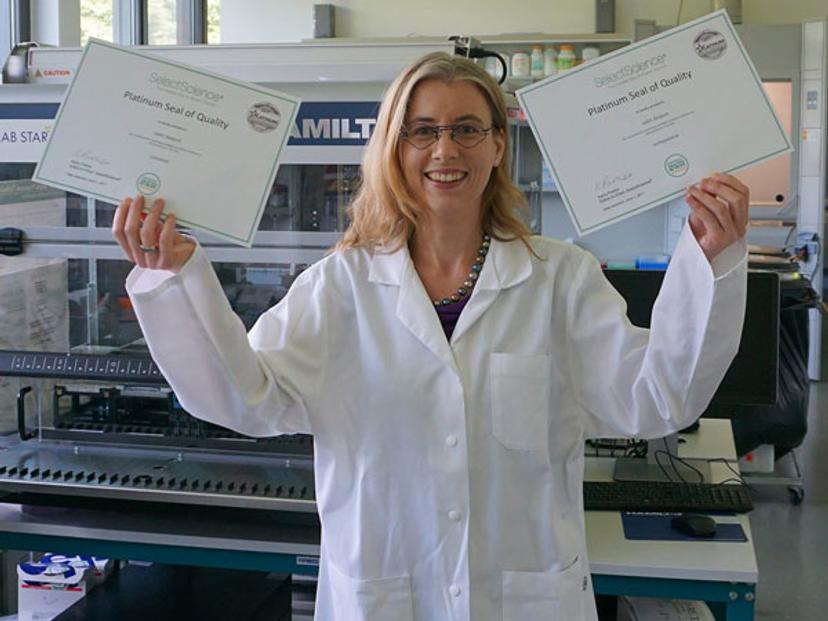
Dr Claudia Pantke, GATC Biotech, shows off the company's two Platinum Seal of Quality certificates. Image credit: GATC Biotech

Customer opinion

Others celebrating in style on social media included Bertin Instruments, Beckman Coulter and BioStatus, which, respectively, picked up Seals for the Precellys® Evolution, a high-throughput tissue homogenizer; the Biomek FXp Laboratory Workstation; and DRAQ5, a cell-permeant DNA probe.

Roy Edward, Sales and Marketing Director at Biostatus, said: “DRAQ5’s Gold Seal of Quality directly reflects customer opinion of this product’s contribution to cytometry and microscopy and of BioStatus’s uncompromising commitment to product quality, customer service and technical support.”

Invaluable for scientists

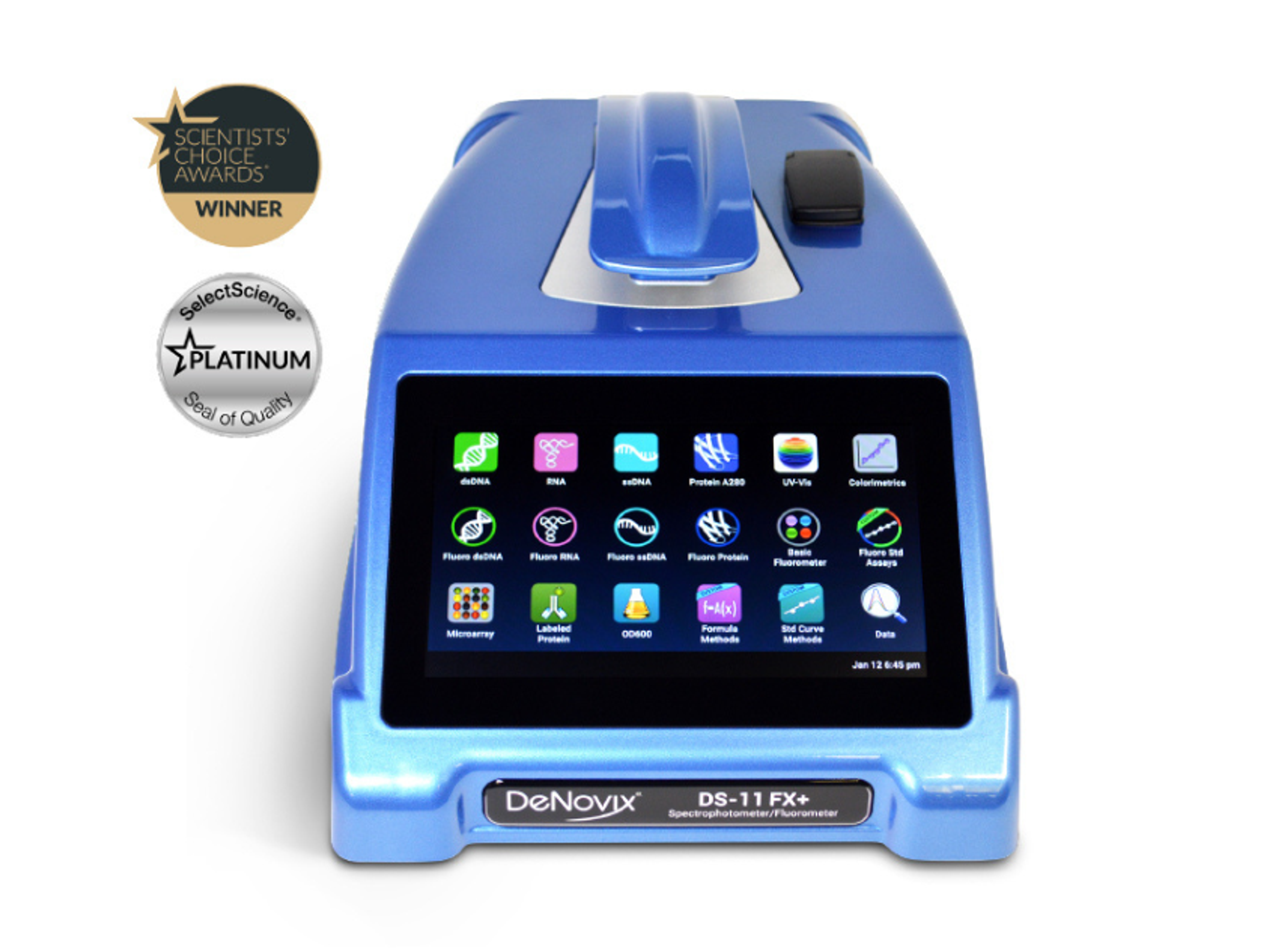
DeNovix Inc. was another to receive a Gold Seal of Quality, for its DS-11 FX+ Spectrophotometer / Fluorometer. DeNovix Business Director Kevin Kelley said: “It is a real honor to receive this award that reflects the experience of thousands of scientists around the world who use our products."

For scientists wishing to make informed buying decisions, the feedback of their global peers is "invaluable", added Mr Kelley.


This award reflects the experience of thousands of scientists around the world.


Kevin Kelley

DeNovix

Thank you for feedback

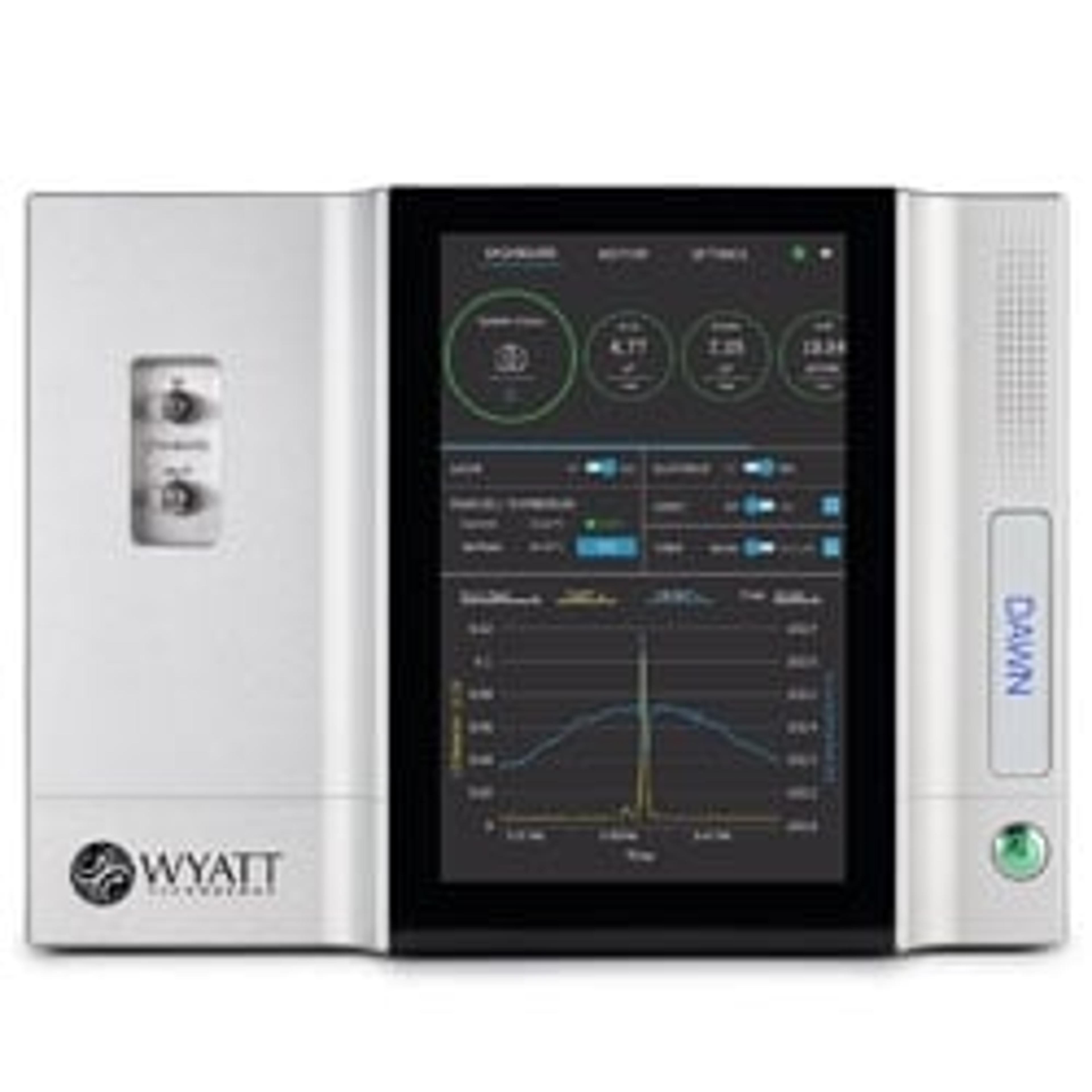
The team at Wyatt Technology Corp. was delighted to see the DAWN HELEOS II Multi-Angle Light Scattering Detector pick up a Silver Seal of Quality, just a few months after it received the SelectScience Reviewers’ Choice Instrument of the Year Award at Pittcon 2017.

In a blog celebrating the Seal, the team thanked their customers for taking the trouble to submit reviews after Wyatt took the plunge and joined the SelectScience product review program. They wrote: “We are very grateful to all of our customers who submitted reviews: to those who submitted positive reviews, and to those whose reviews were less than positive, giving us important feedback on what needs to be improved. We look forward to more feedback.”

Best decisions

The next tranche of Seal of Quality recipients will be announced in September.

“We have been absolutely delighted by the response to the new Seals of Quality from an industry which clearly sees the great value of customer feedback and trusted peer validation,” said SelectScience Editor-in-Chief, Kerry Parker. “We look forward to being able to reveal the new recipients as this program goes from strength to strength, helping to accelerate vital research by enabling scientists to make the best decisions for their lab quickly and with confidence.”
Write a product review today >

Manufacturers, learn more about how to achieve a Seal of Quality for your products >

Links

Tags

AutosamplersAutosamplers are automated sample loaders used with a number of separation and analytical techniques. HPLC autosamplers use automated partial or full-loop injection systems and place samples in vials or microplates for analysis. Autosamplers can also be used for elemental analysis. Features to consider include repeatability, syringe capacity, footprint and temperature controls.  Capillary ElectrophoresisCapillary electrophoresis (CE) is used to separate molecules based on charge, size and hydrophobicity. Pressure, voltage or a vacuum is used to introduce the sample to fused silica capillaries. Fluorescence, UV/Vis, UV or diode array detectors are used to visualize components. Types of CE systems include capillary electrochromatography (CEC), capillary zone electrophoresis and capillary gel electrophoresis. Find the best capillary electrophoresis equipment in our peer-reviewed product directory: compare products, check customer reviews and receive pricing direct from manufacturers.Atomic Absorption / Emission SpectroscopyAtomic absorption spectroscopy (AAS) and atomic emission spectroscopy (AES) — also called optical emission spectroscopy (OES) — are used to detect the elemental constituents in samples. Both techniques involve the atomization of a sample. Atomic absorption spectrometers may use a flame or furnace to create an atomic vapor of the sample before irradiation with spectral light. Optical emission spectrometers may use a flame, inductively coupled plasma (ICP), microwave plasma (MP) or spark arcs to atomize and excite the sample. At higher excitation energies, electrons can be emitted instead of photons, which can be useful for samples that can’t be atomized and for surface analysis. Explore electron spectroscopy equipment such as Auger spectrometers and photoelectron spectrometers for surface elemental analysis of samples. Find the best atomic absorption, photoelectron and optical emission spectrometers in our peer-reviewed product directory: compare products, check customer reviews and receive pricing direct from manufacturers.AntibodiesAntibodies are used in techniques such as confocal and fluorescence microscopy, flow cytometry, ELISA, ELISPOT, immunohistochemistry, western blotting and immunopreciptation. Select specific antigen reactivity, high specific affinity, low non-specific binding, monoclonal or polyclonal, primary or secondary antibodies and associated conjugates such as an enzyme or dye for visualization.Autoclaves and SterilizersAutoclaves and sterilizers are commonly used to sterilize laboratory equipment, instruments and growth media using constant pressure and temperature. When choosing an autoclave or sterilizer consider medical or laboratory application, size, loading and sterilization method. Sterilization methods include flame (Bunsen burners), heat (steam or dry), chemical and UV.Labware and Lab SuppliesLabware and lab supplies include various forms of glassware, plasticware, reagents and personal protective equipment (PPE) and are used across all scientific laboratories, enabling daily tasks to be performed. Explore a range of flasks and beakers, petri dishes, carboys and storage bottles. Labware such as condensers, desiccators and burettes are also available for more specific tasks. Find the best labware and lab supplies in our peer-reviewed product directory: compare products, check customer reviews and receive pricing direct from manufacturers.Chem / BioinformaticsCheminformatics and bioinformatics are computational techniques used in chemistry and biology, respectively, for data acquisition, processing and storage. Cheminformatics focuses on compound information, whereas bioinformatics is mainly applied to analysis and modeling of genomics, genetic and sequencing information. Hardware and software is available for data acquisition, analysis, management and storage.ADME-ToxicologyADME-toxicology (ADME-Tox) studies are used in pharmacology and pharmacokinetics to assess the activity/toxicity of drugs <i>in vivo</i> or <i>in vitro</i>. Find bioassays for absorption, distribution, metabolism, and excretion of drug molecules including cytotoxicity, transporter/permeability, metabolism and activity assays as well as hepatocytes and cell lines for ADME. Find the best ADME-toxicology products in our peer-reviewed product directory: compare products, check customer reviews and receive pricing direct from manufacturers.Assay AssemblyAssay Assembly is technique used in drug discovery to develop assays to test the cytotoxicity, genotoxicity, or other activities of a compound on a cell. Assay assembly requires chip assembly, a delivery system and a detection and analysis method. Beneficial features of assay kits or automated systems include high-throughput, high speed and sensitivity and low signal to noise ratio.Blood TransfusionBlood Transfusion involves giving donor blood to a recipient patient. Screening is essential to avoid transfusion reactions. Blood banks use immunohematological techniques to determine rh and ABO blood group, and screen for antibodies using specific antisera. Blood Banks use Direct Coombs Tests (DCT) and Indirect Coombs Tests (IAT) to detect hemolysis and Haemolytic Disease of the Newborn (HDN).Biopharmaceutical AdvancesBiopharmaceutical advances follow the development of pharmaceuticals derived from biotechnology, also known as biotechnology medicines. Biopharmaceuticals may be produced from cell lines, plants, or microbial cells. Important considerations of biopharmaceutical use include application, cost, production process and purification.Clinical TrialsClinical Trials, an essential part of drug discovery process, assess the safety and effectiveness of a new medication or device in the pharmaceutical industry. Clinical Trials are a phased process (Phase 0, Phase I, Phase II, Phase III and Phase IV) which begins after initial preclinical testing.Automation Supplies / AccessoriesAutomated accessories and consumables make lab processes fast, efficient and reliable. Useful automation accessories include microplate sealers, label printers and reagent reservoirs.GC-MS GC-MS (gas chromatography-mass spectrometry) instruments and equipment are used to separate, quantify and identify mixtures of small and volatile compounds, such as polycyclic aromatics, fatty acids and alcohols. Often used in drug detection, forensic investigation and environmental analysis for pesticides and contaminants, GC-MS is a powerful addition to your lab’s analytical capabilities. GC-MS/MS instruments equipped with a qTOF or triple quadrupole analyzers can give greater sensitivity and resolution to your analysis. Find the best GC-MS instruments and equipment in our peer-reviewed product directory: compare products, check customer reviews and receive pricing direct from manufacturers.BiochemistryBiochemistry (or clinical chemistry) involves the analysis of bodily fluids using chemical tests. Techniques used include HPLC, chromatography, spectroscopy, mass spectrometry, immunochemical, electrophoresis, turbidometric / spectrophotometric assay, MRI and ISE analysis. Tests are often carried out on plasma or serum but urine (urinalysis) and fecal specimens are also processed.