New SARS-CoV-2 gene variants may provide clues to coronavirus' epidemiology

Scientists say early data, generated with new NGS research panel from Thermo Fisher Scientific, suggest coronavirus is genetically stable, and could increase the effectiveness of vaccines in development

26 Mar 2020

Diane Li
Assistant Editor

Industry news

Two teams of infectious disease researchers in Italy say they have further analyzed the SARS-CoV-2 genome from samples acquired locally to generate early data that reveal a level of genetic variability suggesting the rapidly spreading virus’s genome is stable. The findings, developed using a new next-generation sequencing (NGS) research assay from Thermo Fisher Scientific, increase the likelihood that future coronavirus vaccines can have a higher rate of effectiveness and could help the global scientific community’s effort to better understand the epidemiology and spread of COVID-19.

The two independent research teams from “Lazzaro Spallanzani” National Institute for Infectious Diseases (IRCCS) in Rome and the Forensic Division of the Department of Biomedical Sciences and Public Health (DSBSP) at Ancona University Hospital sequenced multiple samples and identified the presence of gene variants when compared against the original Wuhan coronavirus reference genome. Viruses that mutate rapidly over short periods of time make it challenging to develop effective vaccines that protect people against infection. The low number of variants discovered in the Italian samples two months after the virus was first sequenced in China suggests that SARS-CoV-2, which has infected more than an estimated 64,000 people in Italy and 380,000 globally, is a relatively slow-mutating pathogen. Both teams in Italy carried out the sequencing work with Thermo Fisher’s new Ion AmpliSeq SARS-COV-2 Research Panel, which features a 24-hour, end-to-end workflow.

“The ability to very quickly run multiple samples and accurately decipher key changes in the virus’s genetic code will be crucial for the global scientific community to stay ahead of SARS-CoV-2 and to develop strategies against it that, ultimately, can be leveraged to help resolve the pandemic,” said Dr. Maria Rosaria Capobianchi, head of the Virology Department, Lazzaro Spallanzani National Institute for Infectious Diseases, which was the first research center in Europe to generate whole genome sequencing data of the coronavirus using Thermo Fisher’s Ion Torrent NGS platform. “Viral genomes are dynamic and these preliminary data need further analysis to determine the biological significance of the gene variants and to investigate the evolutionary path of the coronavirus.”

Professor Stefano Menzo, head of Virology at Ancona University Hospital, said: “Had we investigated other viruses we might have expected up to dozens of new mutations after so many infectious cycles in patients. Our initial data show that this is a very stable RNA virus, with only five novel variants. A virus with a stable genome is good news for vaccine development because it indicates that the effectiveness of vaccines could be more consistent, possibly over many years.”

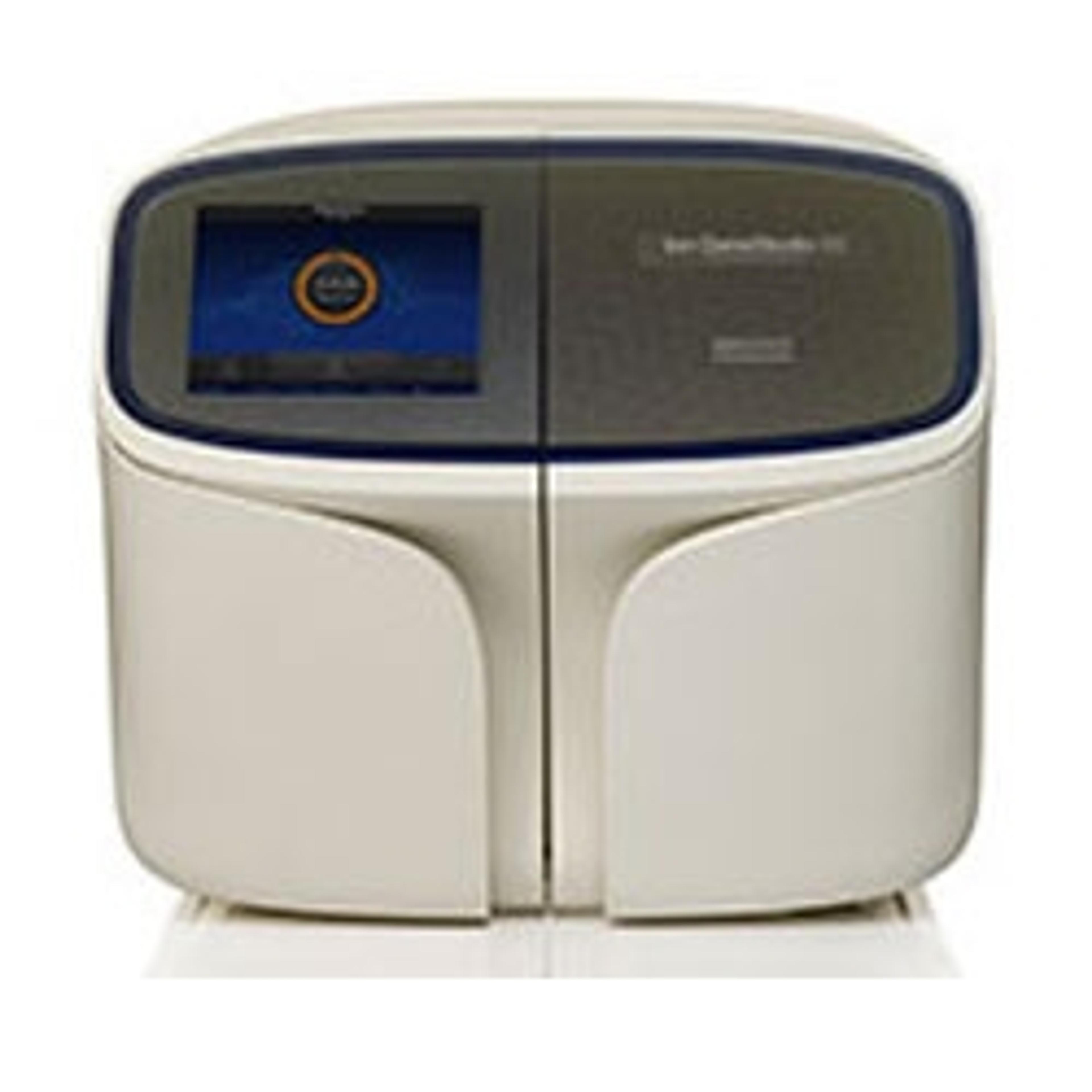
The scientists now plan to further analyze the data with Thermo Fisher’s new Ion SARS-CoV-2 analysis solution* for variant annotation and consensus sequencing assembly to better understand the impact on disease severity, mode of transmission, and phylogenetic studies. The Ion Ampliseq SARS-COV-2 Research Panel is a targeted NGS solution that analyzes the entire SARS-CoV-2 genome. It provides an efficient, high-throughput end-to-end workflow for monitoring genomic evolution, which is critical during a rapidly developing pandemic. The panel is optimized to run on the Ion GeneStudio S5 Systems.*

Panel Optimization for Genexus System Underway

To further expedite NGS analysis of SARS-CoV-2 and to help meet growing customer demand, Thermo Fisher has begun to optimize the Ion AmpliSeq SARS-COV-2 Research Panel for the Ion Torrent Genexus System.* Launched in November 2019, the company’s newest sequencing platform automates the entire targeted NGS workflow and can deliver specimen to report economically in as little as 14 hours. Optimization and validation of the research panel on the Genexus System is now underway in collaboration with Thermo Fisher customers.

“Thermo Fisher’s immediate response to first develop a PCR SARS-CoV-2 diagnostic** assay and now a next-generation sequencing research solution to help customers investigate coronavirus is at the core of our mission,” said Peter Silvester, senior vice president and president of Life Sciences Solutions at Thermo Fisher Scientific. “We share the global community’s heightened concern during this unprecedented public health crisis and, for this reason, we are continuing to maximize our efforts to provide our laboratory partners, infectious disease researchers and vaccine developers with the most advanced tools in support of their very important work.”

* For Research Use Only. Not for use in diagnostic procedures.

** Designation as an IVD or as an IVD for emergency use / special access varies from region to region.

Do you use Thermo Fisher Scientific products in your lab? Write a review today for your chance to win a $400 Amazon gift card>>

Ion GeneStudio S5 Series

Thermo Fisher Scientific

Achieve speed and throughput flexibility across a broad range of next-generation sequencing (NGS) applications with the Ion GeneStudio™ S5 series of benchtop NGS systems from Thermo Fisher Scientific.

(4)

Links

Tags

Sample PreparationSample preparation can improve the quality and speed of separation techniques. Products to assist sample preparation include filtration equipment, evaporators, membranes and sieves.AntibodiesAntibodies are used in techniques such as confocal and fluorescence microscopy, flow cytometry, ELISA, ELISPOT, immunohistochemistry, western blotting and immunopreciptation. Select specific antigen reactivity, high specific affinity, low non-specific binding, monoclonal or polyclonal, primary or secondary antibodies and associated conjugates such as an enzyme or dye for visualization.Cell / Tissue CultureCell culture or tissue culture is used to study the biology of cells or tissues and to isolate cellular products in an environment which can be manipulated and well defined. Accurately control your culture environment with bioreactors or culture incubators, bind your cells to a surface or together with an extracellular matrix. Distinguish cell types with differential media or proliferate cells with certain characteristics using selective media. Enrich your media with supplements such as growth factors, sera and vitamins. Find the best cell and tissue culture products, kits and equipment in our peer-reviewed product directory: compare products, check customer reviews and receive pricing direct from manufacturers.Combinatorial ChemistryCombinatorial chemistry, also known as combichem, is a technique used in drug discovery to create libraries of structurally related compounds. A library is generated by synthesis with a chemical reactor system or by computer-based modeling of compound combinations. When undertaking combinatorial chemistry consider reagents, buffers, resins and standards.Lab-on-a-ChipLab-on-a-chip (LOC) technology uses microfluidic chips, such as microarrays, to perform biochemical assays on a small scale. Benefits of lab-on-a-chip include the small volume of sample required as well as the speed of analysis. In selecting lab-on-a-chip devices consider the assay, cost, reliability, sensitivity and signal to noise ratio.PCR and Thermal CyclingPolymerase chain reaction (PCR) kits and thermal cyclers are used for the in vitro amplification of DNA permitting subsequent analysis and experimental procedures. Explore a range of high-quality polymerase, primers and nucleotides or simplify your workflow with a PCR mastermix. Find reverse transcription PCR (RT-PCR) and cDNA synthesis kits for RNA products and libraries. Quantitatively measure the amplification of DNA with real-time PCR (qPCR) and droplet digital PCR (ddPCR) kits and systems, and discover automated PCR setup solutions to increase throughput. Alternative DNA amplification methods also include recombinase polymerase amplification (RPA) kits. Find the best PCR kits and thermal cyclers and purification equipment in our peer-reviewed product directory: compare products, check customer reviews and receive pricing direct from manufacturers.Cell Lines Stem Cells and Primary CellsPrimary cell cultures, established cell lines and stem cells are vital for <i>in vitro</i> and <i>ex vivo</i> experimentation. High-quality cells, optimized for your applications, alongside optimized cell substrates, growth medium and supplements, are critical for experimental success. Explore a range of cells suitable for your applications, including isogenic cell lines, competent cells, induced pluripotent stem cell (iPSC)-derived cell lines, fungal/bacterial/mammalian cell lines, stem cells and cancer cell lines. Find the best cells for your research in our peer-reviewed product directory: compare products, check customer reviews and receive pricing direct from manufacturers.Data AnalysisData analysis hardware and software is available to make data processing straight-forward yet powerful. Data software can be used for math and stats, technical graphing and image analysis. In addition, software is available for specific data analysis of electrophoresis, densitometry, ELISA and DNA sequencing.Sample ManagementSample management systems include sample storage devices such as freezers and plate storers, sample environment enclosures and sample organization, retrieval and sorter systems. Useful system features include high-throughput, automation, robotic arms, automated liquid handling and associated database systems. Accessories in sample management include barcode scanners, heat sealers and tubes.Compound LibrariesCompound libraries, or chemical libraries, are used in drug discovery for the identification of potential therapeutics compounds. Used in conjunction with high-throughput screening, the libraries of stored compounds are often generated for specific purposes as a drug target or disease model. Cheminformatics are commonly used when designing a compound library and software can be used to analyze the screening process.  Process ChemistryProcess chemistry is an important stage of drug development for scaling-up drug production or chemical synthesis reactions. It is useful for optimizing economical and efficient drug production. Process chemistry uses reactors and pump systems as well as reagents, standards and buffers.Blood TransfusionBlood Transfusion involves giving donor blood to a recipient patient. Screening is essential to avoid transfusion reactions. Blood banks use immunohematological techniques to determine rh and ABO blood group, and screen for antibodies using specific antisera. Blood Banks use Direct Coombs Tests (DCT) and Indirect Coombs Tests (IAT) to detect hemolysis and Haemolytic Disease of the Newborn (HDN).HematologyIn Haematology / Hematology, complete blood cell counts (or full blood counts) are obtained using automated blood count analyzers to enumerate blood cell types.  Hematology also encompasses haemostasis and coagulation, thrombophilia and hemophilia, plasma viscosity and ESR analysis, hemoglobinopathies, cell morphology and haematinic measurement.ImmunologyImmunological techniques measure and characterize immune responses. Immunology kits and analysis systems often use techniques such as ELISA, radioimmunoassay (RIA) and immunodiffusion assays, Immunohistochemistry, and flow cytometry. Immunologists use equipment such as flow Cytometers, plate readers, plate washers and fluorescent microscopes.Cellular PathologyCellular Pathology deals with the microscopic analysis of tissue samples and cells. Sample preparation and processing includes fixation, staining, sectioning and slide mounting, using equipment such microtomes and cryostats. In choosing immunohistochemistry and immunocytochemistry kits, consider chromogens, staining method, antibodies, microscopes and imaging.
New SARS-CoV-2 gene variants may provide clues to coronavirus' epidemiology