
New Portable Infrared Spectrometer Enables Scientists to Analyze Samples in the Field
Thermo Scientific Delta Ray IRIS and Delta Ray Connect IRIS among highlights at EGU 2016
18 Apr 2016Product news
Scientists can now benefit from a portable infrared spectrometer, designed to provide continuous measurement of isotope ratios and CO2 concentrations in air and in containers.
Live demonstrations of the Thermo Scientific Delta Ray Isotope Ratio Infrared Spectrometer (IRIS) with URI Connect will be conducted at The European Geosciences Union General Assembly (EGU), at Austria Center Vienna, April 17-22 2016, Booth G17-18.
Subject matter experts will demonstrate the use and application of the Delta Ray IRIS series based on a number of posters presented by both customers and Thermo Fisher Scientific at the conference, including:
- On-site isotopic analysis of dissolved inorganic carbon using an isotope ratio infrared spectrometer
- Preferential flow pathways revealed by field based stable isotope analysis of CO2 by mid-infrared laser spectroscopy
- Delta Ray Road Trip: Measuring 13C, 18O and concentration of CO2 across Canada
- The isotopic signature of ecosystem respiration and Eddy Covariance measurements of stable CO2 isotopologues in a temperate beech forest
“The demand for extending measurements of isotope ratios into the field is growing. Our transportable system addresses this need and includes full referencing schemes and workflows,” said HJ Jost, product manager, Delta Ray IRIS, Thermo Fisher Scientific, “The instrument was designed with field portability and operational simplicity in mind, so that scientists can place it right at the point of the research interest. The URI Connect interface balances the concentration of reference gases against that of the sample, targeting accuracy with minimum effort from the user.”
The Delta IRIS with URI Connect is a new solution that extends the continuous measurement of isotope ratios and concentrations of CO2 in air to discrete samples, such as head space analysis or direct injection of small amounts of CO2. By simultaneously detecting 13C and 18O, the system allows scientists to measure both isotopolgues and concentration in one step, without destroying the sample. The URI Connect system lets the user interface with samples containing as little as 80 µg of CO2, such as in vials, syringes or bags, which can then be analyzed with the Delta Ray IRIS analyzer.
Related products
Request Quote for All Products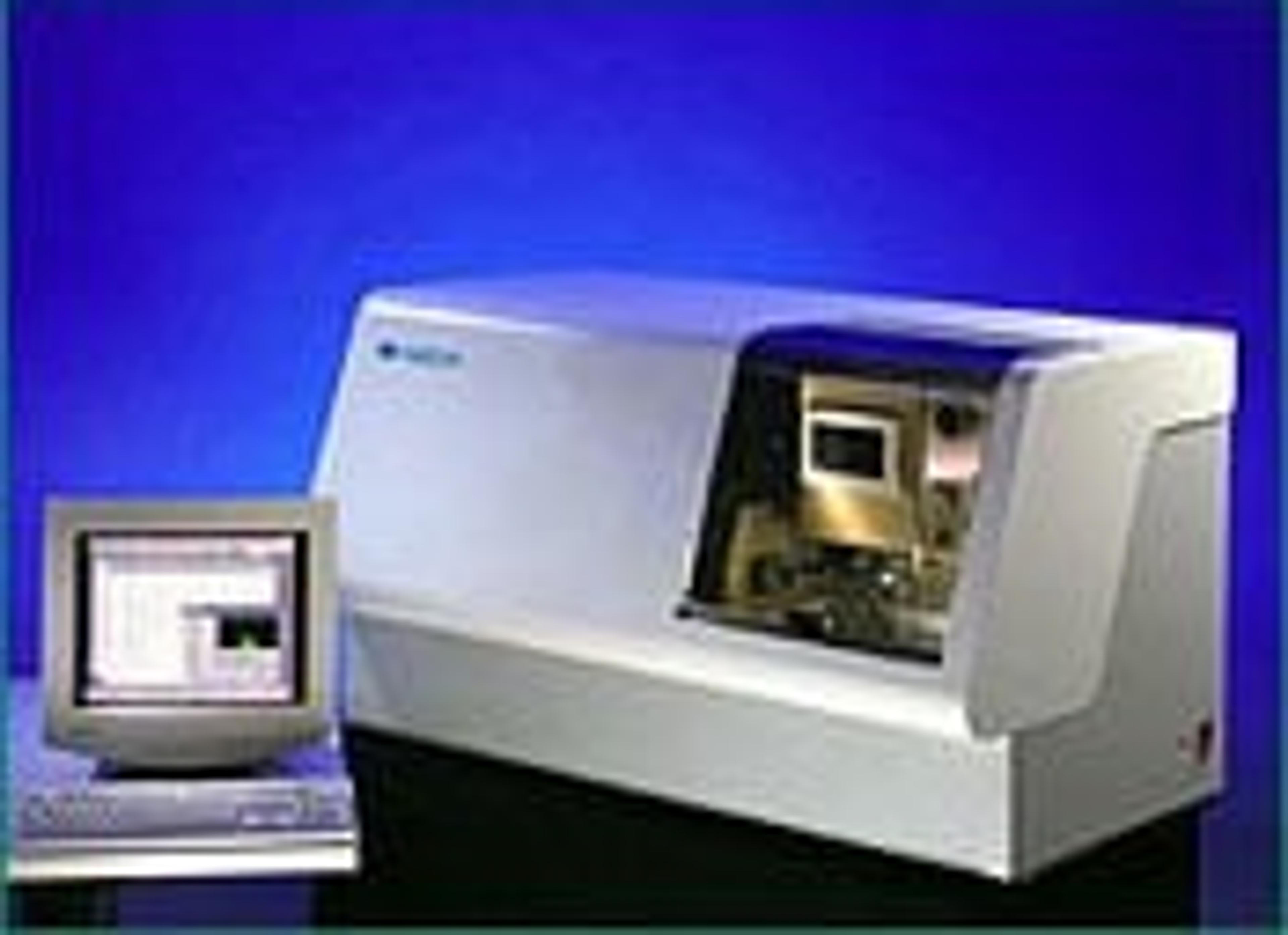
Iris DCP
Thermo Fisher ScientificThe IRIS DCP is an economical simultaneous plasma emission spectrometer that combines Thermo Elemental's innovative DCP source, patented CID solid-state array detector and a high-resolution Echelle spectrometer in a self-contained benchtop package.
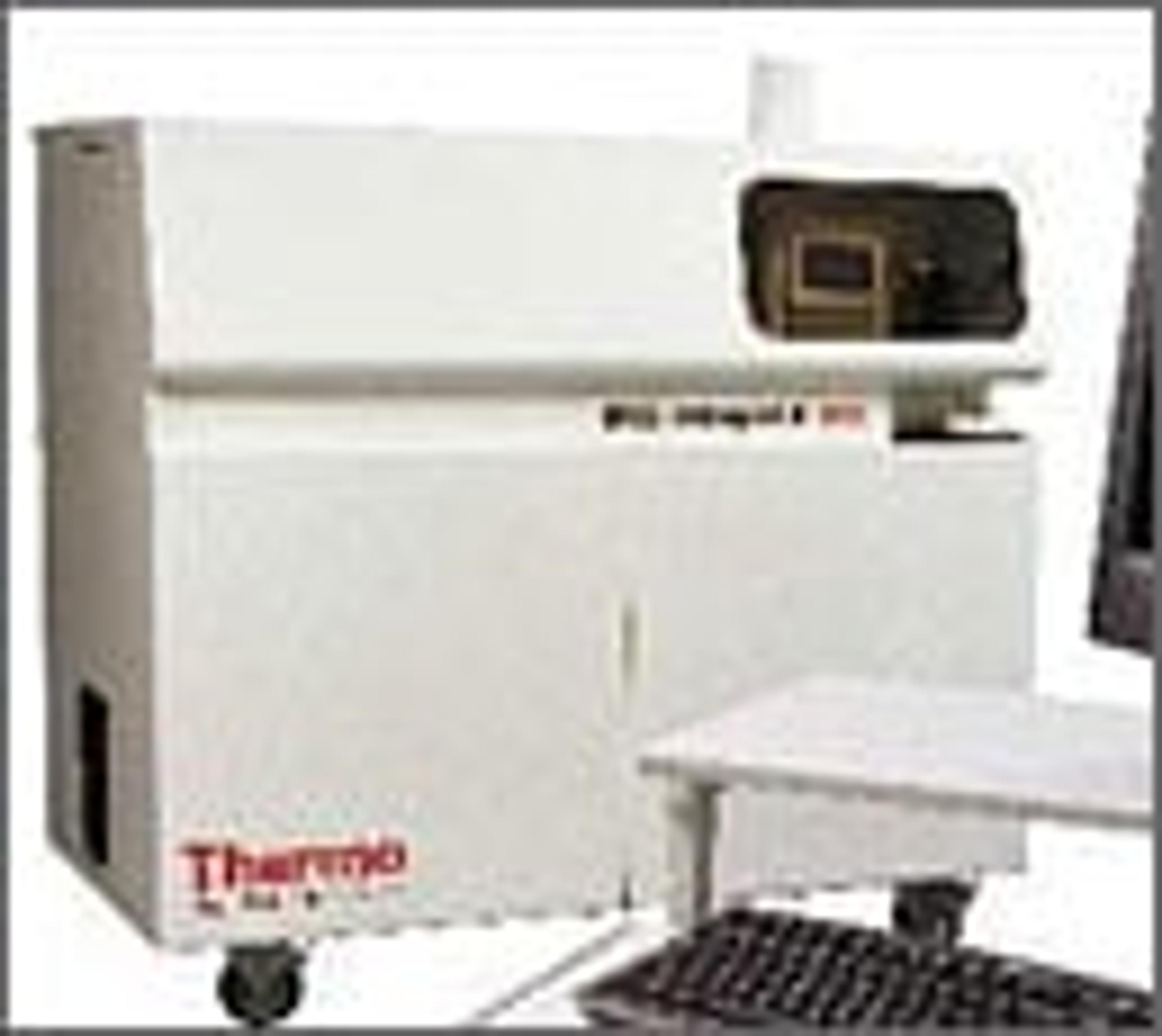
IRIS Intrepid II
Thermo Fisher ScientificBased on the improved eXtreme Stability Platform, the IRIS Intrepid II models provide powerful, easy-to-use elemental analysis.• Low noise CID detector and redesigned echelle spectrometer• Better resolution and detection limits• Radial or DUO view plasma options handle any sample• Full frame image capture for records or subsequent re-analysis• Intuitive TEVATM software with tools for data compliance Product detail: The new-generation Intrepid II spectrometers extend and enhance the application-proven performance of the popular Thermo Elemental IRIS series. They combine the speed, accuracy and throughput of a simultaneous ICP with the flexibility of a sequential system, providing a powerful, easy-to-use elemental analysis solution that delivers high productivity and optimum analytical results -- no compromises required. The Intrepid series offers options for extended wavelength coverage, and to best match the needs of your particular analysis. Systems can be configured for radial, axial or duo (radial and axial) plasma viewing. So, whatever your application -- environmental, metallurgical, petrochemical, geochemical/mining, food, agricultural, plating solutions, semiconductor, bio-pharmaceutical or wear metals in oil -- you can be sure your Thermo Elemental Intrepid system is not only up to the job, it's optimized for it. Options: IRIS Intrepid II XSP Radial or DUO plasma view configurations 1500 watt RF generator operated at 27.12 MHz Full view, two-handed access sample introduction area The XSP, eXtreme Stability Platform, Radial or Duo plasma view simultaneous ICP-OES serves as the foundation of the entire IRIS Intrepid II product line. Next generation CID technology, coupled with improved component designs, provides full range simultaneous analysis but with equal freedom of wavelength choice to a sequential. Easy to navigate TEVA software offers the ultimate in data audit trail protection with full 21 CFR Part 11 compliance tools that can even be switched off for methods not requiring regulation. IRIS Intrepid II XDL High sensitivity, low noise Radial or DUO plasma view 2000 watt RF generator operated at 27.12 MHz Mass flow controlled nebulizer and dual purge gas control The XDL, eXtreme Detection Limit, version features additional stability and signal-to-noise enhancements above and beyond the XSP. The excellent signal-to-noise characteristics of these models maximises sample throughput as minimal integration times are necessary,even for low concentrations. The detection limits for the radial view are the lowest of any simultaneous ICP-OES today and equal to some axial systems. The Duo model couples maximum working range with freedom from EIE interference via radial view and the lowest detection limits ever for axial view with the high sensitivity sample introduction system. IRIS Intrepid II XUV Extended UV Radial view designed for halogen analysis 2000 watt RF generator operated at 27.12 MHz Mass flow controlled nebulizer The XUV, eXtreme UltraViolet, model of the IRIS Intrepid II is designed specifically for sensitive analysis of halogen elements in tough sample analyses such as oils. The XUV includes all of the sensitivity and stability advances of the XSP and XDL, plus high UV transmittance optics and the most extensive wavelength range of 130 - 1050nm. ADVANTAGES Productivity Simultaneous ICP analytical speed Sequential ICP flexibility Reliability High-performance Echelle Spectrometer NEW Proven crystal-controlled RF source with power selection in 250 increments Direct-drive peristaltic pump Simplicity NEW Simple, elegant design with large easy-access plasma-viewing window NEW Powerful, easy-to-use TEVA software Accuracy Multiple wavelengths for simultaneous determination of each element Enhanced resolution for complex matrices Industry-leading radial performance for organic and heavy matrix samples Sensitivity Excellent detection limits in radial, axial, and duo configurations Versatility Full wavelength coverage with all spectral information available at a single glance NEW Expanded range of accessories extend your analysis capabilities