New Methods to Improve Your Nucleic Acid and Protein Quantification

The latest technologies and methods for the molecular biology lab

21 Oct 2015

Sarah Thomas
Associate Editor

Editorial article

New technologies to improve your DNA, RNA and protein quantification

Quantification of nucleic acid and protein is very important to ensure the integrity of downstream applications. Here we present some of the latest technologies and methods added to SelectScience to help you ensure accurate quantification from the start of your experiment. Plus, discover the answers to some of the most asked photometry questions.

Discover the new Thermo Scientific™ NanoDrop™ microvolume UV-Vis spectrophotometer. The instrument incorporates new capabilities that make it even faster and easier to evaluate DNA, RNA and protein samples. Read more>>

Eppendorf´s R&D team answers the most frequently asked questions about photometry - a basic application in molecular biology labs - in a series of videos. Watch episode one>>

This application note evaluates how the accuracy of protein quantitation can be affected by fractionation at the protein level. Reproducible quantitation of cellular proteins is an important step in the analysis of cellular physiology. Protein-level fractionation in conjunction with tandem mass tag methods were used, using human gastric carcinoma cell line (MKN-45) as the example. Download method>>

Watch this SelectScience interview to learn how researchers at the Biocontrol and Natural Products (BANP) Group at Swansea University use BioTek Synergy H1 to efficiently perform a range of analyses, including protein quantification. Watch video>>

This note from Trinean describes a new cDrop™ application suited for the quantification (ng/μl) of DNA extracted from blood samples using the Promega ReliaPrep™ DNA isolation kit. Download method>>

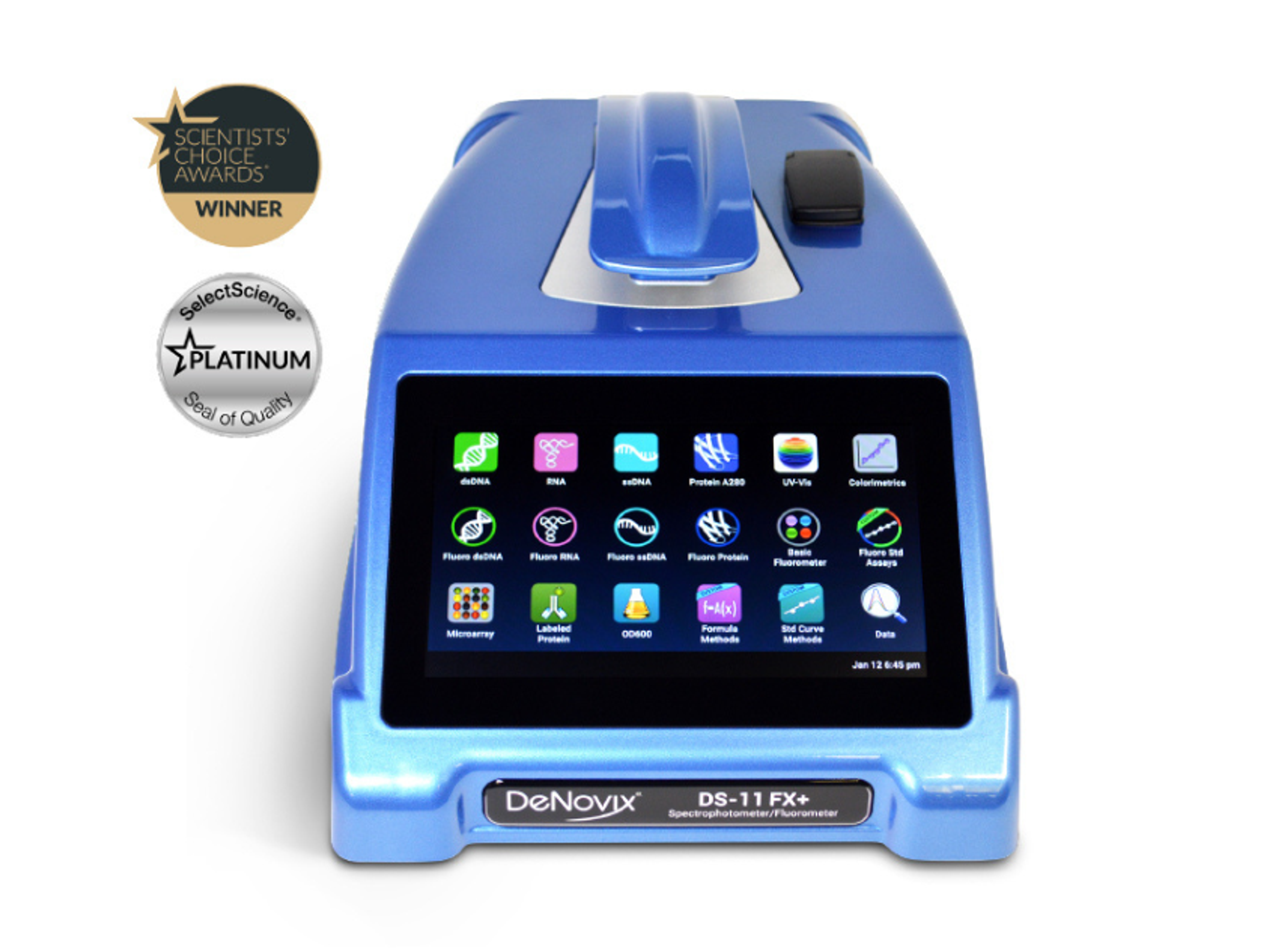
The DeNovix DS-11 FX series spectrophotometer / fluorometer combines fluorescence and microvolume absorbance methods in a single, compact instrument. Rapidly quantify nucleic acid and protein samples over seven orders of magnitude, selecting from your choice of fluorescence assays, 1 µL absorbance or cuvettes. Read more>>

Bio-Rad Laboratories, Inc. recently announced the launch of ddPCR™ Supermix for Residual DNA Quantification. Designed for use with Bio-Rad’s Droplet Digital™ PCR Systems, this supermix provides a highly precise and sensitive method for directly measuring host cell DNA (HCD) that contaminates biopharmaceutical products. Read more>>

  • Download Exclusive Buying Guides

Download the free SelectScience UV/Vis Buying Guide and DNA and RNA Purification and Isolation Buying Guide to learn about important considerations when purchasing new products for molecular biology research.

Image copyright: Shutterstock hywards

DS-11 Series Spectrophotometer / Fluorometer

DeNovix

DeNovix takes spectrophotometry to a whole new level of performance with the DS-11 Series. This easy-to-use, compact spectrophotometer delivers full spectrum UV-Vis analysis and fluorescence capability, making it ideal for rapid nucleic acid and protein quality control.

(498)

SageELF Sample Fractionator for DNA and Protein

Sage Science

The SageELF is an automated, whole-sample fractionation system for NGS sample prep. SageELF, a whole-sample fractionation tool, is now shipping from Sage Science, developer of the Pippin automated DNA size selection system. The SageELF (short for Electrophoretic Lateral Fractionator) generates 12 contiguous fractions from a whole DNA sample, allowing scientists to generate libraries with multiple insert sizes from the same sample, which has applications in genome sequencing, structural variant detection, and identification of rare splice variants. This sample prep instrument will also be especially useful for preserving precious samples. Users simply load their sample, start the run, and pipette out the fractions later. Unlike in-gel digestion, in which some DNA fragments never leave the gel, the whole DNA sample is electrophoresed into the elution modules.Sage Science targets labor-intensive steps in the sample prep process where automation can offer improved precision and reproducibility. Precise size selection is critical for optimizing sequencing efficiency, improving genome assemblies, and reducing NGS project costs.Features: Make libraries with multiple insert sizes from the same sample Ideal for rare or precious samples Automated for precise, reproducible results Applications: Genome sequencing Structural variant detection Rare splice variant detection

(0)

Links

Tags

UV-Visible SpectroscopyUltraviolet-visible (UV-Vis) spectrophotometers are used to measure the interaction of UV and visible light with a sample, including transmission, reflectance & absorbance. The two major instrument classes are single-beam or double-beam spectrophotometers. More specialized equipment includes colorimeters, spectroradiometers and refractometers. Portable and microvolume spectrophotometers are also available. For the modular spectroscopy lab, explore a range of light sources for combination with a spectrograph/spectrometer and optics. Find the best UV-Vis spectroscopy products in our peer-reviewed product directory: compare products, check customer reviews and receive pricing direct from manufacturers.Genome AnalysisGenomics, the study of genomes, includes functional genomics, evolutionary genomics and comparative genomics. There are many genomic technologies such as DNA sequencing of whole genomes, computational biology and bioinformatics. DNA and nucleic acids must be isolated and concentrated from cells for analysis with kits, automated analyzers and software. Other useful technologies for studying genomics include PCR, microarrays and electrophoresis.PCR and Thermal CyclingPolymerase chain reaction (PCR) kits and thermal cyclers are used for the in vitro amplification of DNA permitting subsequent analysis and experimental procedures. Explore a range of high-quality polymerase, primers and nucleotides or simplify your workflow with a PCR mastermix. Find reverse transcription PCR (RT-PCR) and cDNA synthesis kits for RNA products and libraries. Quantitatively measure the amplification of DNA with real-time PCR (qPCR) and droplet digital PCR (ddPCR) kits and systems, and discover automated PCR setup solutions to increase throughput. Alternative DNA amplification methods also include recombinase polymerase amplification (RPA) kits. Find the best PCR kits and thermal cyclers and purification equipment in our peer-reviewed product directory: compare products, check customer reviews and receive pricing direct from manufacturers.DNA / RNA Extraction and PurificationPurified DNA and RNA are required for numerous downstream molecular biology applications. Consequently, the importance of high-quality DNA/RNA extraction and purification equipment cannot be underestimated. Many purification kits are available and are typically optimized for nucleic acid type and source, including plasmid DNA, genomic DNA, mRNA, RNA and viral nucleic acid purification kits. Automated extraction and purification of nucleic acids can be implemented with magnetic bead separator instruments or high-throughput purification workstations. Find the best DNA/RNA extraction and purification equipment in our peer-reviewed product directory: compare products, check customer reviews and receive pricing direct from manufacturers.DNA SequencingDNA sequencing, such as sanger sequencing, is a biological technique that determines the precise order of nucleotide bases in a fragment or template of DNA. DNA sequencers and genetic analyzers are based on capillary electrophoresis, where labeled DNA fragments are electrophoretically separated by size as they migrate through a polymer. Find the best DNA sequencing products, including DNA sequencing kits, genomic libraries and genetic identity kits in our peer-reviewed product directory: compare products, check customer reviews and receive pricing direct from manufacturers.Protein PurificationProtein purification is a vital step in drug discovery, therapeutics, biotech and life science research. The purification process typically involves subcellular or membrane protein extraction with cell lysis kits, separation of proteins from cell debris by filtration or spin columns, and the isolation of proteins of interest from other proteins and impurities with affinity purification (including fusion protein tags and antibody binding proteins A, G and L), immunoprecipitation or chromatographic methods, such as ion exchange, size exclusion and immobilized metal affinity chromatography. All purification methods come in multiple formats for your laboratory needs, including agarose or magnetic beads, resins, columns and filter plates. Find the best protein purification equipment in our peer-reviewed product directory: compare products, check customer reviews and receive pricing direct from manufacturers.Gene Expression and Molecular CloningMolecular cloning is a set of techniques that utilizes vectors to transfer recombinant DNA into host cells and is an essential tool for investigating the expression of genes and proteins in bacterial or mammalian cells. A variety of vectors optimized for gene cloning and expression in a range of host organisms are available, alongside competent cells for genetic replication. Here, you can explore a range of molecular tools, high-quality genomic and cDNA libraries, premade clones, transformation and transfection reagents and mutagenesis or gene expression detection assays and expression arrays. Find the best gene expression and molecular cloning products in our peer-reviewed product directory: compare products, check customer reviews and receive pricing direct from manufacturers.RNA InterferenceRNA interference (RNAi) uses siRNA or miRNA for transcriptional silencing, gene knockdown and regulation of gene expression. RNAi requires chemical synthesis, introduction of DNA vectors into cells, an assay of RNAi effects and RNAi quantification or analysis. Consider target sequence selection, reagent preparation, controls, high specificity and effectiveness and low non-specific gene knockdown.Next Generation SequencingNext-generation sequencing (NGS), also known as whole-genome sequencing, high-throughput sequencing and massive parallel sequencing, produces and analyses thousands to millions of nucleotide sequences at once. Sequencing systems operate via varying technologies depending on the manufacturer, including sequencing by synthesis, ligation, pyrosequencing, ion semiconductor and single-molecule real-time sequencing. For NGS, library preparation is paramount to successful sequencing. In this section, explore a range of library preparation kits, from targeted, amplicon-based or hybridization-based kits including epigenomic, transcriptomic and genomic workflows to fragmentation kits. Find the best next-generation sequencing products in our peer-reviewed product directory: compare products, check customer reviews and receive pricing direct from manufacturers.DNA / RNA QuantificationDetection and quantification of nucleic acids is important in molecular biology, cloning, expression, forensics and clinical diagnostics. Nucleic acids can be detected by labeling with colorimetric, fluorescent or radio labels and using in situ hybridization kits to identify specific sequences. Multiple nucleic acids can be detected and quantified at once using RNA / DNA detection beads or RNA / DNA microarrays. Find the best DNA / RNA Quantification products in our peer-reviewed product directory: compare products, check customer reviews and receive pricing direct from manufacturers.Molecular BiologyMolecular biology is the branch of biology that focuses on the molecular mechanisms that underlie cellular functions. It involves studying DNA, RNA, and proteins to understand gene expression, replication, and regulation. Molecular biology is fundamental to biotechnology, medicine, and genetic research. Explore molecular biology products in our peer-reviewed product directory; compare products, check reviews, and get pricing directly from manufacturers.FluorescenceThe emission of fluorescence occurs when a photon of energy is supplied to a fluorescent chemical compound by an external source, causing it to become excited. Fluorescence can be detected and measured for different purposes using microplate readers, fluorescence microscopes, fluorescence scanners, and flow cytometers.DNA ExtractionDNA extraction is a critical step in many biological studies, including genomics, diagnostics, and forensic analysis. The process involves isolating DNA from cells or tissues, and the quality and purity of the extracted DNA can impact downstream applications. Explore DNA extraction products in our peer-reviewed product directory; compare products, check reviews, and get pricing directly from manufacturers.Fluorescence Based AssayFluorescence based assays are widely used in life science research and high-throughput screening to measure a broad range of cellular activities.Protein BiologyThe analysis of protein expression, identity and function is vital for many areas of life science research and drug discovery. Some of the most commonly used techniques in protein analysis include Western blotting, electrophoresis and mass spectrometry.