
New hot start isothermal mixes boost sensitivity, specificity, and speed of DNA target detection
24 Oct 2023
PCR Biosystems, a PCR reagent developer, recently launched a new range of Bst polymerase reagents that offer greater sensitivity, speed, and specificity in all isothermal amplification applications. IsoFast™ Hot Start Bst Polymerase and associated ready mixes use proprietary AptaLock™ hot start technology to minimize non-specific amplification, leading to highly specific and sensitive results in as little as 30 minutes. A new colorimetric mix also enables analysts to detect results visually, vastly reducing equipment requirements. With these technologies, labs can now get reliable results more quickly, unlocking higher throughput testing.
Isothermal mixes are important in a range of isothermal amplification applications, including whole genome amplification, point-of-care assay development and testing, and strand displacement amplification for synthetic biology. However, a common issue with isothermal mixes is non-specific amplification — where primers bind to unintended DNA targets — because amplification often takes place at a fixed temperature which may favour non-specific primer interactions, contrary to PCR. Isothermal mixes can also lead to primer dimer formation, where primers associate with each other and are extended by the polymerase. To avoid these issues, users must design primers carefully, and evaluate many more primer pairs for a single target than they would for standard PCR — both of which can be extremely time-consuming and complex.
To help alleviate these concerns, PCR Biosystems’ newly launched IsoFast™ reagents use AptaLock™, a reversible hot start technology that inhibits polymerase activity below 40°C. As such, both non-specific amplification and primer dimer formation are minimised. Once the mixture is activated on heating, results can be obtained in as little as half an hour, allowing analysts to achieve highly sensitive, specific, and rapid detection of DNA targets. High-throughput testing is also possible, as reaction plates can be set up at room temperature without any issues.
In addition, the color mix contains a pH-based dye that changes color when the desired target is amplified. As a result, the mix enables labs to visually identify positive or negative results without the need for plate readers or fluorometric PCR instruments. The mix is therefore particularly beneficial for regions where point-of-care or field-testing laboratories lack adequate facilities and instrumentation.
“Existing isothermal mixes present a number of challenges for organizations looking for sensitivity, specificity, and speed in DNA detection,” stated Alex Wilson, co-founder and Business Development Manager, PCR Biosystems. “With our new mixes, labs get greatly improved specificity and sensitivity in their amplification reactions, so they obtain highly reliable results. Our internal studies show that they can be up to 50% faster than competitor mixes on tested targets too, which can make a critical difference for diagnostic and medical labs that need results quickly.”
Want the latest science news straight to your inbox? Become a SelectScience member for free today>>
Related products
Request Quote for All Products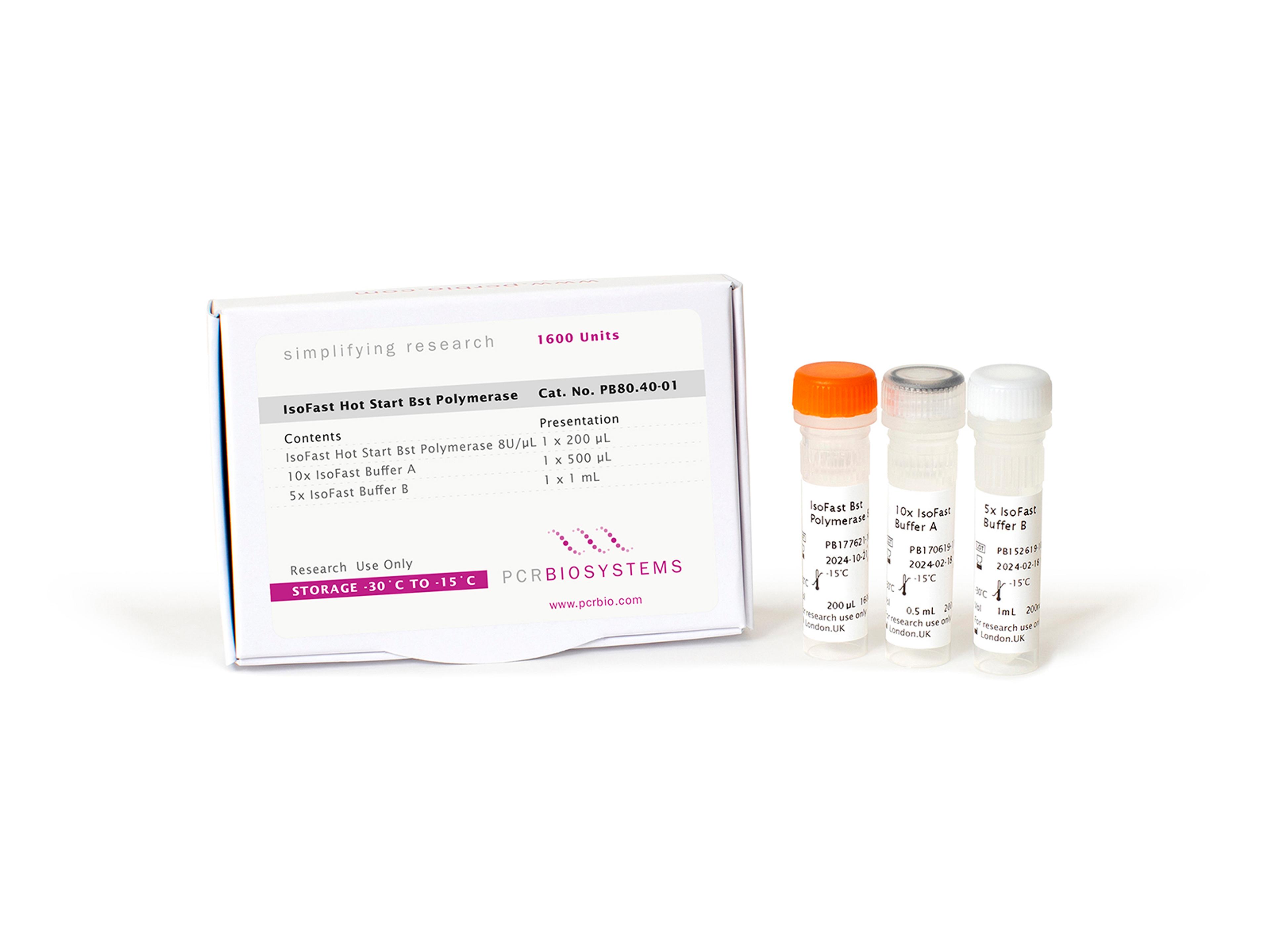
IsoFast® Hot Start Bst Mix
PCR BiosystemsIsoFast® Hot Start Bst Mix is the most recent and improved development of isothermal amplification technology, designed to deliver unparalleled specificity and speed in DNA amplification processes. This mix is suitable for applications such as multiple displacement amplification, isothermal amplification, loop mediated isothermal amplification (LAMP), molecular diagnostics and field diagnostics.