
New Generation of Single-Use Bioreactors Can Reduce Bioprocess Development Time and Cost
27 Apr 2017
Product news
Sartorius Stedim Biotech (SSB), a leading international supplier for the biopharmaceutical industry, announced the launch of its next generation BIOSTAT STR®, a fully scalable, single-use bioreactor family based on a conventional stirred-tank design. This new bioreactor range featuring upgraded hardware and software, as well as a fully integrated, new design of Flexsafe STR® single-use bags, ensures quick and easy bioprocess scale-up of biologics and vaccines.
The BIOSTAT STR® bioreactors are equipped with an improved stainless steel bag holder for user-friendly installation of the single-use Flexsafe STR® bag. The bioreactor series consisting of five systems in different sizes offers working volumes from 12.5 L to 2,000 L. Because the bioreactors are designed with the same geometries as SSB’s ambr® 250 mini bioreactor, the industry gold standard for scale-down, linear scale-up and process transfer from 250 mL to 2,000 L can be achieved in weeks rather than months using this innovative technology platform.
The new bioreactors and the newly introduced single-use Flexsafe STR® bags are a perfect match. The bags with advanced single-use sensor solutions are manufactured from a proprietary, robust multilayer S80 polyethylene film. The formulation of resins and additives for the film are fully characterized, and extrusion process parameters are controlled within established ranges, providing consistent batch-to-batch extractable and leachable profiles. The fully self-contained design of the new bioreactor with its single-use bag prevents product cross-contamination, saving time in set-up, validation, clean-in-place procedures and sterilize-in-place operations.
Besides using bags of the highest purity, the system is designed for efficient oxygen transfer, mixing and CO2 stripping. These combined features ensure excellent cell culture performance with reproducible high-density growth of even sensitive cell lines. As a result, BIOSTAT STR® bioreactors are ideal for achieving very high cell densities in continuous processes and for safe manufacture of vaccines and recombinant proteins in cGMP environments.
The new bioreactor range provides greater flexibility in bioprocess control and data acquisition as software connectivity has been upgraded to allow integrated control by either BioPAT® MFCS software or commonly used third-party industrial distributed control systems (DCS), such as Emerson DeltaV™ or Siemens SIMATIC PCS7.
Dr. Thorsten Adams, Director of Product Management for Fermentation Technologies at Sartorius Stedim Biotech, stated: “Direct linear scalability is crucial for ensuring the efficiency and cost-effectiveness of bioprocess development campaigns. Compared with conventional stainless steel vessels, our next generation BIOSTAT STR® bioreactors in combination with the ambr® 250 technology will help reduce process development timelines significantly. These highly scalable, single-use bioreactors are an intelligent, low-risk bioprocess development solution for use in multi-product facilities, as well as at contract manufacturing organizations, for the production of biologics and vaccines.”
Related products
Request Quote for All Products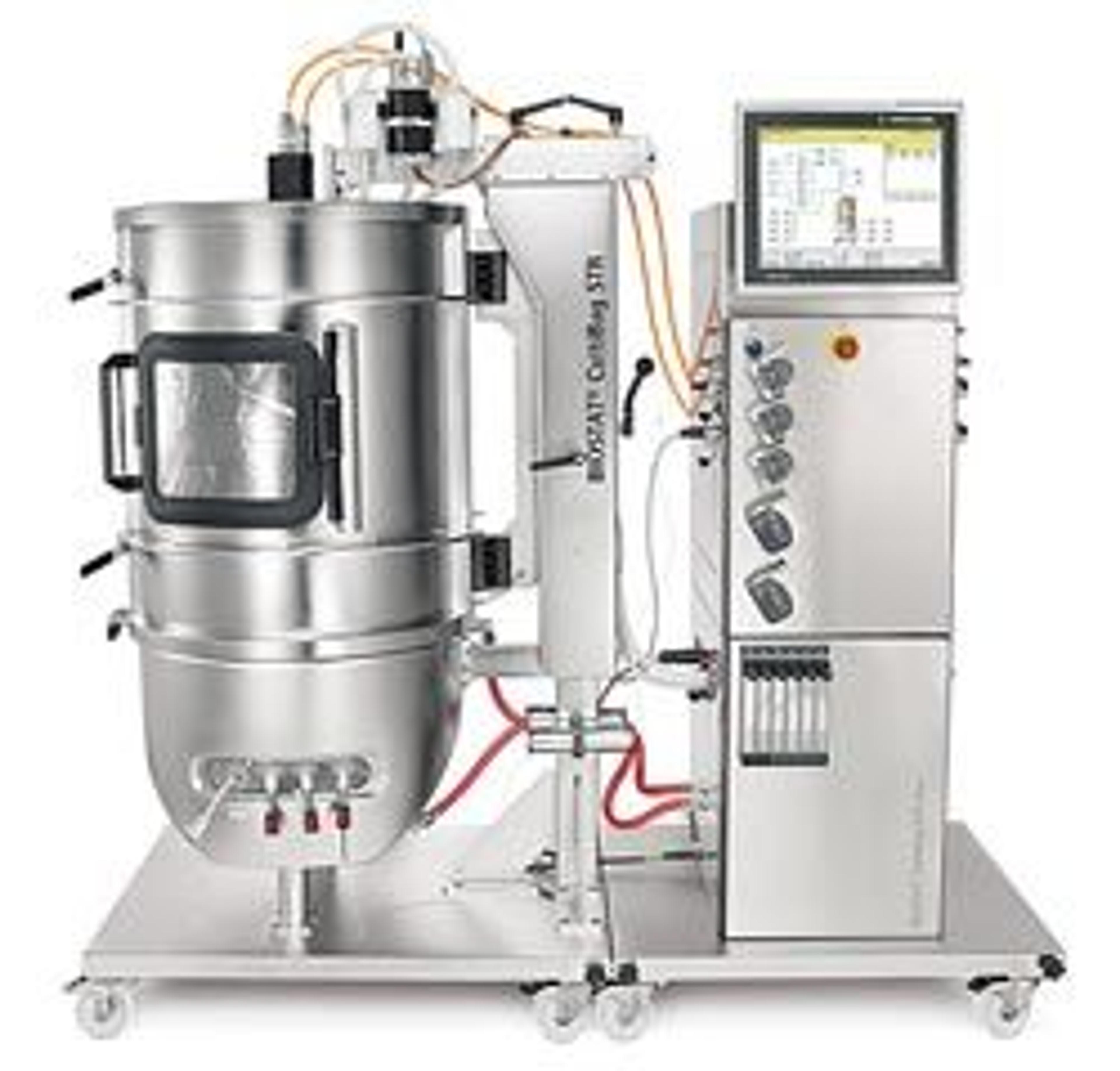
BIOSTAT® CultiBag STR Plus
Sartorius GroupInnovative Bioreactor, Sensor and Stirrer Technology The BIOSTAT® CultiBag STR Plus is a stirred single use bioreactor available from small scale to large scale cultivation up to 1000L. Its design is entirely based on the conventional gold standards coming from the stainless steel systems, allowing for easy scale-up and transfer from stainless steel solutions. The BIOSTAT® CultiBag STR Plus consists of one BIOSTAT® STR Plus Control Tower, one bag holder, a single-use CultiBag STR and superior BioPAT® MFCS/DA data logging software. Single as well as twin versions are available.It is ideal for: Cell Culture applications Industrial and academic research Process development Process optimization Pilot scale production Seed cultivation for large scale bioreactors Production scale Features: Completely single use bioreactor in traditional design Top driven stirrer with magnetic coupling Application driven fully flexible gassing system Available as single and twin version User-friendly touch screen interface for easy operation Single use optical DO & pH sensors for measurement Single use bags available with working volumes of 50L, 200L, 500L and 1000L Validation & Extractible guide available