
New for NanoDrop: 21 CFR part 11 & distinguishing DNA from RNA: Your questions answered
Watch this on-demand webinar to learn more about new updates of the NanoDrop One platform
14 Dec 2020
Expert insights
This year, the NanoDrop One spectrophotometer has received two major updates – features that allow 21 CFR Part 11 compliance and the ability to distinguish DNA from RNA.
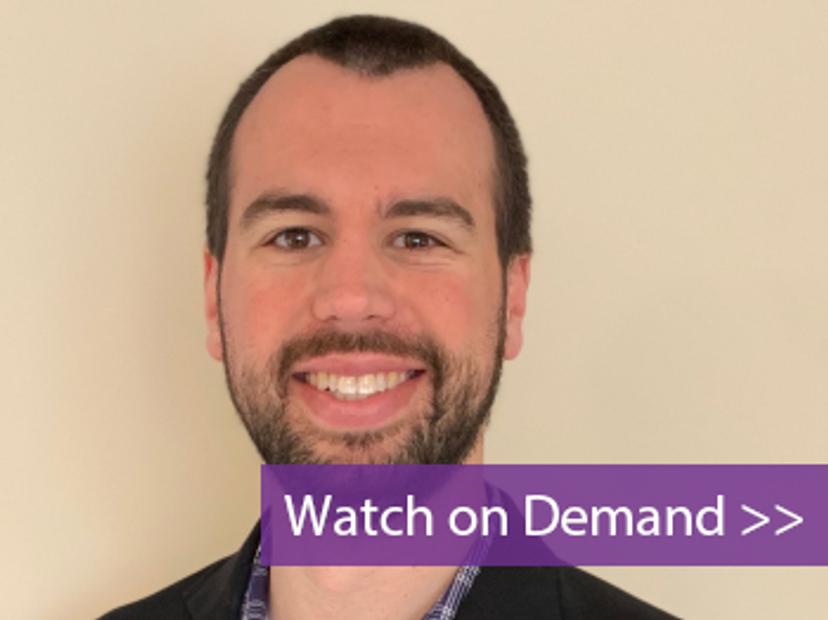
In this on-demand SelectScience webinar, Patrick Brown, product manager at NanoDrop Thermo Fisher Scientific, explores how electronic signatures, audit trails, and user account access have been incorporated into the NanoDrop One platform using the Thermo Scientific Security Suite software. Also, hear about how the Thermo Scientific Acclaro Sample Intelligence Technology algorithms have been updated to identify RNA contamination in DNA and DNA contamination in RNA.
Read on for highlights from the webinar’s Q&A session or register now to watch the webinar on demand.
Watch nowQ: Are these new features only available on new instruments?
PB: No, the software that is going to be available can certainly be used to upgrade older instruments. All the instruments that we have in the field can be upgraded so that you can take advantage of these new innovative features.
Q: Can any amount of DNA contamination in RNA be detected?
PB: The algorithms that we have implemented are specified over a region, a concentration range that we found is most common among our users. Right now, we are working on publishing all the performance data. In this data, you'll see the regions in which the concentration ranges those algorithms are suited. It’s not over the entire range and we'll certainly be putting out published data to explain exactly where the algorithms are best suited.
Q: When using the 21 CFR part 11 software, can I still make measurements on the screen?
PB: That is something to consider when operating in a compliant environment. When you are connecting the instrument to a computer and running the software that allows you to enable compliance, the instrument screen is disabled. You'll get an image on the screen indicating that the instrument is being controlled by the computer so that only the data on the computer is being controlled by our security administration software as well as the audit manager's software.
Q: This is a good combination of nanotechnology and information technology, but how much time does it take to access on average?
PB: Much like the NanoDrop contaminant algorithms that can identify protein or phenol, if your sample does have a nucleic acid contaminant, the measurement and processing time is around eight seconds.
Q: Can you choose multiple sources on the contaminant detection system?
PB: When you are making measurements and looking for nucleic acid contaminants, you can only choose one source. For example, it can be either mammalian, plants, or bacteria. You must first identify precisely what is the source of your sample.
Q: Does the new CFR Part 11 software allow for operation through the integrated touch screen, or is that only to the instrument itself?
PB: For 21 CFR Part 11 software to operate, it needs to be on the computer. The source of the user access control comes from the Windows login system so that you can access the users that are already created either locally within the computer system or throughout your network. You can then manage control across multiple sites or multiple laboratories from a single software installation.
Q: How does the instrument discriminate between contaminants?
PB: The NanoDrop software is based on technology called chemometrics and at a high level, the software algorithms are trained using pure samples as well as mixtures of samples. When your unknown sample is measured, it compares that spectral shape to the known library of spectra and provides a prediction of the analyte concentration.
Learn more about the NanoDrop One platform: Watch the webinar on demand>>
SelectScience runs more than 10 webinars a month across various scientific topics, discover more of our upcoming webinars>>
Related products
Request Quote for All Products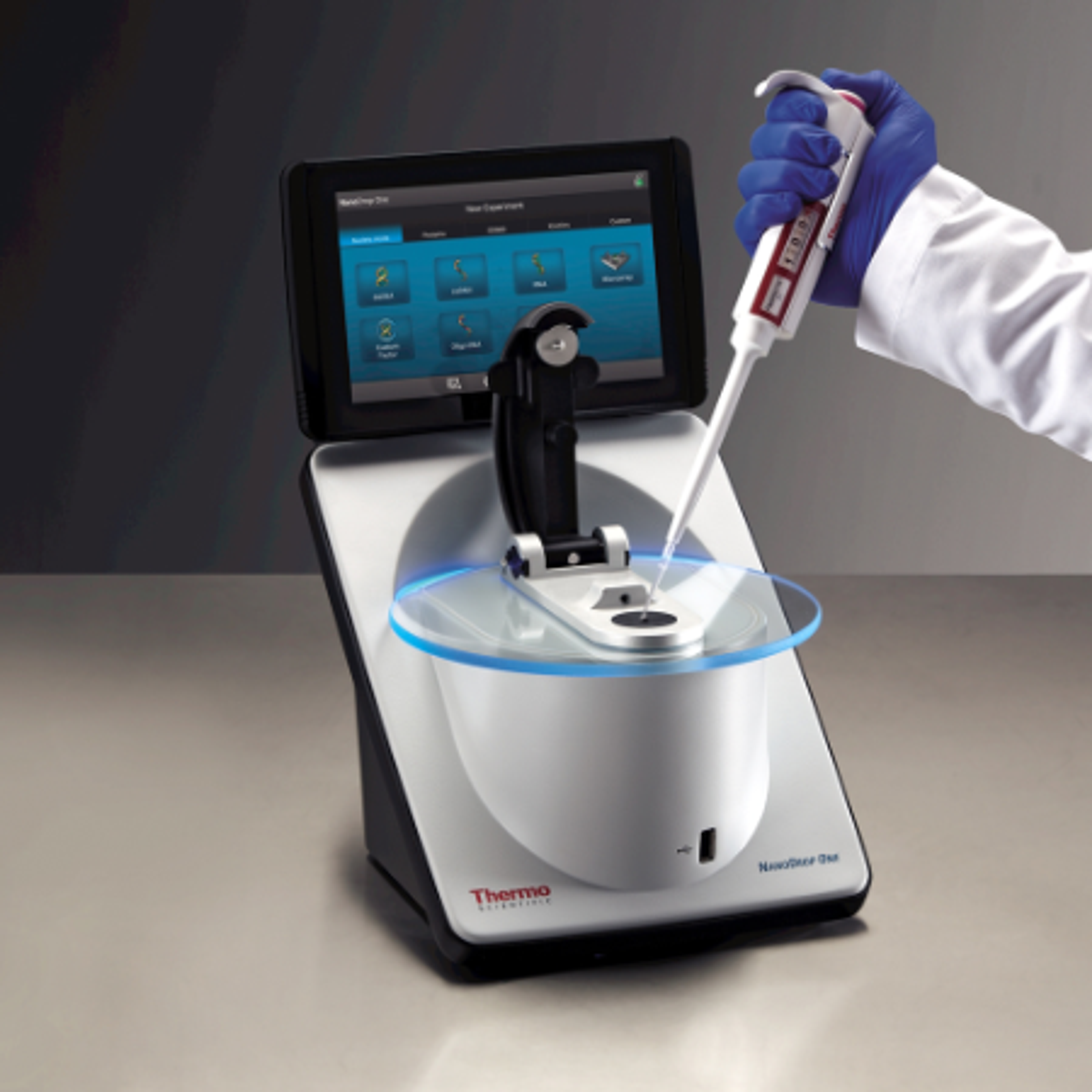
Thermo Scientific™ NanoDrop™ One/OneC Microvolume UV-Vis Spectrophotometer with Wi-Fi
Thermo Fisher ScientificPowerful auto-range pathlength technology facilitates accurate measurements for concentrated samples with no need for dilutions