New Centrifuge Technology Streamlines In Vitro Studies at University of Florida College of Veterinary Medicine

Learn about the essential multi-application centrifuge technology helping dermatology research

23 Jun 2016

Sarah Thomas
Associate Editor

Editorial article

The Comparative Dermatology Laboratory, Small Animal Clinical Sciences at UF College of Veterinary Medicine

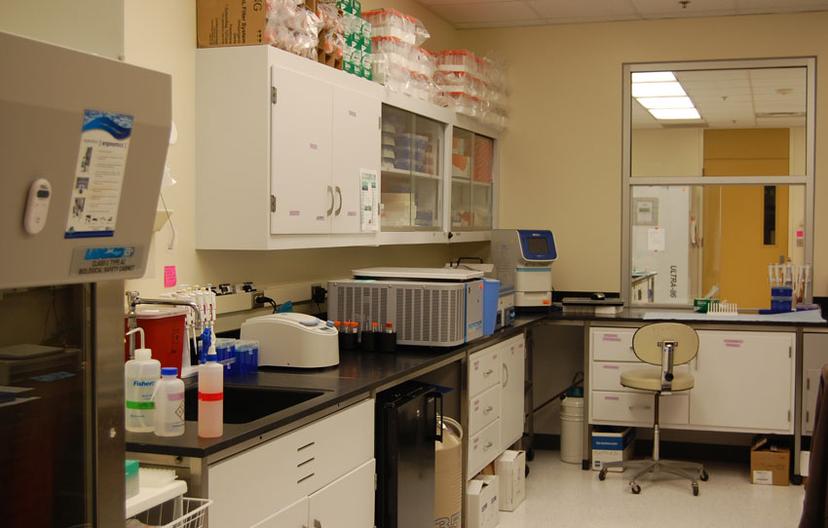
SelectScience® spoke to Kim Ahrens, Scientific Research Manager at the University of Florida College of Veterinary Medicine, to learn how the NuWind Multi-Application Centrifuge from NuAire is helping to improve laboratory workflows.

UF College of Veterinary Medicine aims to advance the health and welfare of animals, humans and the veterinary medical profession through world-class education, innovative research, and state-of-the-art clinical services.

Kim works in the Comparative Dermatology Laboratory of Small Animal Clinical Sciences, under the direction of Professor Rosanna Marsella, DVM. Professor Marsella’s group is focussed on atopic dermatitis and has an association and shared lab space with the College of Medicine at University of Florida.

“Canine atopic dermatitis is a chronic disease that frequently occurs in dogs that results from a defective skin barrier and an immune response that is recognized by an itchy and inflamed skin caused by allergens”, Kim explained. “Our Laboratory seeks to find the root causes of barrier defects and inflammation and also test new drugs and topical therapy to alleviate the itchiness and inflammation.”

The group uses a number of different methods to investigate the disease, “We currently culture keratinocytes from primary skin biopsies, isolate peripheral blood mononuclear cells (PBMCs) for culturing or flow cytometry, extract RNA from cells for RT-PCR, perform immunohistochemistry, western blots and ELISAs.”

As part of this work, the NuAire NuWind Multi-Application Centrifuge is used in the “culture room for isolation of PBMC, either by ficol or whole blood lysis, and passaging of epithelial cells” as well as general laboratory centrifuging.” Kim highlighted the bench top centrifuge’s “capacity for 50 and 15 ml tubes” as well as “quietness, and ability to store multiple programs for a growing lab”, as key features benefitting the laboratory group’s research.

Looking to future research studies, Kim noted that “a quality centrifuge is necessary to continue the work for in vitro studies.”

Do you use the NuWind Multi-Application Centrifuge in your research? Write a review for your chance to win an iPad or $400 Amazon voucher (or equivalent currency).

Links

Tags

Cell / Tissue CultureCell culture or tissue culture is used to study the biology of cells or tissues and to isolate cellular products in an environment which can be manipulated and well defined. Accurately control your culture environment with bioreactors or culture incubators, bind your cells to a surface or together with an extracellular matrix. Distinguish cell types with differential media or proliferate cells with certain characteristics using selective media. Enrich your media with supplements such as growth factors, sera and vitamins. Find the best cell and tissue culture products, kits and equipment in our peer-reviewed product directory: compare products, check customer reviews and receive pricing direct from manufacturers.CentrifugesCentrifuges are used to separate particulates suspended in a liquid via the application of a centrifugal force including cells, macromolecules, nanoparticles and precipitates. Centrifuges come in three sizes: microcentrifuges, benchtop and floor-standing centrifuges, depending on the volume and number of samples that require separation. When choosing a centrifuge, consider its maximum separation power indicated by its relative centrifugal force (RCF) value. Low force centrifuges reach a maximum RCF of 8,000 g, high-force centrifuges can reach maximum RCF values of 80,000 g. For extremely high forces, consider ultracentrifuges (up to 800,000 g). Refrigerated and vacuum centrifuges also known as concentrators are available for more specialized applications. A range of volumes are available for centrifuge tubes and microfuge tubes, depending on sample sizes. Find the best centrifuges in our peer-reviewed product directory: compare products, check customer reviews and receive pricing direct from manufacturers.DNA / RNA Extraction and PurificationPurified DNA and RNA are required for numerous downstream molecular biology applications. Consequently, the importance of high-quality DNA/RNA extraction and purification equipment cannot be underestimated. Many purification kits are available and are typically optimized for nucleic acid type and source, including plasmid DNA, genomic DNA, mRNA, RNA and viral nucleic acid purification kits. Automated extraction and purification of nucleic acids can be implemented with magnetic bead separator instruments or high-throughput purification workstations. Find the best DNA/RNA extraction and purification equipment in our peer-reviewed product directory: compare products, check customer reviews and receive pricing direct from manufacturers.Cell AnalysisThe analysis of cells allows researchers to understand the factors which contribute to cell health and function. These influencing processes can then be predicted and altered, leading to the development of medication and disease treatments.Cell BiologyCell biology studies the structure, function, and behavior of cells. Understanding cellular processes is essential for research in areas such as cancer biology, stem cell research, and neurobiology. Techniques like flow cytometry, microscopy, and cell culture enable researchers to explore cellular mechanisms in detail. Browse our peer-reviewed product directory to find the best cell biology tools and equipment, compare products, check customer reviews, and get pricing directly from manufacturers.Blood AnalysisThe analysis of blood is vital for many areas of life sciences and forensic investigations. Blood samples can be tested for a number of different reasons such as diagnosis, glucose levels, cholesterol and drug testing.InflammationInflammatory Diseases