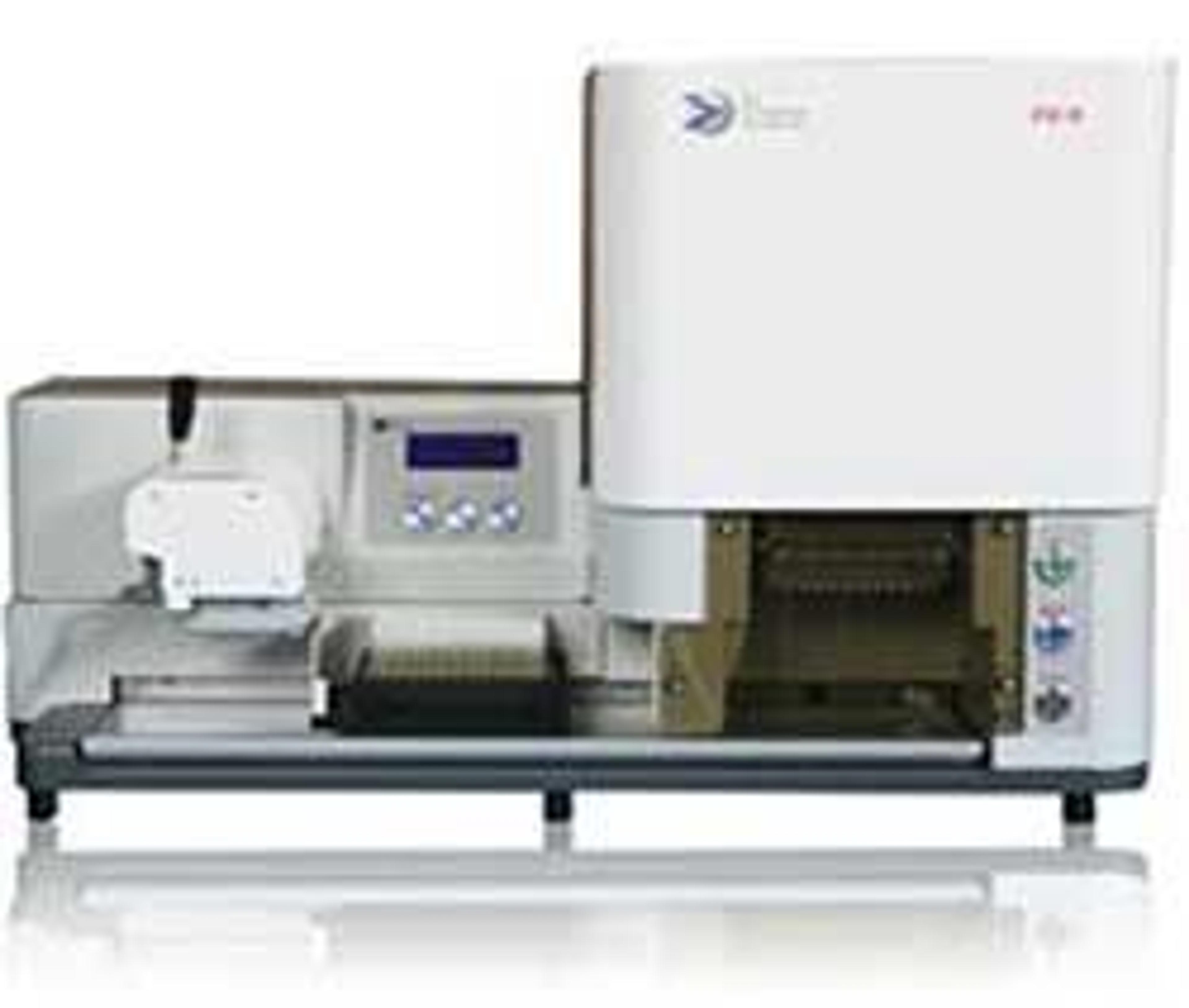
New 48-Way Cryovial Filling For Cell Banking - GMP Validatable System

9 Mar 2011
bridget bridget
Laboratory Director

Product news

Fill-It 48-way is a new bench top system to rapidly dispense cell suspensions from bulk stock into cryovials, as well as decapping and recapping ready for cell-banking. Fill-It supports cell line development projects in GMP laboratories, and is compatible with tubes from all major labware manufacturers.

How much time can Fill-It save your laboratory?

Use the Fill-It Online Calculator to see how rapidly you can dispense cell suspensions from bulk stock into cryovials.

By arrangement, Fill-It can be evaluated in your laboratory.

After requesting an evaluation, one of our specialists will contact to discuss the evaluation process in more detail.

Fill-It key features and benefits include:

• Significantly reduces QC costs by enabling rapid creation of larger batches of cryovials for cell banking
• Maintains the quality of cells by minimising the time they are in contact with cryopreservatives
• Supports H&S policy by addressing the risk of RSI from manual capping and decapping of large amounts of cryovials

An exclusive video demonstration of the new Fill-It 48, 24 and 96-way versions in use can be viewed online. It shows how simple and straightforward the system is to use and features the key processes of dispensing and decapping/ recapping screw-cap tubes.

Fill-It Automated screw-cap cryovial filling system

TAP Biosystems

Fill-It - is an automated benchtop system for filling screw-cap cryovials. Fill-It is designed to help create cell banks of higher quality, consistency and viability. It combines proven decap / recap modules with aseptic liquid handling. Fill-It removes all screw caps simultaneously and then dispenses into multiple cryovials in parallel. Compatible with Corning, Greiner, Micronic, Matrix, Nalgene, Nunc and Sarstedt screw-cap cryovialsKey benefits:• Creates consistent, high quality cell banks • Reduces risk of repetitive strain injury (RSI) • Helps maintain sample integrity due to lower risk of contamination when compared to manual processing. • Improves lab productivity by enabling larger batch runs.

(1)

Links

Tags

Cell / Tissue CultureCell culture or tissue culture is used to study the biology of cells or tissues and to isolate cellular products in an environment which can be manipulated and well defined. Accurately control your culture environment with bioreactors or culture incubators, bind your cells to a surface or together with an extracellular matrix. Distinguish cell types with differential media or proliferate cells with certain characteristics using selective media. Enrich your media with supplements such as growth factors, sera and vitamins. Find the best cell and tissue culture products, kits and equipment in our peer-reviewed product directory: compare products, check customer reviews and receive pricing direct from manufacturers.Cell Lines Stem Cells and Primary CellsPrimary cell cultures, established cell lines and stem cells are vital for <i>in vitro</i> and <i>ex vivo</i> experimentation. High-quality cells, optimized for your applications, alongside optimized cell substrates, growth medium and supplements, are critical for experimental success. Explore a range of cells suitable for your applications, including isogenic cell lines, competent cells, induced pluripotent stem cell (iPSC)-derived cell lines, fungal/bacterial/mammalian cell lines, stem cells and cancer cell lines. Find the best cells for your research in our peer-reviewed product directory: compare products, check customer reviews and receive pricing direct from manufacturers.Sample ManagementSample management systems include sample storage devices such as freezers and plate storers, sample environment enclosures and sample organization, retrieval and sorter systems. Useful system features include high-throughput, automation, robotic arms, automated liquid handling and associated database systems. Accessories in sample management include barcode scanners, heat sealers and tubes.Assay AssemblyAssay Assembly is technique used in drug discovery to develop assays to test the cytotoxicity, genotoxicity, or other activities of a compound on a cell. Assay assembly requires chip assembly, a delivery system and a detection and analysis method. Beneficial features of assay kits or automated systems include high-throughput, high speed and sensitivity and low signal to noise ratio.Cell-Based AssaysCell-based assays are used to monitor the presence, quantity and activities of a desired cellular analyte including drug molecules or biomarkers. This can reveal information on cell health (apoptosis, cytotoxicity, viability and proliferation assays), cell metabolism, cell migration and cell signaling mechanisms. Find the best cell-based assay products, kits and equipment with our peer reviewed product directory: compare products, check customer reviews and receiving pricing direct from manufacturers.Biopharmaceutical AdvancesBiopharmaceutical advances follow the development of pharmaceuticals derived from biotechnology, also known as biotechnology medicines. Biopharmaceuticals may be produced from cell lines, plants, or microbial cells. Important considerations of biopharmaceutical use include application, cost, production process and purification.Clinical TrialsClinical Trials, an essential part of drug discovery process, assess the safety and effectiveness of a new medication or device in the pharmaceutical industry. Clinical Trials are a phased process (Phase 0, Phase I, Phase II, Phase III and Phase IV) which begins after initial preclinical testing.Automation Supplies / AccessoriesAutomated accessories and consumables make lab processes fast, efficient and reliable. Useful automation accessories include microplate sealers, label printers and reagent reservoirs.
New 48-Way Cryovial Filling For Cell Banking - GMP Validatable System