
New 3 µm Particle Size Adds HPLC Scalability to Luna® Omega Mixed-Mode Selectivities
18 May 2017
Product news
Phenomenex Inc., a global leader in the research, design and manufacture of advanced technologies for the separation sciences, is introducing two new offerings to its Luna Omega fully porous LC column line – the Luna Omega 3 µm Polar C18 and the Luna Omega 3 µm PS C18.
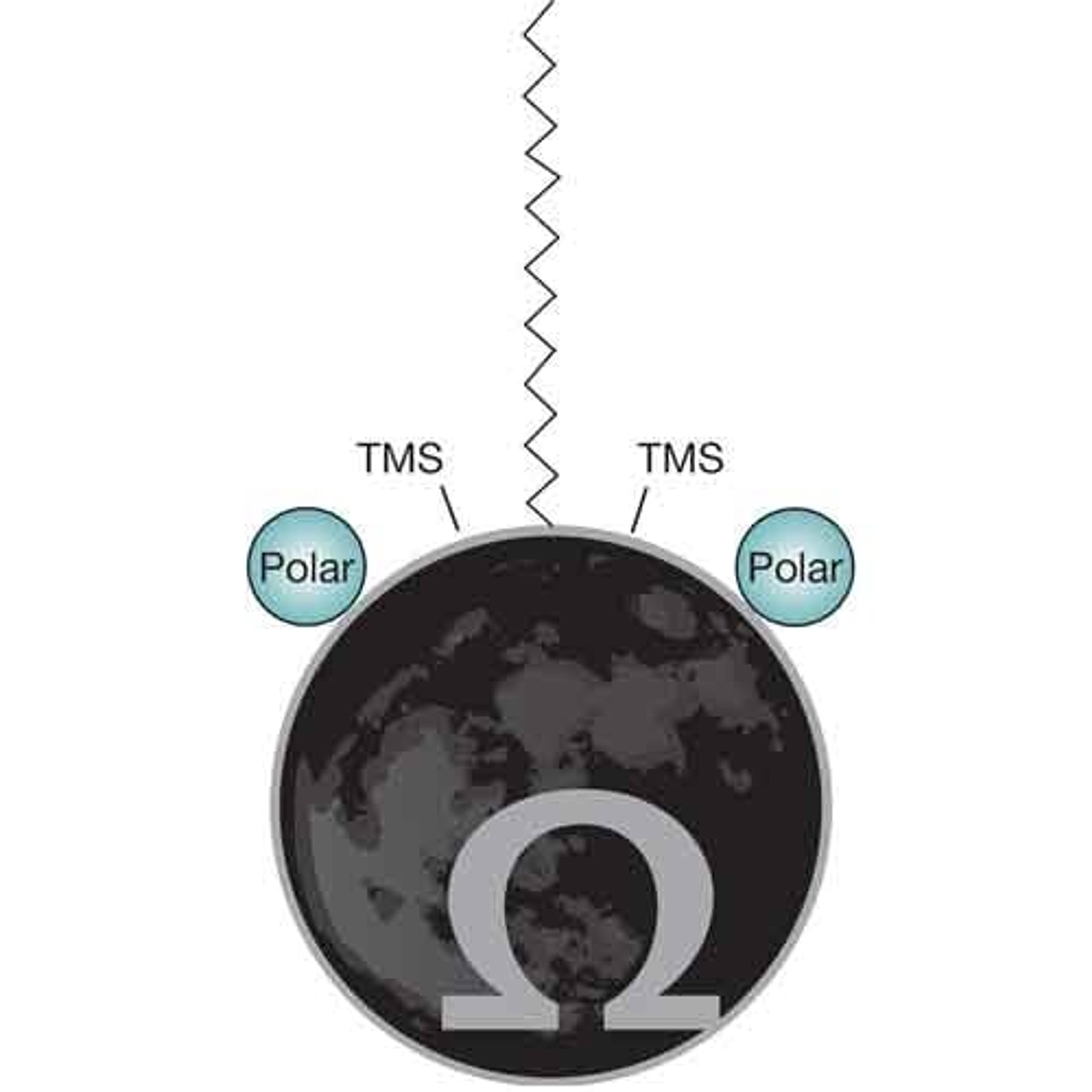
The Luna Omega Polar C18 stationary phase is a unique, robust selectivity bonded to an innovative silica particle that delivers high loadability and retention for both polar and nonpolar analytes. This new phase is 100 percent aqueous-stable due to a polar-modified surface, providing flexibility in solvent and gradient system selection needed to achieve desired polar/nonpolar analyte separation. The new 3 µm particle joins the existing 1.6 µm and 5 µm sizes to provide full scalability from UHPLC to HPLC to preparative chromatography.
Unlike a traditional C18, the Luna Omega PS C18 delivers two distinct and useful separation mechanisms and offers 100 percent aqueous stability. The particle surface of the PS C18 contains a positive charge that facilitates greater acidic compound retention through ionic interaction, while the C18 ligand delivers general reversed-phase retention. This mixed-mode selectivity is a valuable tool for greater separation between mixtures of compounds that have varying functional groups, such as peptides, pesticides or metabolite profiles. Additionally, the positive surface charge encourages sharp basic compound peak shape through the ionic repulsion of these compound species. Like the Luna Omega Polar C18, the three PS 18 particle size choices enable full scalability from UHPLC to HPLC to preparative chromatography.
Luna Omega columns are well suited for a wide range of applications including drug discovery and development, food contaminant analysis, environmental testing, toxicology and clinical research.
“With three directly scalable particle sizes, chromatographers can easily take advantage of the enhanced retention of the Polar C18 and PS C18 for their HPLC and UHPLC work,” commented Simon Lomas, strategic marketing manager for Phenomenex. “These new selectivities offer our customers high-efficiency solutions for their large range of work, from routine/general purpose to complex analyses.” For more information, visit www.phenomenex.com/lunaomega.
Related products
Request Quote for All Products
Luna Omega Polar C18
Phenomenex Inc100 % aqueous stability and enhanced selectivity/retention for polar analytes without diminishing useful non-polar retention.
Luna Omega C18
Phenomenex IncRugged C18 with focus on strong hydrophobic retention of non-polar and polar compounds.