Native & Crosslinked Immunoprecipitation: A Comparative Study

4 Apr 2017
Weylan Kiam-Laine
Microbiologist

Product news

Chromatrap® has published a new article that describes a detailed genome-wide comparison of native and crosslinked chromatin immunoprecipitation followed by next generation sequencing (ChIP-seq) using the company's patented solid-state spin column technology.

Chromatrap® supply high quality N-ChIP-seq and X-ChIP-seq kits. This article compares the enrichment of the histone H3K4me3 modification signal across the whole genome, from chromatin prepared by both methods (native vs crosslink). The histone mark H3K4me3 was chosen for this study to highlight the sensitivity and efficiency of the Chromatrap® spin column technology for both native and cross-linked ChIP-seq as it is associated with ‘open’ transcription start sites and gene activation and is present in euchromatin throughout the genome.

Data is presented which demonstrates strong and comparable enrichment of H3K4me3 from both Native and Cross-linked chromatin. The study highlights that both Native and Cross-linked chromatin preparation methods are compatible with Chromatrap® extraction and capture technology. Providing excellent data both these methods ensure superior H3K4me3 enrichment followed by high throughput sequencing. In addition, the study shows high-quality FASTQC metrics and significant genome-wide peak enrichment levels are obtainable using both assay technologies.

To download a copy of the application note ‘Chromatrap® ChIP-seq from native and cross-linked chromatin’ please visit https://www.chromatrap.com/publications/. For further information contact Chromatrap® on support@chromatrap.com / +44-1978-666222.

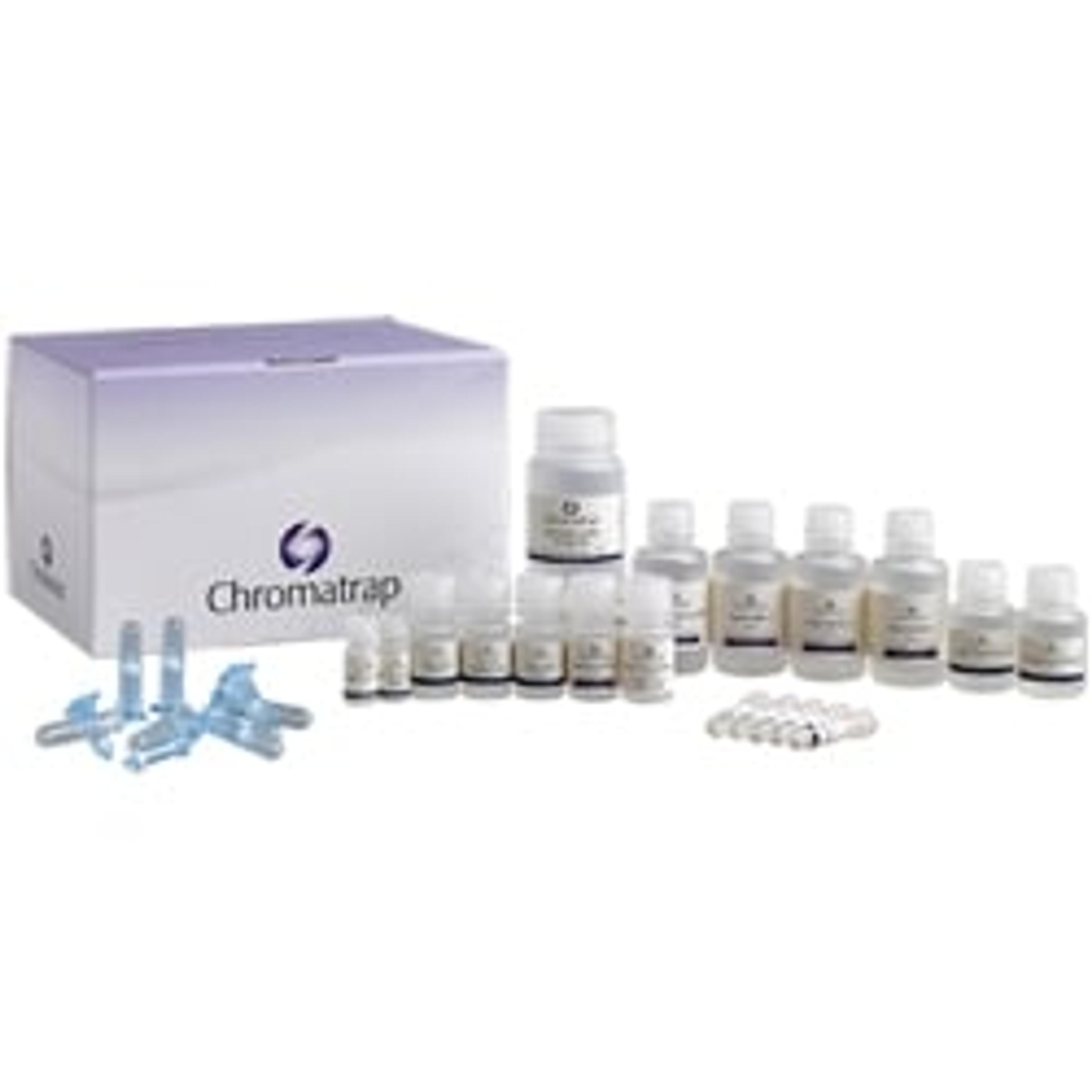
Chromatrap® Native ChIP Kit

Chromatrap

Chromatrap® Native ChIP kits provide an alternative to traditional cross-linked ChIP, which removes the need for fixing cells prior to extraction. 

(0)

Links

Tags

Genome AnalysisGenomics, the study of genomes, includes functional genomics, evolutionary genomics and comparative genomics. There are many genomic technologies such as DNA sequencing of whole genomes, computational biology and bioinformatics. DNA and nucleic acids must be isolated and concentrated from cells for analysis with kits, automated analyzers and software. Other useful technologies for studying genomics include PCR, microarrays and electrophoresis.DNA / RNA Extraction and PurificationPurified DNA and RNA are required for numerous downstream molecular biology applications. Consequently, the importance of high-quality DNA/RNA extraction and purification equipment cannot be underestimated. Many purification kits are available and are typically optimized for nucleic acid type and source, including plasmid DNA, genomic DNA, mRNA, RNA and viral nucleic acid purification kits. Automated extraction and purification of nucleic acids can be implemented with magnetic bead separator instruments or high-throughput purification workstations. Find the best DNA/RNA extraction and purification equipment in our peer-reviewed product directory: compare products, check customer reviews and receive pricing direct from manufacturers.DNA SequencingDNA sequencing, such as sanger sequencing, is a biological technique that determines the precise order of nucleotide bases in a fragment or template of DNA. DNA sequencers and genetic analyzers are based on capillary electrophoresis, where labeled DNA fragments are electrophoretically separated by size as they migrate through a polymer. Find the best DNA sequencing products, including DNA sequencing kits, genomic libraries and genetic identity kits in our peer-reviewed product directory: compare products, check customer reviews and receive pricing direct from manufacturers.Next Generation SequencingNext-generation sequencing (NGS), also known as whole-genome sequencing, high-throughput sequencing and massive parallel sequencing, produces and analyses thousands to millions of nucleotide sequences at once. Sequencing systems operate via varying technologies depending on the manufacturer, including sequencing by synthesis, ligation, pyrosequencing, ion semiconductor and single-molecule real-time sequencing. For NGS, library preparation is paramount to successful sequencing. In this section, explore a range of library preparation kits, from targeted, amplicon-based or hybridization-based kits including epigenomic, transcriptomic and genomic workflows to fragmentation kits. Find the best next-generation sequencing products in our peer-reviewed product directory: compare products, check customer reviews and receive pricing direct from manufacturers.Target-EnrichmentImmunoprecipitationGenome SequencingGenome sequencing involves determining the complete DNA sequence of an organism's genome. It provides crucial information about genetic variations, mutations, and diseases. Advances in sequencing technologies, such as next-generation sequencing (NGS), have accelerated research in genomics, diagnostics, and personalized medicine. Explore genome sequencing tools in our peer-reviewed product directory; compare products, check reviews, and get pricing directly from manufacturers.