My Lab Essentials: Forensic Soil Investigation − Mapping Criminal Influences

Bringing soil fingerprinting into the court room

30 Sept 2015

Lois Manton-O'Byrne, PhD
Executive Editor

Editorial article

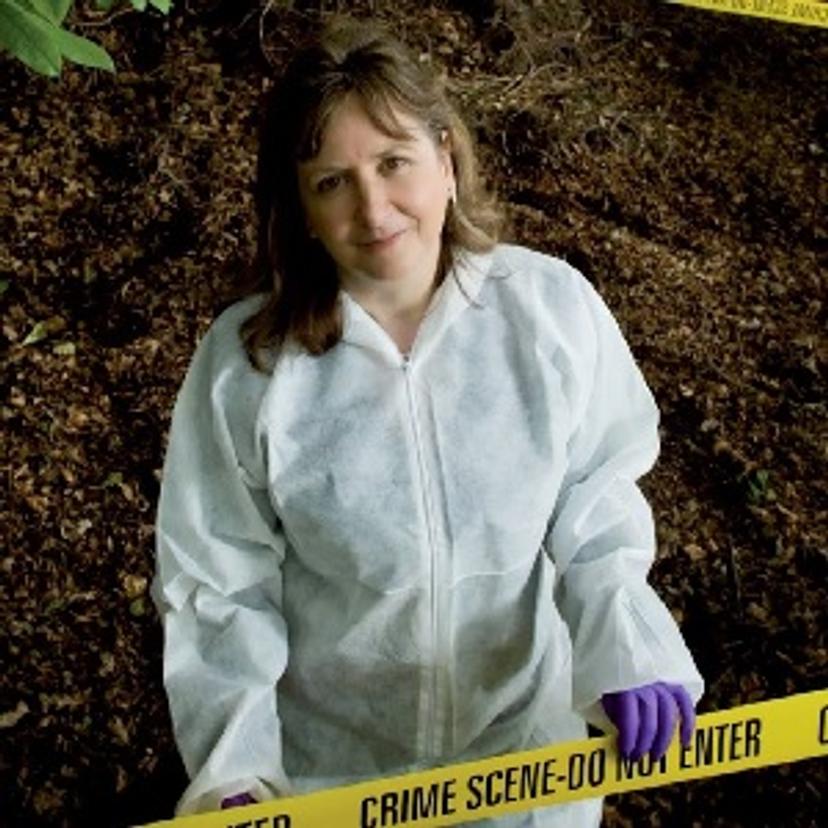
Prof. Lorna Dawson, Principal Soil Scientist in the Environmental and Biochemical Sciences group and Head of Forensic Soil Science, James Hutton Institute, UK

For Professor Lorna Dawson, Principal Soil Scientist in the Environmental and Biochemical Sciences group and Head of Forensic Soil Science, at the James Hutton Institute, UK, the scene of the crime encompasses more than for most people. Prof. Dawson has pioneered the forensic study of soil, using both organic and inorganic 'fingerprints' to identify with surprising accuracy the origin of the sample, linking suspects with crime scenes. In the latest in our Lab Essentials series, Prof. Dawson explains what features she looks for in a sample, and reveals the potential for microbial DNA to bring soil data to UK courts.

"It's not just dirt," explained Prof. Dawson. From Roman times to Sherlock Holmes, soil has been used in crime scene investigation. However, modern science has struggled to catch up, and there is need for "continuity, integrity, robust analytical approaches, and reproducibility" more than ever. "Current research is to develop increasingly faster, cheaper and more robust techniques to help law enforcement in searches, crime scene comparisons, evaluation and presentation in court," Prof. Dawson continued.

A wealth of information

There are several aspects that can be studied in soil, from "inorganic analysis of minerals and elements, to organic analysis, studying hydrocarbon, alcohol, ketone and pollen content, for example. I also examine the soil sample for seeds, plant fragments, hairs, and flakes of paint." Finally, the DNA of bacteria, fungi, nematodes and any other organism that calls the soil sample ‘home’ are analyzed.

Together with the organic characteristics, Prof. Dawson can map "the plant or fungal species that grow and have grown there, and reveal the ecological habitat." With the inorganic data, she can identify "which type of rock the soil has formed from, or if it is near an area of pollution or agricultural intensity. Man's influence can also be ascertained from the soil fingerprints, using compounds such as car residues or PAHs."

Prof. Dawson's work has given her a great appreciation for the world she lives in. "Soil is vital to our very existence – it gives us good food, clean air, fresh water, a rich biodiversity below and above ground, and a cultural base to support our heritage. It's not just helping us investigate crime. As the population of the world increases, we must protect this non renewable resource," she explained.

The future of forensic soil science

In relation to soil DNA profiles, "before being used in the UK courts, however, further rigorous testing is required," explained Prof. Dawson. In particular, the use of microbial DNA has "great potential" to allow scientists to work quickly with trace amounts of sample using "technology that forensics labs and law courts are already used to". However, the effect of time after sample collection and potentially even the time of year are as yet unknown – "we should proceed with extreme caution", counseled Prof. Dawson on the regular use of soil DNA as evidence.

Eventually, Prof. Dawson hopes "to apply the same approach that we do in serious crimes, such as murder, to volume crime, like theft." With the development of faster, smaller and cheaper analyses, better understanding of the information that soil holds, and greater interdisciplinary collaboration, she believes this hope will become a reality: "sometimes the greatest advances occur when disciplines cross".

Here are Prof. Dawson's Lab Essentials, the products and technologies she couldn’t work without:

ChargeSwitch® Direct gDNA Purification Kit and Pro Plasmid Miniprep Kit from Life Technologies

Fragment Analysis Kits from Life Technologies

3130xl Genetic Analyzer from Applied Biosystems

Hhal enzymes from Promega

Pipettes from Gilson and pipette tips from Starlab

5804 R efrigerated centrifuge from Eppendorf

Qubit 2.0 from Life Technologies

Agencourt Ampure XP kit from Beckman Coulter

Have you used any of these products? Share your experiences with our community of scientists by writing a review today, or find out more Lab Essentials.

Links

Tags

Capillary ElectrophoresisCapillary electrophoresis (CE) is used to separate molecules based on charge, size and hydrophobicity. Pressure, voltage or a vacuum is used to introduce the sample to fused silica capillaries. Fluorescence, UV/Vis, UV or diode array detectors are used to visualize components. Types of CE systems include capillary electrochromatography (CEC), capillary zone electrophoresis and capillary gel electrophoresis. Find the best capillary electrophoresis equipment in our peer-reviewed product directory: compare products, check customer reviews and receive pricing direct from manufacturers.PCR and Thermal CyclingPolymerase chain reaction (PCR) kits and thermal cyclers are used for the in vitro amplification of DNA permitting subsequent analysis and experimental procedures. Explore a range of high-quality polymerase, primers and nucleotides or simplify your workflow with a PCR mastermix. Find reverse transcription PCR (RT-PCR) and cDNA synthesis kits for RNA products and libraries. Quantitatively measure the amplification of DNA with real-time PCR (qPCR) and droplet digital PCR (ddPCR) kits and systems, and discover automated PCR setup solutions to increase throughput. Alternative DNA amplification methods also include recombinase polymerase amplification (RPA) kits. Find the best PCR kits and thermal cyclers and purification equipment in our peer-reviewed product directory: compare products, check customer reviews and receive pricing direct from manufacturers.DNA / RNA Extraction and PurificationPurified DNA and RNA are required for numerous downstream molecular biology applications. Consequently, the importance of high-quality DNA/RNA extraction and purification equipment cannot be underestimated. Many purification kits are available and are typically optimized for nucleic acid type and source, including plasmid DNA, genomic DNA, mRNA, RNA and viral nucleic acid purification kits. Automated extraction and purification of nucleic acids can be implemented with magnetic bead separator instruments or high-throughput purification workstations. Find the best DNA/RNA extraction and purification equipment in our peer-reviewed product directory: compare products, check customer reviews and receive pricing direct from manufacturers.DNA SequencingDNA sequencing, such as sanger sequencing, is a biological technique that determines the precise order of nucleotide bases in a fragment or template of DNA. DNA sequencers and genetic analyzers are based on capillary electrophoresis, where labeled DNA fragments are electrophoretically separated by size as they migrate through a polymer. Find the best DNA sequencing products, including DNA sequencing kits, genomic libraries and genetic identity kits in our peer-reviewed product directory: compare products, check customer reviews and receive pricing direct from manufacturers.Evidence Collection and AnalysisEvidence Collection and Analysis is the retrieval and subsequent investigation into criminal evidence obtained from a crime scene. Forensic genetic instruments, kits and reagents enable the analysis of evidence collected  at the crime scene. Reagents and kits for presumptive analysis for body fluids such as blood, saliva and semen in addition to drugs and narcotics test kits are used for CSI. Fingerprinting equipment, forensic light sources, casting kits and equipment for collecting recoverable materials can be found in the directory.Toxicology / Drugs of Abuse TestingToxicology and Drugs of Abuse Testing is the investigation into toxic and illegal substances found at the scene of a crime or from a suspect and / or victim associated with a scene of a crime. Analyzers, immunoassays and drugs of abuse test kits and presumptive test kits are an essential aspect of toxicology investigation.Light MicroscopyLight microscopes or optical microscopes are used to visualize microscale objects under magnification, including cells, clinical specimens and materials. Lab equipment for light microscopy includes confocal microscopes, fluorescence microscopes, zoom and stereo microscopes. Microscope slides and imaging reagents are available for visualizing samples, as well as various microscope stages and incubators for large or temperature-sensitive samples. Find the best light microscopes in our peer-reviewed product directory: compare products, check customer reviews and receive pricing direct from manufacturers.Soil TestingSoil testing helps determine the nutrient content, pH level, and other factors affecting soil health. This information is critical for agriculture, environmental science, and land management. Explore soil testing solutions in our peer-reviewed product directory; compare products, check reviews, and get pricing directly from manufacturers.Microbial DetectionMicrobial detection is crucial for identifying and quantifying bacteria, viruses, fungi, and other microorganisms. This process is essential for food safety, environmental monitoring, clinical diagnostics, and pharmaceutical manufacturing. Explore the best microbial detection tools in our peer-reviewed product directory; compare products, check reviews, and get pricing directly from manufacturers.Environmental ForensicsForensic InvestigationForensic investigation is a diverse collection of scientific techniques and methods for the identification and characterization of chemicals relating to crime scene investigations.