
My Lab Essentials: Dr John Parrington, University of Oxford
Discover the lab instruments Dr Parrington couldn't do his research without
7 Jul 2015
Editorial article

Dr John Parrington, Associate Professor at Worcester College, University of Oxford
In the latest in our Lab Essentials series, Associate Professor John Parrington, researcher and lecturer in pharmacology and biology at the University of Oxford, UK, discusses his research on calcium signaling, his new book, and the instruments he couldn't do his research without.
In his lab at Worcester College, Dr Parrington studies the chemical signals that underlie important processes in the body, particularly fertilization. His team recently identified a protein in sperm, PLCzeta that activates the egg to grow into an embryo through calcium signaling. He also showed the protein to affect how the heart contracts and the control of blood sugar.
Through studies on 'knock-out' mice − mice that have had defects engineered in specific genes − Dr Parrington has indicated that defects in the production or expression of PLCzeta may hold the key to understanding human male infertility too, which has already led to some novel IVF therapies. His team is also studying the role of endolysosomes; traditionally, people have thought of the lysosome as the dustbin of the cell. However, his latest work indicates that the lysosome plays an important part in generating calcium signals.
Communicating science
Dr Parrington also has a key interest in popular science and communication of science to the public. In 2012, he was awarded a prestigious Media Fellowship from the British Science Association, beating 170 applications to become one of 10 lucky scientists sent to media outlets such as the BBC. Dr Parrington spent seven weeks with The Times of London and covered the ENCODE project, which indicated that, contrary to popular thought at the time, 80-100% of the genome was in fact functional. The ensuing controversy of this finding inspired him to write The Deeper Genome, which explores what the genome is and how our understanding of it has changed over the years.
He asserts that: “In a democracy, people should be as clued up as they can be about the issues that affect our lives, as they have the responsibility of electing people to parliament.” and continues to promote this through outreach work, most recently at St Barnabas primary school, Oxford.
Here are Dr Parrington's lab essentials:
Innova® Ultra-low Temperature Freezers
Leica DM IL LED tissue culture microscope
Hybridizer Hybridization Oven HB-1000
Electro-Fast Electrophoresis system
Hermle Microcentrifuge Z233 MK2
Impeen Nano Photometer
Related products
Request Quote for All Products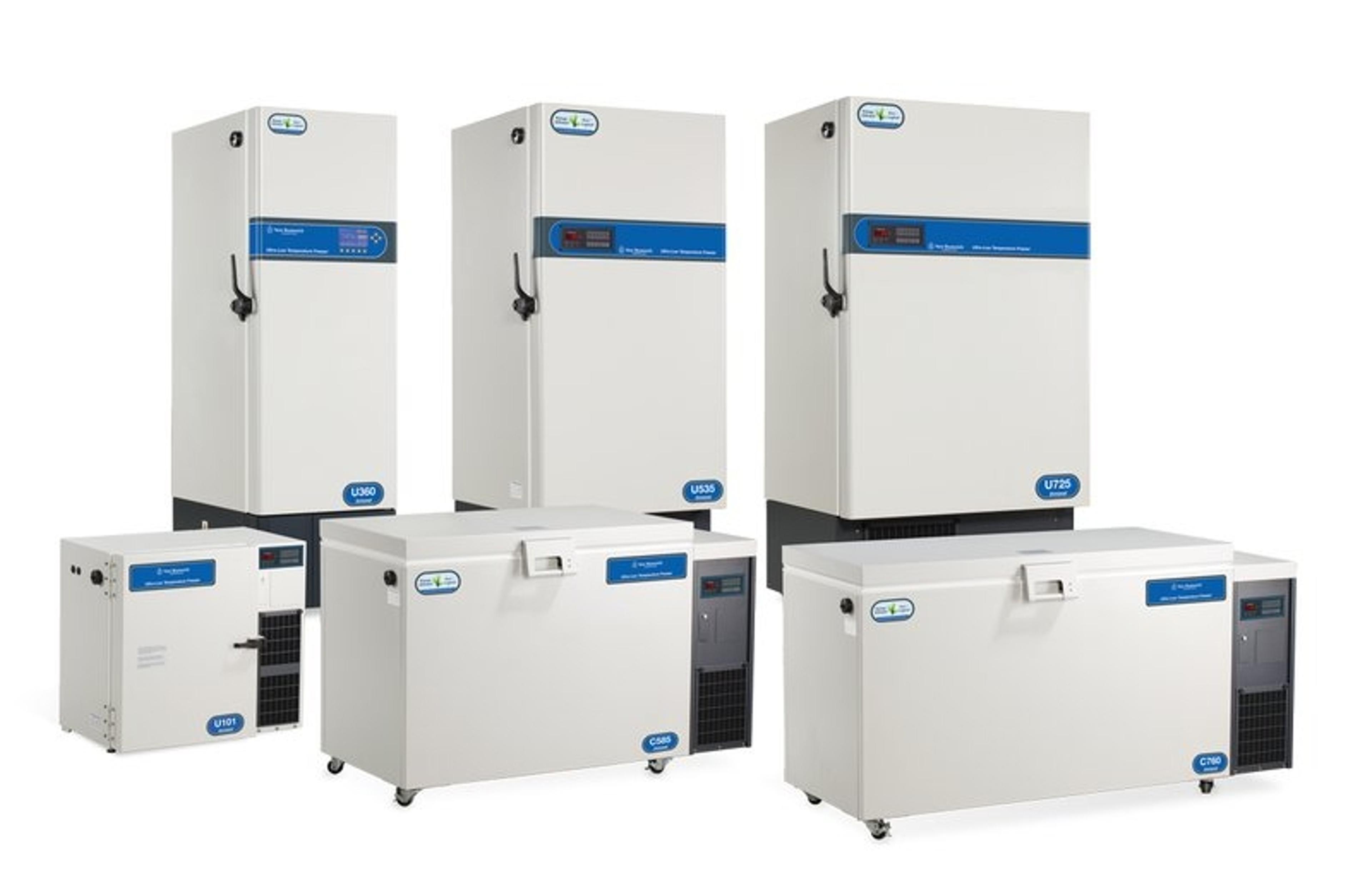
Innova® Ultra-low Temperature Freezers
EppendorfNew Brunswick Scientific's Innova® ultra-low temperature lab freezers combine Vacuum Insulation Panel design with our cooling technology to provide the ultimate in space and power efficiency. Six ULT freezer models are now available, including our unique personal-sized Innova U101, designed for use on or under the lab bench; and Innova U725, capable of holding up to 10,400 more samples than lab freezers of equal size. For labs short on space, we offer an ultra-slender model, Innova U360. Use of ultra-efficient vacuum insulation panel technology enables the U360 to hold 25,200 samples, yet measure under 27" (67 cm) wide. Features: Increased Storage Capacity Innova ULT laboratory freezers utilize Vacuum Insulation Panel technology to offer up to 30% more storage capacity Convenience Flush, front-mounted control panel Easy-to-open door Heated air vent with spring-assisted plunger to break ice Low noise & low heat output Inner door system with molded grip and ice-proof latch Easy mobility Front-mounted, washable filter Inner doors easily lifet off without tools Remote control & data logging Sample security User-defined password protects alarm and temperature setpoints Keyed locks on outer doors and lids Energy Efficient NBS lab freezers consume less power per kilowatt-hour Rapid temperature recovery after door opening
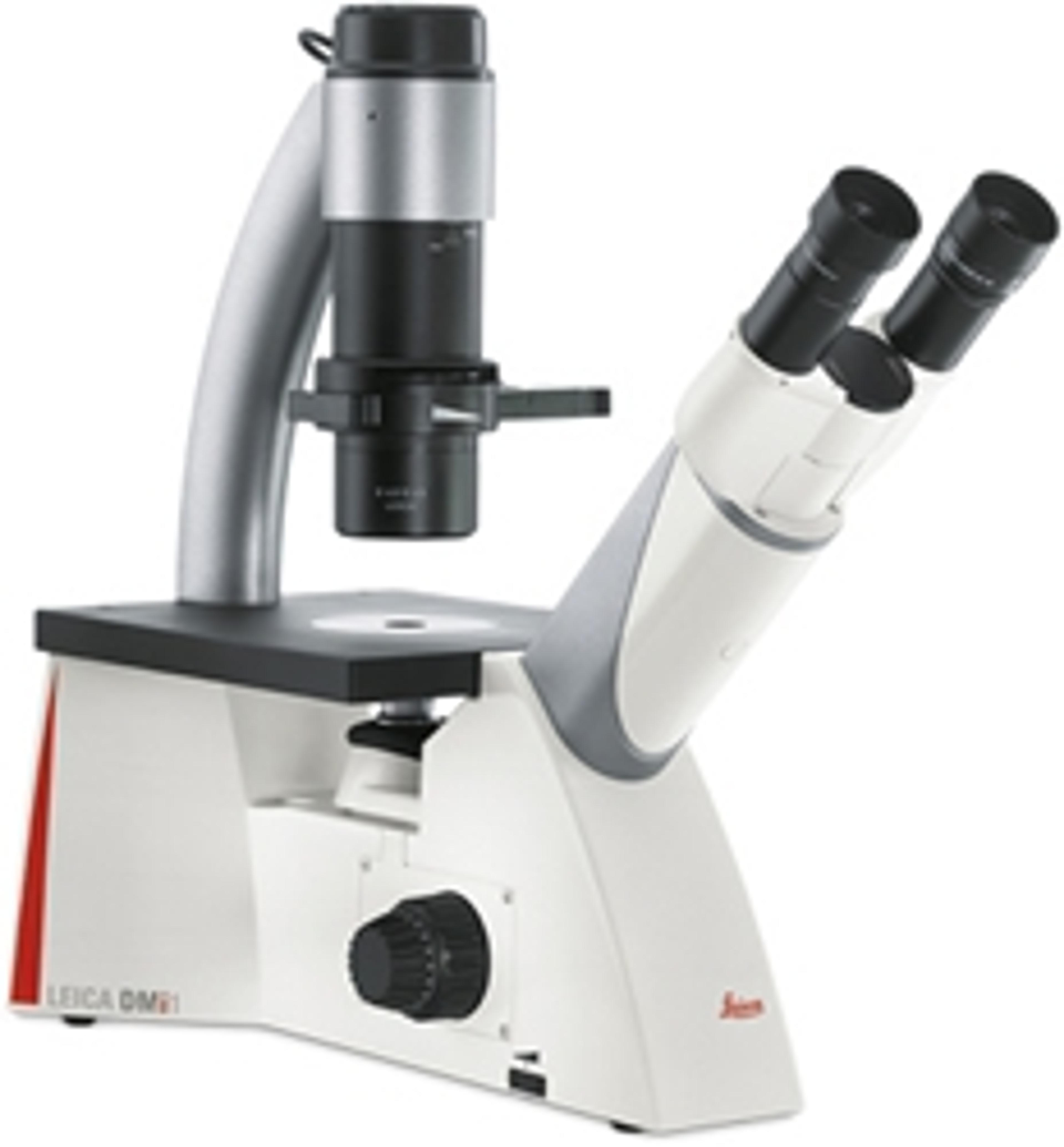
DMi1 inverted microscope for cell culture
Leica Microsystems EuropeInverted microscope designed for routine cell and tissue culture

Stuart Orbital Shakers
Cole-Parmer Instrument Co.These shakers provides a smooth uniform circular motion with an orbit of 16mm. The SSM1 is supplied with a non-slip mat that can hold up to four multi-well plates or diagnostic cards. The SSL1 comes complete with a cradle system, rather than a non slip mat, to comfortably hold flasks. The shakers can be used in incubators and environmental chambers (up to 40°C and 80% humidity). Speed is variable from 30 to 300 rpm. Once set on the digital display, the shaking speed is effectively maintained even over long periods of time. Shaking times can be set to run for 1 to 999 minutes on the built-in digital timer, or the unit can be set for continuous operation. Features: Smooth orbital shaking action Orbit of 16mm is ideal for larger samples, for example multi well plates Built-in digital timer Variable speed control to 300rpm Supplied with non-slip mat for multi-well plates etc. Optional accessory cradle system for flasks and bottles