
Mission Bio’s Tapestri Platform used to distinguish acute myeloid leukemia clones from CHIP clones
New findings pave way to potentially improved assessment of measurable residual disease in AML patients
27 May 2021
Product news
Mission Bio, the life sciences company delivering single-cell resolution multi-omics tools to accelerate discoveries and improve time-to-market for new therapeutics, announced a new peer-reviewed study published using the Tapestri Platform’s single-cell multi-omics solution to accurately distinguish leukemic cells from clonal hematopoiesis of indeterminate potential (CHIP) in relapsed AML patients. These findings highlight the potential of single-cell proteogenomics to vastly improve disease monitoring post-treatment, specifically for measurable residual disease (MRD) in hematological malignancies. The study was led by Christopher S. Hourigan, MD, DPhil, Chief of Myeloid Malignancies at the National Heart, Lung, and Blood Institute (NHLBI), part of the National Institutes of Health, and published in Blood Cancer Discovery, a journal of the American Association for Cancer Research.
Because the same mutations can occur in both CHIP and AML clones in the same patient, it can be difficult to distinguish between the two, which is critical for monitoring disease persistence after a patient has undergone treatment. Current single-analyte methods of MRD detection, such as bulk DNA sequencing and flow cytometry, don’t always provide a clear diagnosis. A recent study highlighted the synergistic use of both flow cytometry and NGS-based methods for detection of residual disease.1 In this NHLBI-led study, lead author Laura Dillon, PhD and team showed that integrating both the DNA variants and the immunophenotypic profile from the same cell enables more comprehensive detection of phenotypically heterogeneous disease, while resolving confounding CHIP clones in the same sample.
By conducting simultaneous single-cell DNA and protein analysis on three relapsed AML patients, researchers were able to determine whether epigenetic mutations co-occurred with other leukemia-defining features like structural variations (translocations, inversions, fusions and copy number) and immunophenotypes at the single-cell level. Where AML is often believed to arise from antecedent CHIP populations, one of these samples highlighted a particular case of parallel and mutually exclusive clonal architecture. With these complex genotype-phenotype relationships revealed, they were able to distinguish malignancy from benign somatic mosaicism that can often confound accurate disease profiling. This integrated multi-modal approach provided more comprehensive insight into the clonal relationship between concurrent CHIP and AML clones. Making this distinction can mean the difference in a clinical setting for MRD monitoring of relapsed AML patients, and those living with other heme malignancies that have undergone treatment.
“We are excited that these novel multi-omics methods enabled by Tapestri can provide critical insights to unravel complex disease biology and are showing the potential impact on patient outcomes,” said Yan Zhang, CEO of Mission Bio. “They may even open the door to personalized medicines by defining the unique features of MRD in individual patients more accurately. We applaud Dr. Hourigan and team for their efforts, and congratulate them for findings that have the potential to provide better diagnoses to those living with AML.”
Do you use Mission Bio products in your lab? Write a review today for your chance to win a $400 Amazon Gift Card>>
Related products
Request Quote for All Products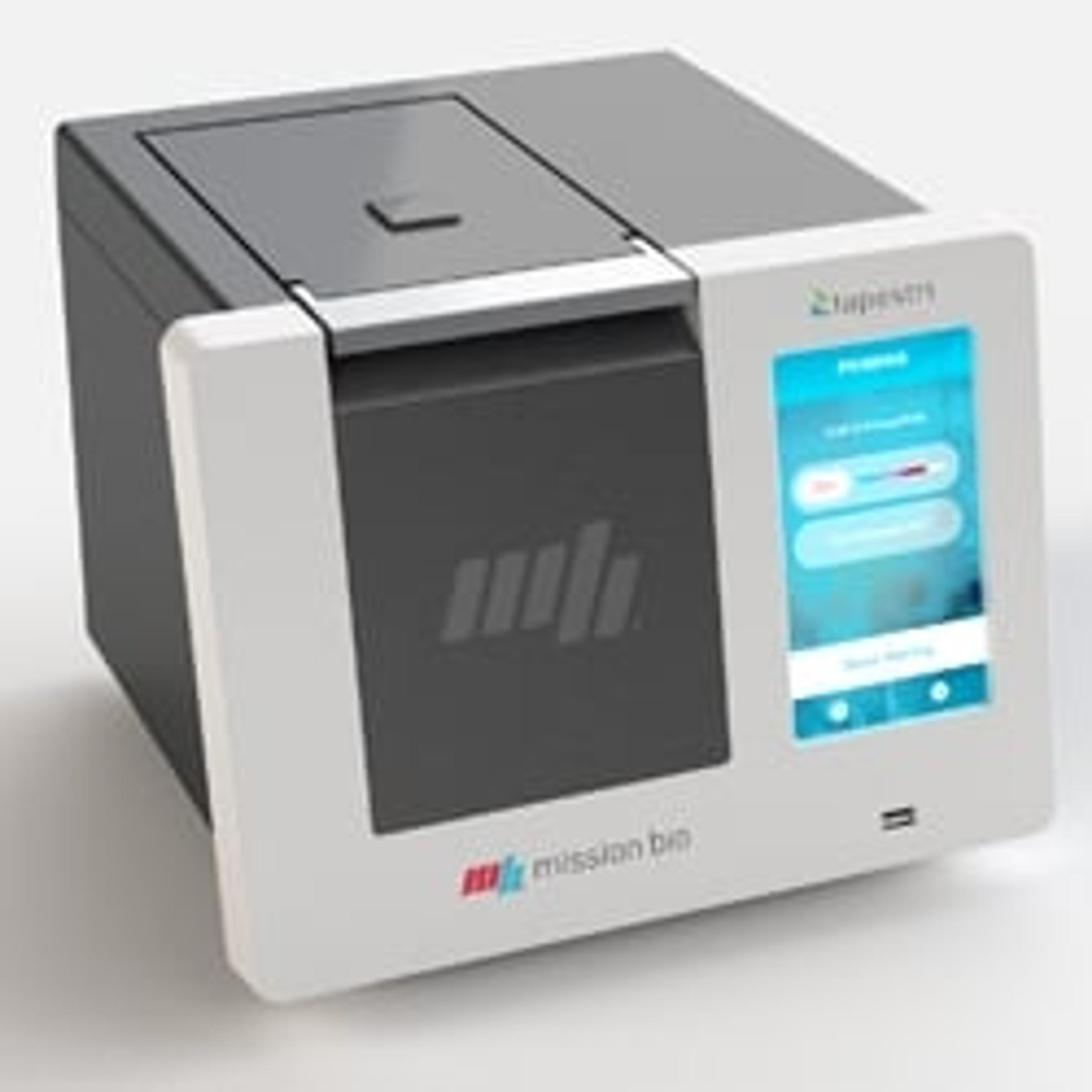
Tapestri Platform
Mission BioClonal Resolution with Single-Cell Precision Complex disease evolves, so understanding genetic variability — including mutation co-occurrence at the single-cell level — is vitally important for clinical researchers to break the cycle of treatment response, resistance and relapse.