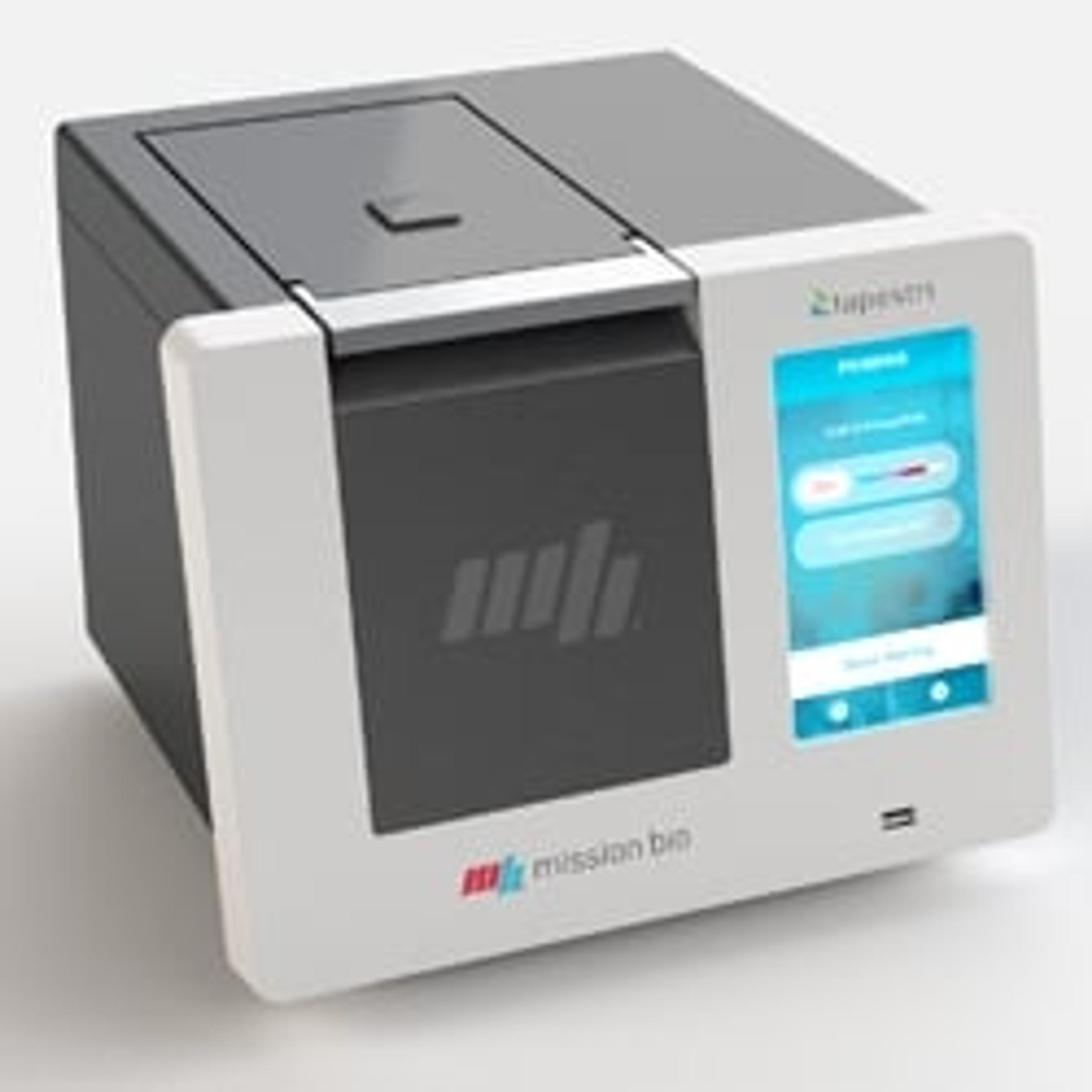
Mission Bio launches single-cell multi-omics system for faster development of precision cancer therapies

The integrated solution offers deeper insight into therapy resistance and relapse, saving billions in drug development costs

18 Jan 2021

Diane Li
Assistant Editor

Product news

Mission Bio, Inc. has announced the launch of a complete Tapestri® Single-cell Multi-omics Solution, the most comprehensive single-cell multi-omics platform on the market. With a new instrument, single-cell multi-omics reagent kits, TotalSeq-D™ antibody content from BioLegend, and visualization software, the complete package provides layered insight into multiple analytes across all blood cancers, reducing drug development time and cost by at least half. The company is partnering with BioLegend, a global leader and provider of world-class, cutting-edge antibodies and reagents, to develop antibody panels for single-cell protein detection with the new device.

The complexity of cancer cannot be overcome without comprehensive tools. Running a large-scale clinical study costs around $40 million, and the pharmaceutical industry is losing $50 billion a year on failed clinical trials and ineffective drugs. It is essential to identify precision biomarkers and characterize resistance mechanisms — both DNA mutations and protein expression– to minimize losses, maximize treatment efficacy, and accelerate time to market.

“With our technology, you can unlock the ground truth of cancer: our DNA-Protein kit offers, for the first time, the ability to understand the communication pathway all the way from the blueprint of life in the center of the cell — DNA — to the exterior of the cell via surface proteins, without inference or conjecture,” explained Nigel Beard, Ph.D., Chief Technology Officer and SVP of Operations of Mission Bio. “It’s a product builders’ dream to deliver a disruptive technology that truly empowers our customers with the potential to unravel the many connected threads that make up the complexity of cancer.”

Mission Bio’s new solution can uniquely detect DNA and protein simultaneously from the same cell and is already adopted by marquee NCI Cancer Centers, including MD Anderson Cancer Center, Memorial Sloan Kettering Cancer Center, University of Texas, Southwestern Medical Center, and the University of California, San Francisco. The offering sets a new standard for comprehensive single-cell multi-omics, providing:

  • 2x Faster Analysis – The new Tapestri Instrument uniquely enables a simpler workflow for faster time-to-data. By integrating both genotype and phenotype data on a single Tapestri run, researchers save weeks in processing and analysis time in running a single multi-omics workflow.
  • Get More Out of Your Sample – Save precious samples by utilizing new reagent kits for a single workflow to obtain both mutation data and protein expression.
    • New Tapestri Cell Protein Staining Reagent Kits from Mission Bio are optimized with a fully developed protocol and compatible with new TotalSeq-D kits from BioLegend and existing Tapestri Core Reagent Kits.
    • The 45-plex TotalSeq-D Heme Oncology Cocktail is the first catalog panel in partnership with BioLegend for single-cell surface protein detection with the Tapestri Platform. The panel is pre-mixed, titrated, and lyophilized and consists of antibodies applicable to various hematological malignancies.
  • Visualization Tools for Integrated Insights – From novice users to savvier bioinformaticians, the updated Tapestri Pipeline and Insights software provide publication-ready visualization tools that make it easier to understand data — from raw sequencing files to multi-dimensional cluster plots.

“The value of connecting the mutations in single-cells with their immunophenotypes directly has been a game-changer in allowing us to discover cell surface markers that identify disease stem cells. Merging multiple assays saves us a tremendous amount of time and allows for better insights into disease biology so that we can develop more precise and effective therapies,” said Stephen Chung, M.D., University of Texas, Southwestern Medical Center.

The latest system extends Mission Bio’s market reach, merging the $3 billion flow market with the $2.5 billion next-generation sequencing market. The combined market is projected to reach over $20 billion by 2025. The Tapestri Platform’s novel DNA and protein capabilities have been validated in numerous peer-reviewed studies, including most recently in Nature and Nature Communications, which established the single-cell genomics atlas of acute myeloid leukemia (AML), providing a unique insight into disease evolution and treatment resistance.

Do you use Mission Bio products in your lab? Write a review today for your chance to win a $400 Amazon Gift Card>>

Tapestri Platform

Mission Bio

Clonal Resolution with Single-Cell Precision Complex disease evolves, so understanding genetic variability — including mutation co-occurrence at the single-cell level — is vitally important for clinical researchers to break the cycle of treatment response, resistance and relapse.

(0)

Links

Tags

AntibodiesAntibodies are used in techniques such as confocal and fluorescence microscopy, flow cytometry, ELISA, ELISPOT, immunohistochemistry, western blotting and immunopreciptation. Select specific antigen reactivity, high specific affinity, low non-specific binding, monoclonal or polyclonal, primary or secondary antibodies and associated conjugates such as an enzyme or dye for visualization.Data AnalysisData analysis hardware and software is available to make data processing straight-forward yet powerful. Data software can be used for math and stats, technical graphing and image analysis. In addition, software is available for specific data analysis of electrophoresis, densitometry, ELISA and DNA sequencing.HematologyIn Haematology / Hematology, complete blood cell counts (or full blood counts) are obtained using automated blood count analyzers to enumerate blood cell types.  Hematology also encompasses haemostasis and coagulation, thrombophilia and hemophilia, plasma viscosity and ESR analysis, hemoglobinopathies, cell morphology and haematinic measurement.ImmunologyImmunological techniques measure and characterize immune responses. Immunology kits and analysis systems often use techniques such as ELISA, radioimmunoassay (RIA) and immunodiffusion assays, Immunohistochemistry, and flow cytometry. Immunologists use equipment such as flow Cytometers, plate readers, plate washers and fluorescent microscopes.Cellular PathologyCellular Pathology deals with the microscopic analysis of tissue samples and cells. Sample preparation and processing includes fixation, staining, sectioning and slide mounting, using equipment such microtomes and cryostats. In choosing immunohistochemistry and immunocytochemistry kits, consider chromogens, staining method, antibodies, microscopes and imaging.DNA / RNA Extraction and PurificationPurified DNA and RNA are required for numerous downstream molecular biology applications. Consequently, the importance of high-quality DNA/RNA extraction and purification equipment cannot be underestimated. Many purification kits are available and are typically optimized for nucleic acid type and source, including plasmid DNA, genomic DNA, mRNA, RNA and viral nucleic acid purification kits. Automated extraction and purification of nucleic acids can be implemented with magnetic bead separator instruments or high-throughput purification workstations. Find the best DNA/RNA extraction and purification equipment in our peer-reviewed product directory: compare products, check customer reviews and receive pricing direct from manufacturers.Biopharmaceutical AdvancesBiopharmaceutical advances follow the development of pharmaceuticals derived from biotechnology, also known as biotechnology medicines. Biopharmaceuticals may be produced from cell lines, plants, or microbial cells. Important considerations of biopharmaceutical use include application, cost, production process and purification.Clinical TrialsClinical Trials, an essential part of drug discovery process, assess the safety and effectiveness of a new medication or device in the pharmaceutical industry. Clinical Trials are a phased process (Phase 0, Phase I, Phase II, Phase III and Phase IV) which begins after initial preclinical testing.Clinical ChemistryBiochemistry (or clinical chemistry) involves the analysis of bodily fluids using chemical tests. Techniques used include HPLC, chromatography, spectroscopy, mass spectrometry, immunochemical, electrophoresis, turbidometric / spectrophotometric assay, MRI and ISE analysis. Tests are often carried out on plasma or serum but urine (urinalysis) and fecal specimens are also processed.Clinical GeneticsMolecular Genetics covers the analysis of hereditary genetic disease and chromosomal abnormalities. Genetics can be analysed using DNA, RNA, and protein microarrays, PCR, RT PCR and DNA sequencing. Genetic equipment includes genetic workstations, thermal cyclers, cooling blocks and electrophoresis products. Diagnostic kits are used for DNA / RNA extraction and purification.Clinical MicrobiologyMicrobiology is the study of microorganisms including protists, prokaryotes, fungi, and, often, viruses. Microorganisms are a useful research tool as genetic vectors and, in immunology, for antibiotic susceptibility testing, cellular biology and genetics. Microorganisms commonly grow readily in incubators with microbial culture media; this can contain chromogenic supplements to differentiate between cell lines. Estimate your culture’s density of microorganisms with colony counters, or screen and select colonies for desirable clones with automated colony pickers. Additionally, equipment is available to monitor environments for the presence of microbes and identify with microbial identification instruments. Find the best microbiology products in our peer-reviewed product directory: compare products, check customer reviews and receive pricing direct from manufacturers.Drug DeliveryDrug Delivery refers to dosage form, route of administration, formulations, technologies, and systems for transporting a pharmaceutical compound in the body as needed to safely achieve its desired therapeutic effect. Drug delivery is often approached via the biopharmaceutical or small molecule drug's formulation, but it may also involve medical devices or drug-device combination products. Considerations include instrumentation, software and services. RegulatoryPharmaceutical regulations impact on all areas of drug development, manufacture and control and supply. Services are provided from the early stages of drug development and clinical trials through to dossier submission, approval and marketing. Regulatory also includes submission of analytical studies from the pharmaceutical product and safety. DNA / RNA QuantificationDetection and quantification of nucleic acids is important in molecular biology, cloning, expression, forensics and clinical diagnostics. Nucleic acids can be detected by labeling with colorimetric, fluorescent or radio labels and using in situ hybridization kits to identify specific sequences. Multiple nucleic acids can be detected and quantified at once using RNA / DNA detection beads or RNA / DNA microarrays. Find the best DNA / RNA Quantification products in our peer-reviewed product directory: compare products, check customer reviews and receive pricing direct from manufacturers.Leukemia