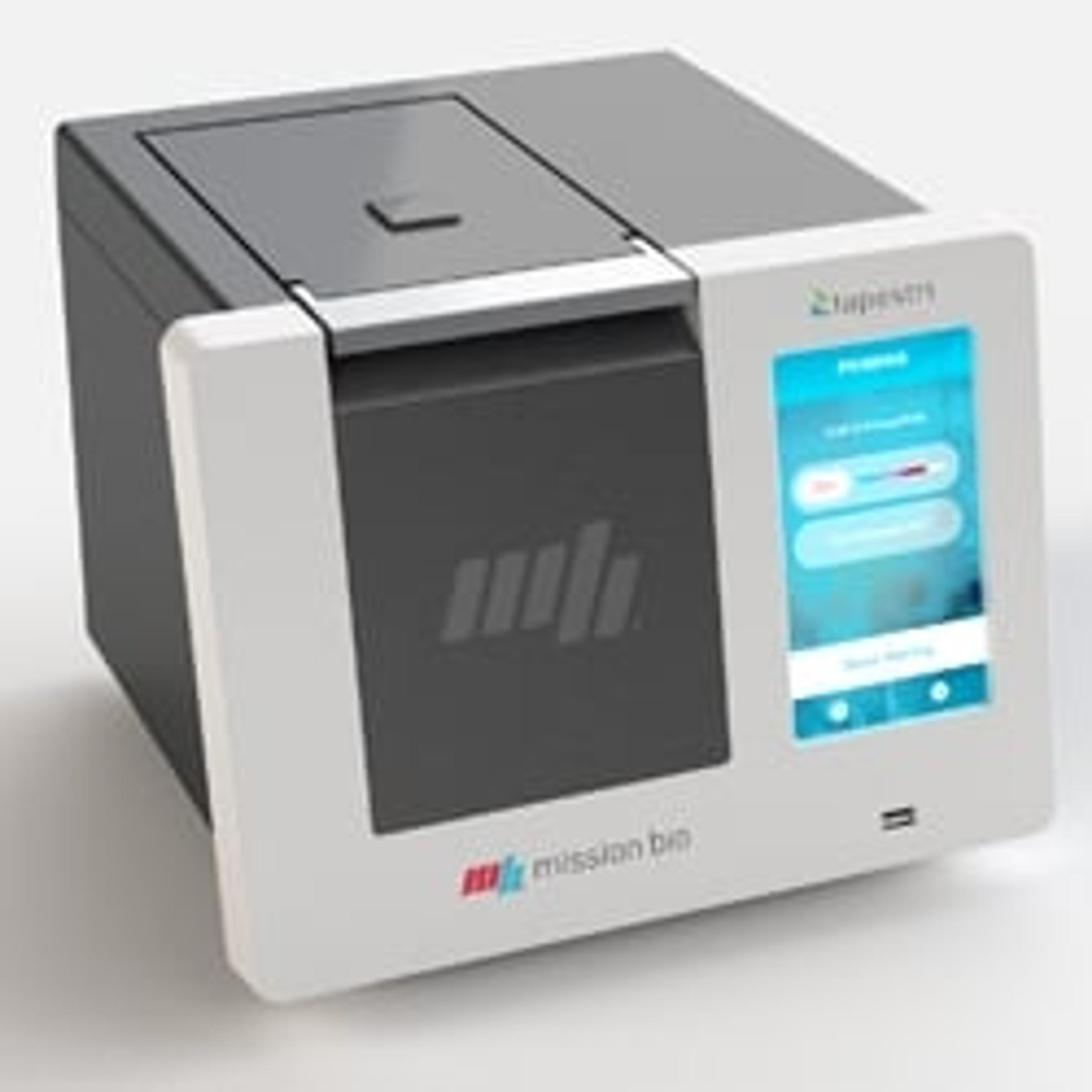
Mission Bio launches pharma assay development services to speed access to new technologies

New service reduces project time from months to weeks for biopharma customers

27 May 2021

Diane Li
Assistant Editor

Product news

Mission Bio, the pioneer in high-throughput single-cell DNA and multi-omics analysis, has announced the launch of its Pharma Assay Development (PAD) services to accelerate biomarker discovery and cell and gene therapy development pipelines for biopharma customers. The PAD Team will provide customers with early access to services based on the latest new technological innovations, in addition to services on Mission Bio’s existing products to implement Single Cell Multiomics capabilities into discovery, translational and clinical research efforts. Mission Bio has appointed Harsha Kavuri to head up the PAD Team as General Manager, affirming its strategic focus to service the dynamic needs of customers working in areas like hematology and cell and gene therapy.

Pharmaceutical companies are accustomed to long, costly assessment and due diligence of any new technologies to ensure adoption of new technological platforms in house would add value to the overall therapy research and development efforts. Mission Bio’s PAD Team helps lower the hurdle of platform adoption by running projects on behalf of pharma customers, providing a quicker and easier path at the proof of concept stage and enabling those same customers to ultimately bring Mission Bio products in-house faster and more efficiently.

“Our biopharma customers face a number of challenges when trying to adopt new technologies that are even more pronounced in today’s environment, including sourcing the proper expertise and finding the operational and analytical resources,” Kavuri said. “By putting our new Pharma Assay Development team at their disposal, we can enable the next wave of applications for our customers across areas like biomarkers for solid tumors, hematological cancers and cell and gene therapy.”

The extra level of service provided by the PAD offering has already shown the potential to deliver projects in a matter of weeks as opposed to months. Several papers have been published in the area of treatment resistance mechanisms from teams at UCSF and the University of Pennsylvania, as well as an investigation of combinational therapies by Agios, all of which made use of the access and resources this PAD service provides.

Do you use Mission Bio products in your lab? Write a review today for your chance to win a $400 Amazon Gift Card>>

Tapestri Platform

Mission Bio

Clonal Resolution with Single-Cell Precision Complex disease evolves, so understanding genetic variability — including mutation co-occurrence at the single-cell level — is vitally important for clinical researchers to break the cycle of treatment response, resistance and relapse.

(0)

Links

Tags

HematologyIn Haematology / Hematology, complete blood cell counts (or full blood counts) are obtained using automated blood count analyzers to enumerate blood cell types.  Hematology also encompasses haemostasis and coagulation, thrombophilia and hemophilia, plasma viscosity and ESR analysis, hemoglobinopathies, cell morphology and haematinic measurement.Cellular PathologyCellular Pathology deals with the microscopic analysis of tissue samples and cells. Sample preparation and processing includes fixation, staining, sectioning and slide mounting, using equipment such microtomes and cryostats. In choosing immunohistochemistry and immunocytochemistry kits, consider chromogens, staining method, antibodies, microscopes and imaging.Clinical ChemistryBiochemistry (or clinical chemistry) involves the analysis of bodily fluids using chemical tests. Techniques used include HPLC, chromatography, spectroscopy, mass spectrometry, immunochemical, electrophoresis, turbidometric / spectrophotometric assay, MRI and ISE analysis. Tests are often carried out on plasma or serum but urine (urinalysis) and fecal specimens are also processed.Clinical GeneticsMolecular Genetics covers the analysis of hereditary genetic disease and chromosomal abnormalities. Genetics can be analysed using DNA, RNA, and protein microarrays, PCR, RT PCR and DNA sequencing. Genetic equipment includes genetic workstations, thermal cyclers, cooling blocks and electrophoresis products. Diagnostic kits are used for DNA / RNA extraction and purification.Clinical MicrobiologyMicrobiology is the study of microorganisms including protists, prokaryotes, fungi, and, often, viruses. Microorganisms are a useful research tool as genetic vectors and, in immunology, for antibiotic susceptibility testing, cellular biology and genetics. Microorganisms commonly grow readily in incubators with microbial culture media; this can contain chromogenic supplements to differentiate between cell lines. Estimate your culture’s density of microorganisms with colony counters, or screen and select colonies for desirable clones with automated colony pickers. Additionally, equipment is available to monitor environments for the presence of microbes and identify with microbial identification instruments. Find the best microbiology products in our peer-reviewed product directory: compare products, check customer reviews and receive pricing direct from manufacturers.Cancer DiagnosticsThere are a wide variety of diagnostic tests for cancer available, and this range continues to expand as our knowledge of cancer improves. Current diagnostic methods include biopsy, imaging and blood tests for known biomarkers. New methods in research development include liquid biopsies and cancer breathalyzers.Cell TherapyCell therapy involves using living cells to treat diseases, often by replacing damaged cells or stimulating regeneration. Stem cell therapy and CAR-T cell therapy are examples of cutting-edge treatments in regenerative medicine and cancer immunotherapy. Browse our peer-reviewed product directory to find the best cell therapy tools, compare products, check reviews, and get pricing directly from manufacturers.Assay DevelopmentThe process of proving an assay to be sensitive with respect to the target is known as assay development. The assay should be able to characterize novel compounds and measure the potency of these compounds against a validated biological target.PharmaceuticalsPharmaceuticals are medicinal drugs used in healthcare to diagnose, prevent, cure and treat illnesses. Pharmaceuticals that are excreted after use appear in wastewater and can have detrimental effects on the environment.TumorsTumor research focuses on understanding abnormal cell growth that leads to cancer. Identifying biomarkers, studying tumor microenvironments, and developing targeted therapies are critical for advancing cancer treatment. Early detection and personalized treatment options are key to improving outcomes for patients. Browse our peer-reviewed product directory to explore tools for tumor research, diagnostics, and cancer therapies; compare products, read customer reviews, and get pricing directly from manufacturers.Gene TherapyGene therapy is a technique that modifies or replaces genes within an individual's cells to treat or prevent diseases. This approach holds potential for curing genetic disorders, cancers, and certain viral infections. Advances in gene editing technologies like CRISPR are driving the growth of gene therapy. Explore gene therapy tools and technologies in our peer-reviewed product directory; compare products, check reviews, and get pricing directly from manufacturers.Cancer ResearchAlthough cancer is often referred to as a single condition, it actually consists of more than 100 different diseases. Microscopy, mass spectrometry, high throughput sequencing and flow cytometry are some of the most common techniques employed in cancer research labs.
Mission Bio launches pharma assay development services to speed access to new technologies