
Mission Bio Launches in China, Announces Distribution Partnership with Novogene
Deal brings single-cell genomics to China and accelerates Mission Bio’s mission to predict and prevent cancer relapse on a global scale
11 Jul 2019Industry news
Mission Bio, a pioneer in targeted single-cell DNA analysis and precision genomics, have announced that it has launched sales in China through a distribution agreement with Novogene, a leading provider of genomic services and solutions globally. The deal brings the Mission Bio Tapestri® Platform to the rapidly expanding Chinese market.
China is one of the world’s largest next-generation sequencing (NGS) markets, with enormous opportunities for genomics. Thanks to greater investment into the region’s healthcare infrastructure, the market is poised to explode: recent reports project the country’s DNA sequencing market will reach $2.7 billion by 2022, up from $1.1 billion in 2017. Further, the in vitro diagnostics (IVD) market is expected to double by 2022, growing from $3 billion in 2017.
“The demand for innovative and impactful technologies has required Novogene to bring new products to our customers,” said Ruiqiang Li, Ph.D., founder and CEO of Novogene. “The Mission Bio Tapestri Platform has advantages over current offerings, including increased resolution down to 0.1 percent. It is synergistic to the sequencing we offer, and we are excited to be able to offer this unique technology to our customers.”
The Mission Bio Tapestri Platform is the only single-cell targeted DNA solution available to more precisely identify cancer cell mutation profiles. Tapestri’s unique ability to sensitively detect rare cancer subclones and co-occurring cancer mutations offer a precise way to measure therapy response and disease progression.
“We are excited about our partnership with Novogene and increasing our reach into the China market,” said Darrin Crisitello, Chief Commercial Officer of Mission Bio. “Novogene is highly regarded globally across the industry with reach into key accounts that will have significant interest in the Tapestri Platform. The adoption of this targeted single-cell DNA analysis has been strong in other parts of the world, and we expect the same uptake in the Chinese market.”
Today, more than a dozen leading institutions have adopted Mission Bio’s Tapestri Platform to better understand cancer progression and patient outcomes. Most recently, researchers from the University of Pennsylvania (Penn) and the University of California San Francisco (UCSF) leveraged the single-cell technology to track and monitor cancer evolution, revealing the potential for more impactful, dynamic therapies in patients with Acute Myeloid Leukemia (AML). The study, published in Cancer Discovery, is the first-ever study using single-cell DNA analysis to reveal how cancer evolves in response to targeted treatment.
For more science news, straight to your inbox, join SelectScience today.
Related products
Request Quote for All Products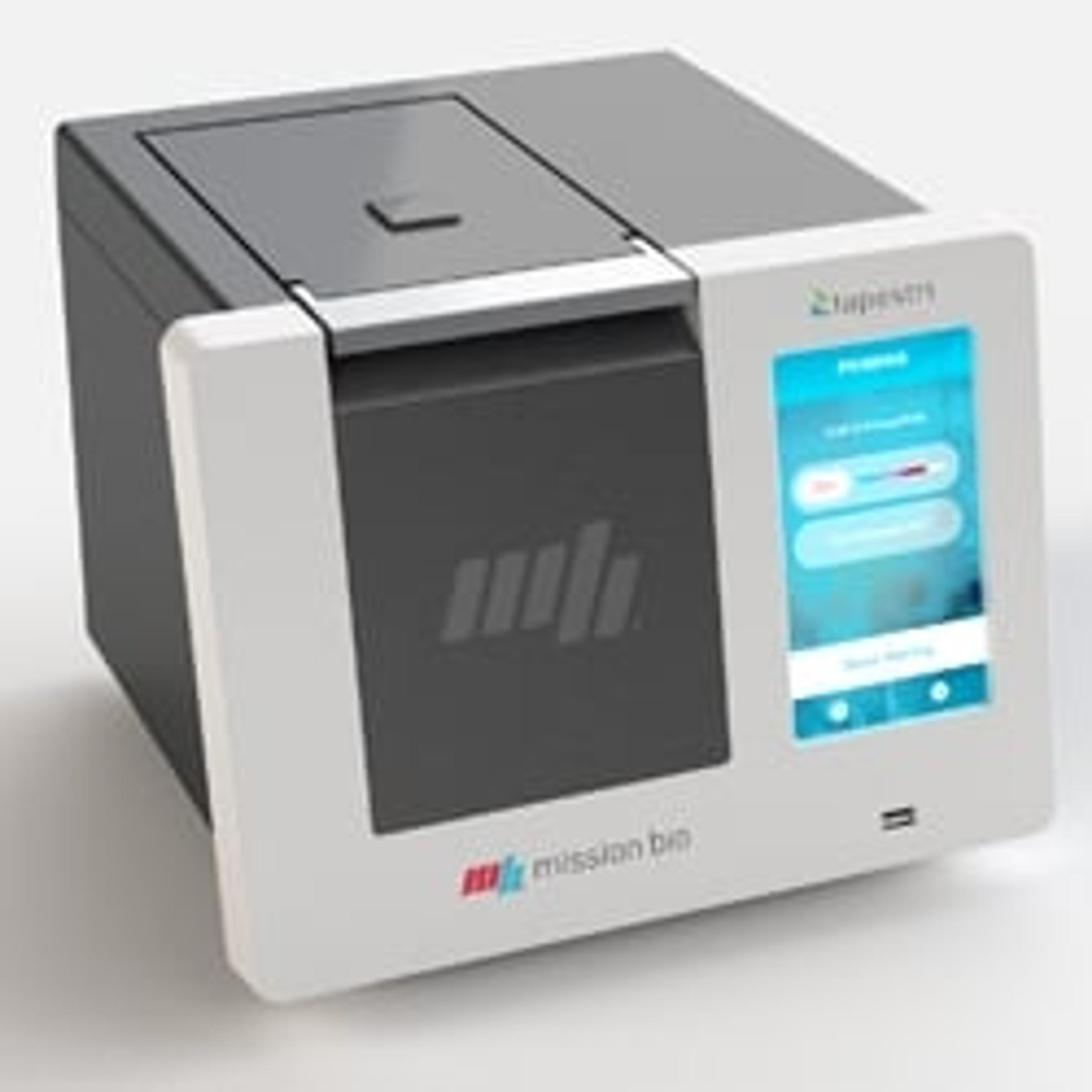
Tapestri Platform
Mission BioClonal Resolution with Single-Cell Precision Complex disease evolves, so understanding genetic variability — including mutation co-occurrence at the single-cell level — is vitally important for clinical researchers to break the cycle of treatment response, resistance and relapse.