MILabs Launches New Molecular Imaging Product Line at the European Association of Nuclear Medicine Annual Meeting

20 Oct 2014

Sarah Thomas
Associate Editor

Product news

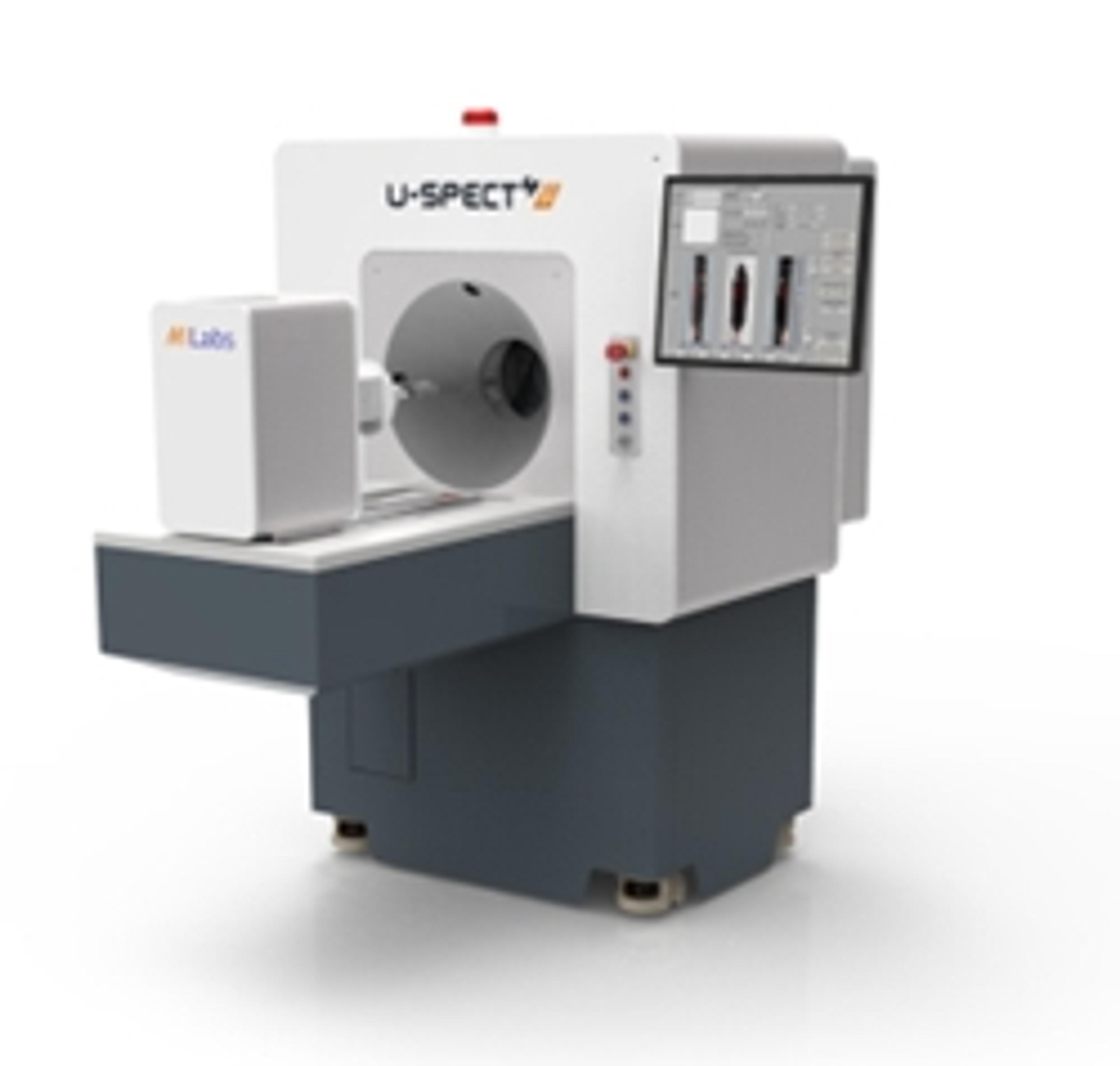
MILabs BV has launched a complete new preclinical product line at the 2014 Annual European Association of Nuclear Medicine Meeting in Gothenburg, Sweden, October 18-22. It consists of the new 4-series comprising U-SPECT4, U-SPECT4CT, VECTor4 and VECTor4CT incorporating significant improvements over the former PLUS-series. The 4-series carries even further the tradition of MILabs to deliver the best SPECT and PET image resolution available in the market.

The new systems are more compact and include a dramatically improved X-Ray CT subsystem with reduced radiation dose, increased resolution and speed. The CT subsystem comes at three different resolution levels. The high resolution versions have significant added value for application areas such as in vivo bone, cancer and arthritis research.

“Our customers are highly enthusiastic about the integrated low dose CT units and we are pleased to offer them dramatically improved resolution as well“, says Frederik Beekman, CEO/CSO of MILabs. This new generation U-SPECT4CT and VECTor4CT brings MILabs even further ahead in terms of combined ultra-high resolution functional and anatomical nuclear imaging. MILabs expects that the next generation U-SPECT4, U-SPECT4CT, VECTor4 and VECTor4CT systems will further accelerate the rapid growth of MILabs’ global customer base.

U-SPECT4 CT

MILabs BV

By far the best available SPECT resolution and sensitivity on the market. Patented 3D focusing capability for dynamic nuclear microscopy in organs and tumors. Ultra-fast imaging with multi-physiologic gating reveals dynamic processes with unprecedented time resolution, ideal for pharmacokinetic imaging.Patented M5™ collimation satisfies widest range of resolution, sensitivity and FOV needs. High reliability and long life due to very robust stationary detector design. Highly quantitative single and multi-tracer SPECT. Multi-modal imaging support for third party devices.Features: ¼ mm resolution Ultra-fast & sensitive (>13000 cps/MBq) Optional fully integrated CT

(0)

Links

Tags

In Vivo Imaging Systems<i>In vivo</i> imaging systems, including pre-clinical imaging systems and medical imaging systems are used to non-invasively visualize and capture images of live animals and plants. Monitor the natural processes or diseases of your subjects using small-animal pre-clinical imaging systems, including single photon positron emission tomography (SPECT), positron emission tomography (PET), computed tomography (micro-CT), magnetic resonance imaging (MRI), X-ray radiography, ultrasound, fluorescence and bioluminescence imagers. Multimodal systems and software solutions are also available for correlative analysis of organ, tissue, cell, or molecular-level processes. Find the best in vivo imaging products in our peer-reviewed product directory: compare products, check customer reviews and receive pricing direct from manufacturers.Animal ModelsThe use of non-human animals in experiments or behavorial observations. The research is conducted inside universities, medical schools, pharmaceutical companies, farms, defence establishments, and commercial facilities that provide animal-testing services to industry. It includes pure research such as genetics, developmental biology, behavioral studies, as well as applied research such as pharmaceutical testing in pre-clinical, before human, studies. Cancer ResearchAlthough cancer is often referred to as a single condition, it actually consists of more than 100 different diseases. Microscopy, mass spectrometry, high throughput sequencing and flow cytometry are some of the most common techniques employed in cancer research labs.ImagingImaging techniques are essential for obtaining visual representations of samples to understand structures, processes, and function in biological, chemical, and physical research. These tools range from traditional light microscopy to advanced imaging modalities like MRI and electron microscopy, providing researchers with valuable data for diagnostics, drug discovery, and material analysis. Explore imaging solutions in our peer-reviewed product directory to compare products, check reviews, and get pricing directly from manufacturers.Small Animal ImagingSmall animal imaging is the visualization of living animals, most commonly mice and rats, for research purposes. This non-invasive technique is vital for long-term studies into drugs effects, as well as small animal anatomy and physiology.PETSPECT
MILabs Launches New Molecular Imaging Product Line at the European Association of Nuclear Medicine Annual Meeting