
Microplastics analysis reveals the scale of plastic pollution
Dive into the world of microplastics analysis and witness the power of innovative research in combating environmental pollution
12 Oct 2023
New methods are enabling the comprehensive analysis of microplastics to better understand their environmental impact.
In recent years, the global scientific community has turned its attention to the pressing issue of microplastics – tiny fragments of plastic that have infiltrated our environment and pose a significant threat to ecosystems and human health. As awareness of this pervasive problem grows, so has the urgency to develop innovative methods for accurate and efficient analysis of microplastics.
Microplastics, defined as plastic particles measuring less than 5 mm in size, have become an environmental concern of unprecedented scale. From the depths of the oceans to the most remote corners of the planet, these microscopic plastic fragments have infiltrated various ecosystems, endangering marine life, contaminating freshwater resources, and potentially entering the food chain. The adverse effects of microplastics are far-reaching, raising concerns about ecological disruptions and potential human health risks. Therefore, it is imperative to advance our understanding of the distribution, abundance, and characteristics of microplastics through robust and efficient analytical techniques.
Over the past few years, the field of microplastics analysis has witnessed remarkable progress. Traditional methods, such as visual identification under a microscope, have been complemented and enhanced by innovative technologies. Advanced spectroscopic techniques, including Fourier-transform infrared spectroscopy (FTIR) and Raman spectroscopy, provide valuable insights into the chemical composition and polymer identification of microplastics. These methods enable more accurate quantification, classification, and source tracking of microplastics, contributing to a comprehensive understanding of their environmental impact. Here, we detail some of the latest technologies and methods advancing microplastics analysis.
Automated microparticle analysis by Raman microscopy
ParticleScout is an advanced analysis tool from WITec, designed for use with the alpha300 Raman microscope series. This cutting-edge technology precisely locates, categorizes, identifies, and quantifies particles across expansive sample areas. By employing automated routines, ParticleScout efficiently sorts particles and captures their Raman spectra, enabling the generation of comprehensive reports that offer a detailed and insightful overview of the sample under investigation.
Discover the capabilities of ParticleScout and explore how this innovative technology enables the identification and classification of microplastic particles, as well as the accurate quantification of these particles in wastewater.
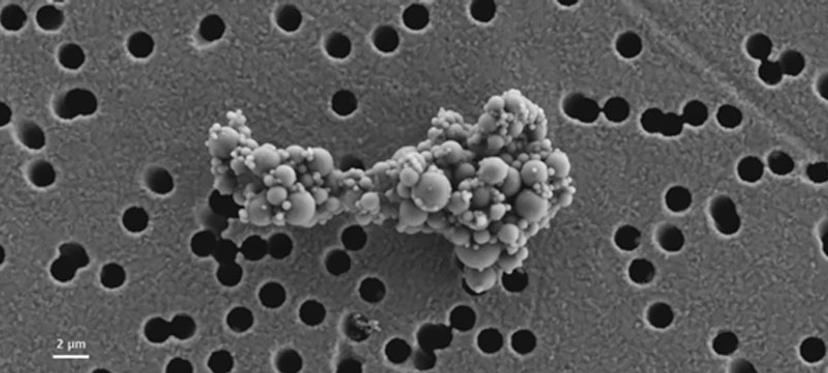
In this application note, ZEISS presents a study on multimodal correlative imaging of microplastics. The study explores the detection and identification of microplastics in various environments, highlighting the challenges posed by their small sizes. It emphasizes the benefits of combining scanning electron microscopy (SEM) and Raman microscopy for enhanced analysis, along with the introduction of a particle identification method based on machine learning software. The note also discusses the use of the nanoGPS chip for precise sample registration and the ZEN Connect software for efficient data processing and correlation. Overall, the study showcases the advantages of SEM-Raman correlation and the potential of machine learning-based particle identification in microplastic analysis.
Overcoming hurdles in the plastic circular economy
The plastic waste industry faces significant challenges in managing the growing volume of plastic waste and mitigating its environmental impact, from the sustainability of new materials, to increasing regulations and the recycling and regeneration of plastic waste.
Gain valuable insights from sustainability and regulatory advisors, along with renowned scientists in this on-demand webinar, as they discuss the challenges of the plastic waste industry and how HORIBA Scientific is actively supporting the transition towards a sustainable future.
Detailed characterization of micro and nanoplastics using Raman spectroscopy
In this informative video, scientists from HORIBA Scientific delve into the significance of microplastics research and provide a comprehensive guide on the precise identification and characterization of micro and nanoplastics using the ParticleFinder module for the LabSpec 6 Spectroscopy Suite software platform. This advanced technology offers laboratory scientists a powerful tool for efficient particle analysis, automated particle localization, and detailed chemical characterization using Raman spectroscopy.
Gain foresight into the future of microplastics research with an innovative study from Agilent Technologies that explores the effects of simulated UV degradation on polystyrene microbeads. Download this application note to discover cutting-edge techniques, such as single particle ICP-MS, utilized to quantify the generation of micro- and nano-sized particles and learn how they can help unveil the potential implications of long-term microplastic retention in the environment.
Imaging measurement and particle characterization of microplastics using infrared microscopy
In this application note, Jasco demonstrates how infrared microscopy can be used to identify microplastics and measure their physical properties, such as size and circulatory. The FT/IR-6000 Series FT-IR Spectrometer and IRT-7000 FT-IR Microscope were utilized for precise analyses of samples.
Want to learn more? Head over to our dedicated environmental community page to stay informed on the latest research, industry news, techniques and upcoming webinars in the environmental sciences.