
Merck Millipore Introduces Magna ChIRP™ RNA Interactome Kits for the Analysis of Chromatin-Associated RNAs
23 Apr 2015
Product news
Merck Millipore, the Life Science division of Merck, today introduced Magna ChIRP™ RNA Interactome Kits, which allow researchers to more easily identify, recover and analyze regions of chromatin that interact with chromatin-associated RNAs such as long non-coding RNA (lncRNA). The highly effective multiprobe-based capture strategy uses cross-linked chromatin to provide reliable detection and discovery of RNA-associated genomic DNA sequences, RNA sequences and proteins.
• Simplifies performance of the ChIRP method by providing all components in one validated kit
• Uses RNA as a target to reliably recover chromatin complexes
• Identifies sites of genomic interaction for chromatin-associated RNA
The new kits use the ChIRP method (Chromatin Isolation by RNA Purification) to isolate chromatin complexes using RNA as the target, allowing researchers to pinpoint specific sites of genomic interaction for chromatin-associated RNAs. The kits simplify the ChIRP method, providing all necessary buffers, enzymes and reagents in one validated kit, as well as a negative control probe set and detailed protocol with capture probe design guidelines. In addition, first-time users can opt for the EZ-Magna ChIRP™ kit, which includes a positive control capture probe set and detection primers that make it easier to validate an experiment's success.
The ChIRP method was first described by researchers at Stanford University in 20111. The technique offered significant potential for lncRNA studies, but the protocol was complex, requiring many different reagents which needed to be sourced from different providers. In addition, the challenging procedure limited use to researchers with strong expertise in the area. The all-in-one Magna ChIRP™ RNA Interactome Kits simplify the process, enabling all laboratories to effectively leverage the ChIRP method.
"Noncoding RNA has become an increasingly prominent area of study in recent years, after researchers discovered that DNA sequence alone does not determine a cell's genetic fate," said Patrick Schneider, Ph.D., Head of Bioscience. "A significant amount of research is now being conducted to understand how chromatin-associated RNAs influence gene expression and epigenetic regulation. Magna ChIRP™ RNA Interactome Kits make the ChIRP method accessible to all researchers, offering a simplified way of studying the interactions of chromatin-associated RNAs."
The kits guide researchers through a process in which they cross-link and lyse cells, sonicate chromatin and hybridize biotinylated capture oligos, which bind to the complementary RNA sequence. Then, Merck Millipore's PureProteome™ Streptavidin magnetic beads are added, which are included in the kits to allow robust pull down of any chromatin binding to the target RNA. After the beads are washed, the DNA, RNA, and protein components can be isolated for further analysis. The protocol eliminates non-specific signals by utilizing split pools of capture probes (even/odd) to allow unambiguous identification of specific interactions.
Related products
Request Quote for All Products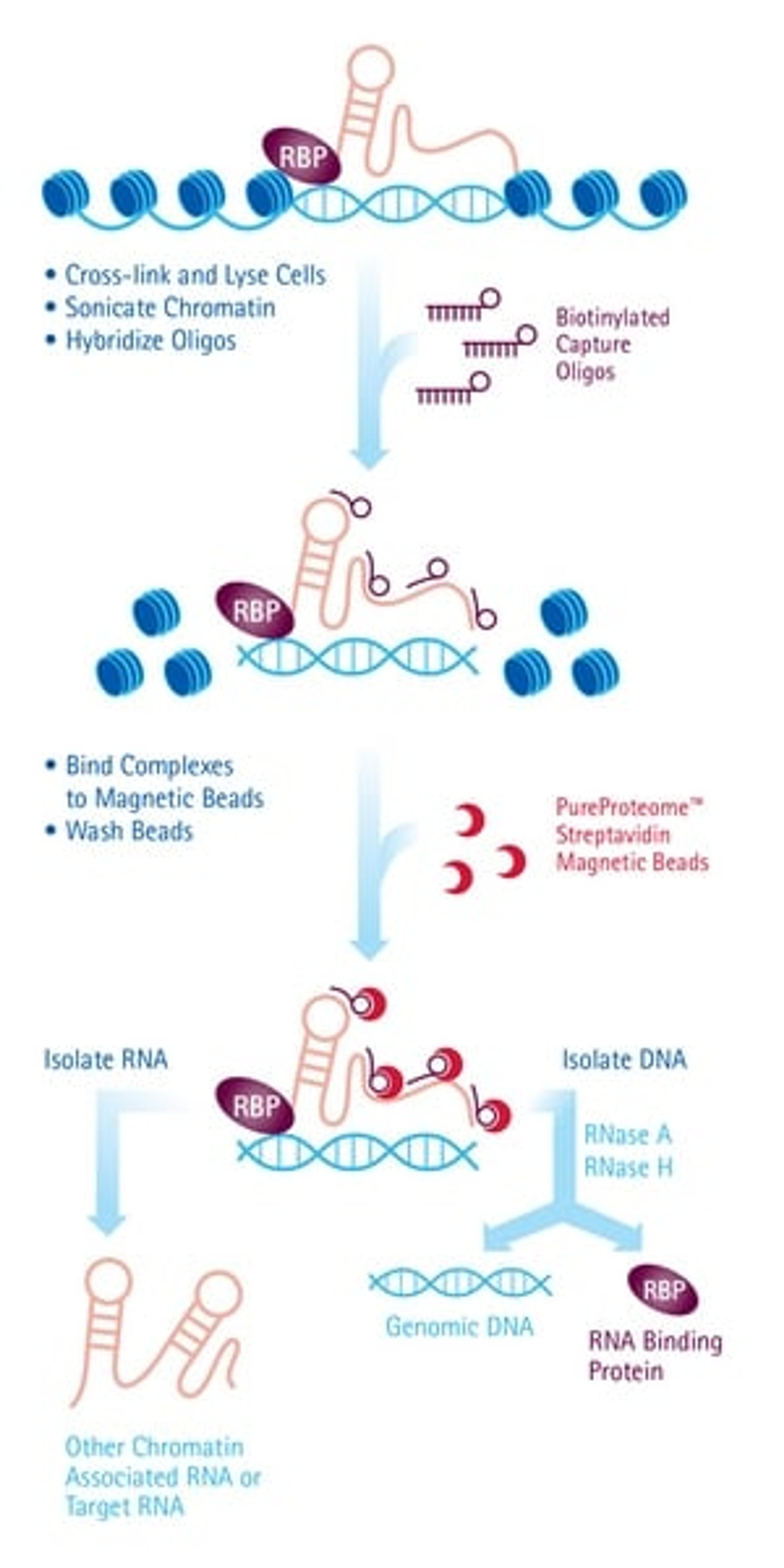
EZ-Magna ChIRP RNA Interactome Kit
Merck KGaA, Darmstadt, GermanyAllows analysis and mapping of regions of chromatin interacting with chromatin-associated RNAs.