Measuring minimal residual disease related to cancer relapse with single cell genomics

Grant received to use the Mission Bio Tapestri Platform to improve the measurement of residual cancerous cells remaining post-treatment

10 Oct 2019
Arran Tabary-Davies
Microbiologist

Industry news

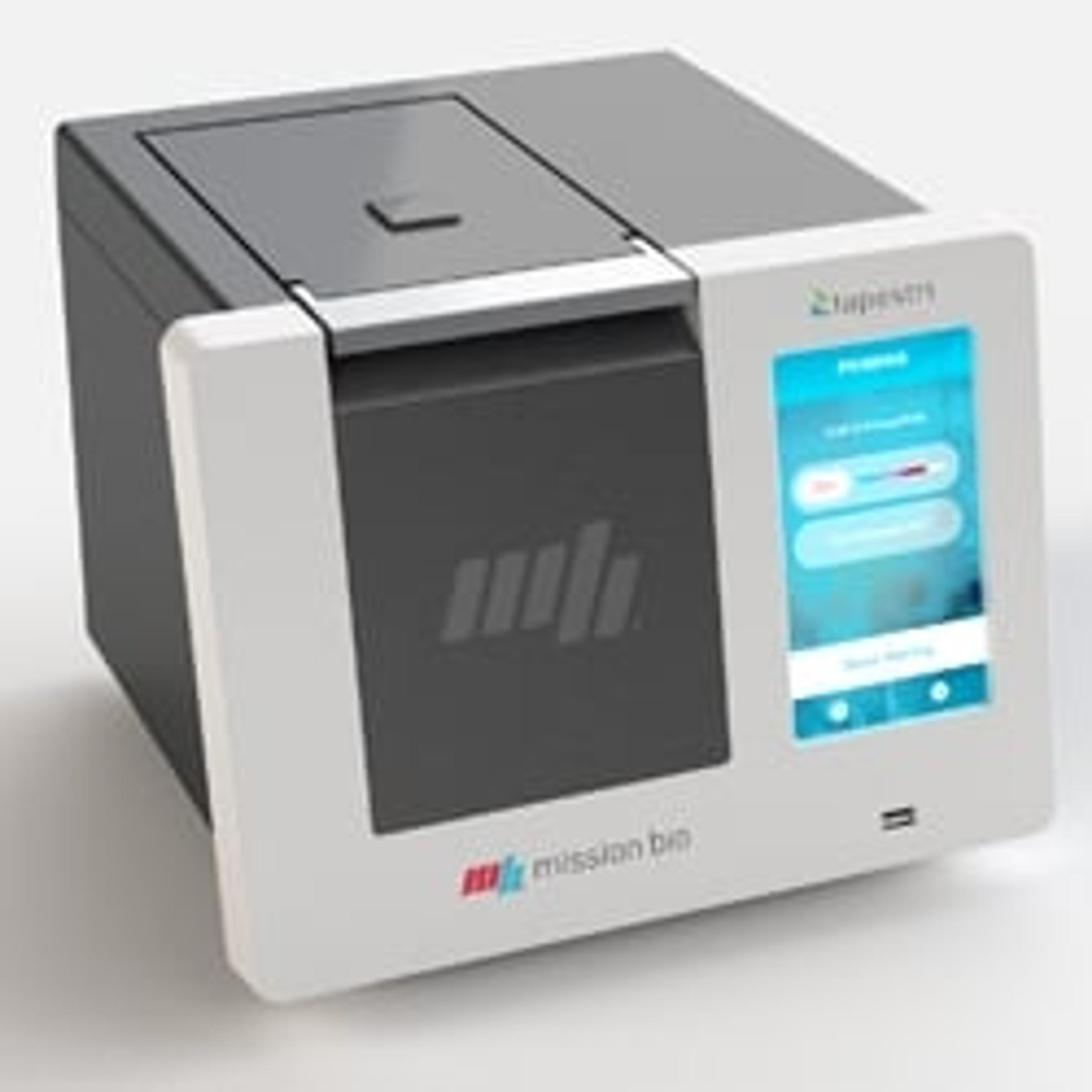
Mission Bio, a pioneer in high-throughput single-cell DNA analysis and precision genomics, has announced that it has been awarded a grant from the National Cancer Institute’s Small Business Innovation Research program to develop more advanced methods of quantifying molecular minimal residual disease in acute myeloid leukemia. In partnership with Dr. Jerry Radich of Fred Hutchinson Cancer Research Center, the project will leverage Mission Bio's Tapestri Platform to enable more accurate prediction of patient outcomes and empower the development of more impactful treatments aimed at residual disease.

“Residual disease leftover after treatment is a major cause of cancer relapse or even death but standard detection methods lack the sensitivity and scale to make strides toward solving this challenge,” explained Charlie Silver, CEO and founder of Mission Bio. “By leveraging the Tapestri Platform for insight at the single-cell level, we can deploy a more sensitive method for characterizing molecular MRD status and make a real difference in the lives of patients.”

The Tapestri Platform is the only single-cell targeted DNA solution available to effectively detect rare cancer subclones and co-occurring cancer mutations, addressing the shortcomings of traditional methods by providing a more accurate lens into the cells that drive disease progression and subsequent relapse.

“Relapse is the main obstacle to cure in leukemia,” explained Dr. Radich, “and the detection of MRD is a direct measure of disease burden after therapy. The Tapestri Platform promises a more accurate identification and quantification of MRD, which could both broaden our understanding of response and resistance to therapy and pave the way for new clinical trials of specific therapies targeted at the clones that remain in the MRD state.”

The news comes on the heels of a strong push from Mission Bio to support biopharmaceutical customers partners like LabCorp and Onconova Therapeutics leverage the Tapestri Platform to fill their need for faster, more precise clinical trials.

Want more of the latest science news straight to your inbox? Become a SelectScience member for free today>>

Tapestri Platform

Mission Bio

Clonal Resolution with Single-Cell Precision Complex disease evolves, so understanding genetic variability — including mutation co-occurrence at the single-cell level — is vitally important for clinical researchers to break the cycle of treatment response, resistance and relapse.

(0)

Links

Tags

Genome AnalysisGenomics, the study of genomes, includes functional genomics, evolutionary genomics and comparative genomics. There are many genomic technologies such as DNA sequencing of whole genomes, computational biology and bioinformatics. DNA and nucleic acids must be isolated and concentrated from cells for analysis with kits, automated analyzers and software. Other useful technologies for studying genomics include PCR, microarrays and electrophoresis.High-Throughput ScreeningHigh-throughput screening (HTS) is an automated drug discovery technique for identification of active compounds against a compound library. Use HTS readers and integrated assay preparation / analysis workstations to screen your compounds. Identify active compounds against various HTS libraries, including membranes, proteins and peptides and HTS cell lines. Find the best high-throughput screening products in our peer-reviewed product directory: compare products, check customer reviews and receive pricing direct from manufacturers.DNA SequencingDNA sequencing, such as sanger sequencing, is a biological technique that determines the precise order of nucleotide bases in a fragment or template of DNA. DNA sequencers and genetic analyzers are based on capillary electrophoresis, where labeled DNA fragments are electrophoretically separated by size as they migrate through a polymer. Find the best DNA sequencing products, including DNA sequencing kits, genomic libraries and genetic identity kits in our peer-reviewed product directory: compare products, check customer reviews and receive pricing direct from manufacturers.Clinical GeneticsMolecular Genetics covers the analysis of hereditary genetic disease and chromosomal abnormalities. Genetics can be analysed using DNA, RNA, and protein microarrays, PCR, RT PCR and DNA sequencing. Genetic equipment includes genetic workstations, thermal cyclers, cooling blocks and electrophoresis products. Diagnostic kits are used for DNA / RNA extraction and purification.Next Generation SequencingNext-generation sequencing (NGS), also known as whole-genome sequencing, high-throughput sequencing and massive parallel sequencing, produces and analyses thousands to millions of nucleotide sequences at once. Sequencing systems operate via varying technologies depending on the manufacturer, including sequencing by synthesis, ligation, pyrosequencing, ion semiconductor and single-molecule real-time sequencing. For NGS, library preparation is paramount to successful sequencing. In this section, explore a range of library preparation kits, from targeted, amplicon-based or hybridization-based kits including epigenomic, transcriptomic and genomic workflows to fragmentation kits. Find the best next-generation sequencing products in our peer-reviewed product directory: compare products, check customer reviews and receive pricing direct from manufacturers.LeukemiaSingle Cell GenomicsCancer ResearchAlthough cancer is often referred to as a single condition, it actually consists of more than 100 different diseases. Microscopy, mass spectrometry, high throughput sequencing and flow cytometry are some of the most common techniques employed in cancer research labs.
Measuring minimal residual disease related to cancer relapse with single cell genomics