Malvern Panalytical launches Revontium at Analytica 2024

High-performance, small-footprint instrument set to enhance elemental analysis

8 Apr 2024

Will Thompson
Editorial Assistant

Product news

Revontium
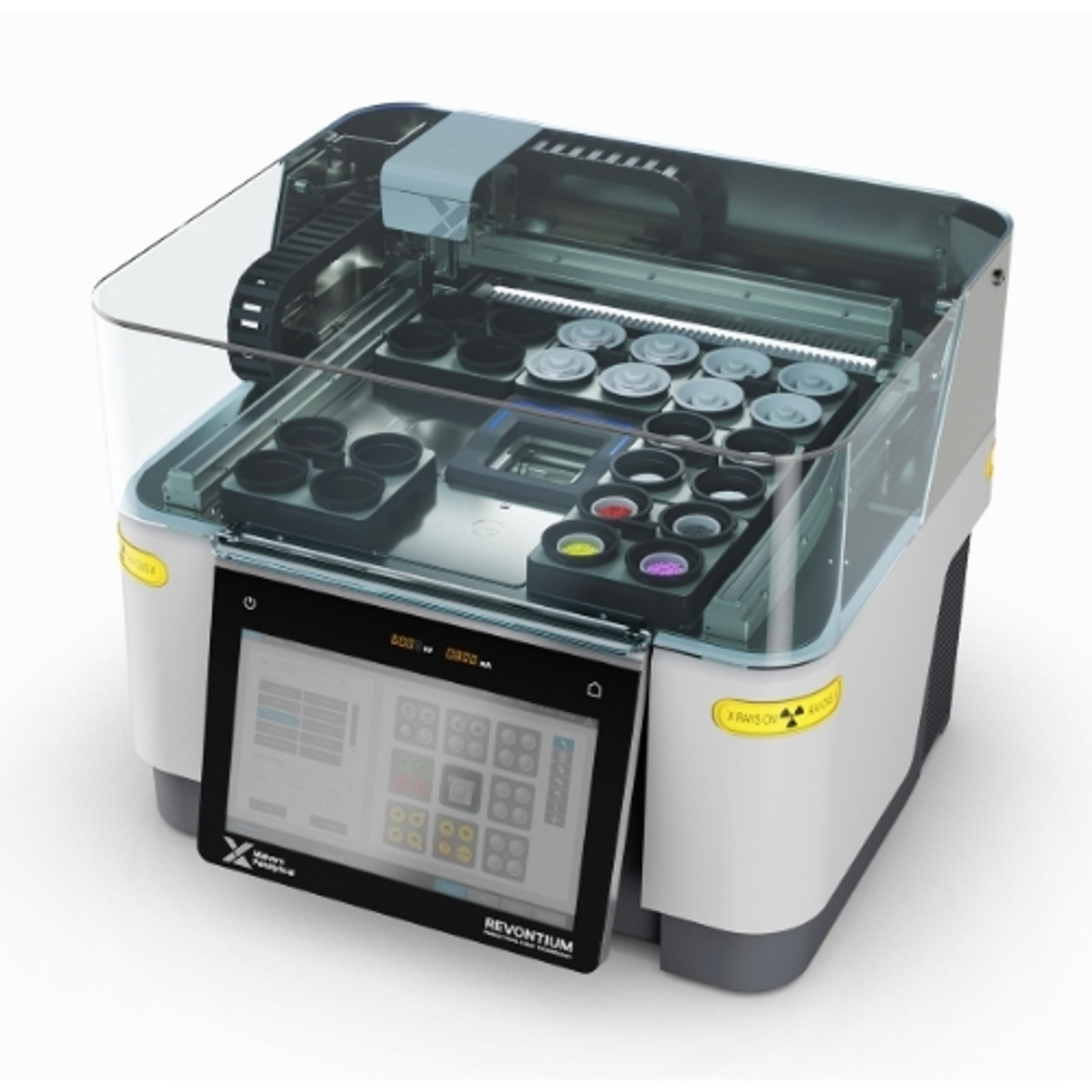
Revontium™ offers a smaller physical and environmental footprint

Malvern Panalytical has launched Revontium™, a compact XRF spectrometer, at Analytica 2024, Munich, Germany. The new instrument delivers powerful elemental analysis and ease of use in a compact 0.4 m footprint, for balance between precision and efficiency. Revontium offers an alternative to 1-2 kW floor-standing systems, delivering high-quality, repeatable results at a reduced cost of ownership and environmental impact. Together, these benefits are set to open new possibilities for elemental analysis across multiple industries.

X-ray fluorescence (XRF) is a well-established, non-destructive technology for elemental analysis, with a number of gains over techniques such as inductively coupled plasma spectroscopy (ICP) and atomic absorption spectroscopy (AAS). However, large, floor-standing wavelength-dispersive (WDXRF) instruments can be both energy- and cost-intensive. Revontium promises to deliver comparable results and data quality to these larger instruments, at a significantly reduced footprint.

Revontium’s cost of ownership is more than 25% lower than that of WDXRF, AAS, and ICP instruments, due to its reduced need for consumables, and simpler maintenance and sample preparation requirements. Unlike ICP, Revontium needs fewer consumables such as acids and high-purity gases, requires no daily calibration, and analyzes samples in ambient conditions. Unlike high-powered WDXRF instruments, there are no external chiller requirements and associated costs, due to internal cooling in the Revontium system. Its power consumption is only 250 watts per hour, compared with 2,000 watts per hour for traditional WDXRF. Together with its small footprint and lack of need for a helium or vacuum pump, Revontium is a sustainable and practical yet powerful option for elemental analysis.

Revontium helps organizations across a variety of industries comply with increasingly stringent environmental regulations and remain compliant with test methods such as ASTM and ISO. This is also beneficial for users working in cement, mining & minerals, and polymer plants. It also opens new possibilities for elemental analysis in the pharmaceutical sector, either as an alternative to ICP or AAS or as a complementary technique. In addition, after non-destructive XRF analysis using Revontium, the same sample can still be measured using ICP, AAS, XRD, or other methods if required.

Want the latest science news straight to your inbox? Become a SelectScience member for free today>>

Revontium

Malvern Panalytical

Revontium™ is a compact X-ray fluorescence (XRF) spectrometer that delivers high-quality elemental analysis in a compact, tabletop format. It bridges the performance of floor-standing XRF and the versatility of table-top instruments. Compact XRF offers a smaller physical and environmental footprint. Its cost of ownership can be more than 25% lower due to reduced need for consumables, extensive sample preparation, and maintenance.

(0)

Links

Tags

Sample PreparationSample preparation can improve the quality and speed of separation techniques. Products to assist sample preparation include filtration equipment, evaporators, membranes and sieves.Fluorescence SpectroscopyFluorometers and spectrofluorometers (also called fluorescence spectrometers) are used to measure the intensity and wavelength of fluorescent light emitted from a sample after excitation by illumination. Spectrofluorometers utilize monochromators to select the desired wavelengths, whereas filter fluorometers employ a set of filters. Spectrofluorometers for measuring steady-state fluorescence and lifetime fluorescence (or time-resolved fluorescence) are available, as well as fluorescence microscopes and microplate readers. Find the best fluorescence spectroscopy products in our peer-reviewed product directory: compare products, check customer reviews and receive pricing direct from manufacturers.Mass SpectrometryMass spectrometry (MS) is a powerful analytical technique used to identify and quantify molecules based on the mass-to-charge ratio of gas-phase ions. It provides detailed information about the structure, composition, and properties of compounds and is widely used across fields such as environmental monitoring, materials science, drug discovery and development, food and beverage testing, and wider chemical research. Key MS techniques include tandem mass spectrometry (MS/MS), liquid chromatography–mass spectrometry (LS-MS) and inductively coupled plasma (ICP-MS). Choosing from these wide range of techniques and technologies can be a daunting task, so keep up to date with scientific applications, performance expectations, and customer reviews here all in one place. Visit our product directory to receive quotes direct from the manufacturer. X-Ray Diffraction and SpectroscopyX-Ray diffraction & spectroscopy are used in material characterization to discern the structure and elemental composition of a sample. X-Ray diffractometers (XRD) are superior instruments in elucidating the dimensional atomic structure of crystalline materials, including powders, thin films and single crystals. For large unit cells or ordered macromolecules, consider small-angle X-ray scattering (SAXS). X-ray spectroscopic techniques include X-ray fluorescence (XRF) and X-ray photoelectron spectroscopy (XPS), both providing simple and accurate methods for determining the elemental composition of a material. Energy dispersive (EDXRF) and wavelength dispersive (WDXRF) XRF spectrometers are available, as well as handheld/portable devices. High-resolution, 3D microstructure characterization of materials can be achieved with X-ray microscopes combining sub-micron resolution imaging with 3D computed tomography. Find the best XRD and XRF spectrometers in our peer-reviewed product directory: compare products, check customer reviews and receive pricing direct from manufacturers.FluorescenceThe emission of fluorescence occurs when a photon of energy is supplied to a fluorescent chemical compound by an external source, causing it to become excited. Fluorescence can be detected and measured for different purposes using microplate readers, fluorescence microscopes, fluorescence scanners, and flow cytometers.X-Ray FluorescenceX-ray fluorescence (XRF) is an analytical technique used to determine the elemental composition of materials. It is widely used in geology, materials science, and environmental testing for detecting heavy metals and other elements. Browse our peer-reviewed product directory to find the best XRF systems, compare products, check reviews, and get pricing directly from manufacturers.Elemental AnalysisElemental analysis involves determining the elemental composition of a sample, often used in environmental, pharmaceutical, and material sciences. Techniques like ICP-MS, X-ray fluorescence, and atomic absorption spectroscopy allow precise quantification of elements such as metals and nonmetals in complex matrices. Browse our peer-reviewed product directory to find the best elemental analysis tools, compare products, check reviews, and get pricing directly from manufacturers.SpectroscopySpectroscopy is a technique that analyzes the interaction of light with matter to study molecular properties, concentrations, and structural information. Widely used in chemical, pharmaceutical, and environmental analysis, spectroscopy offers insights into molecular composition and helps identify unknown compounds. It plays a key role in quality control, research, and diagnostics. Browse our peer-reviewed product directory to compare spectroscopy tools, read reviews, and get prices directly from manufacturers.
Malvern Panalytical launches Revontium at Analytica 2024