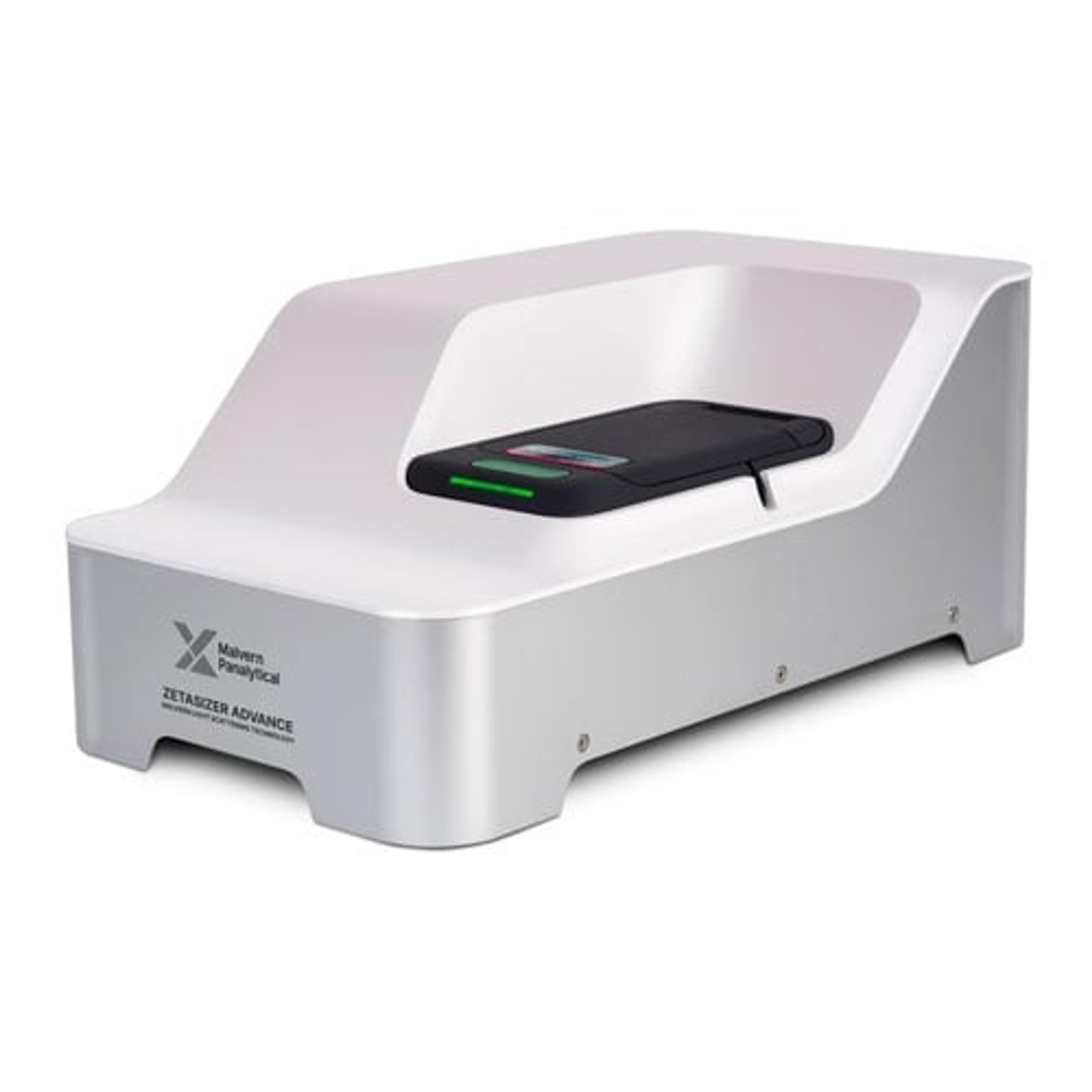
Malvern Panalytical introduces its new Zetasizer Advance range
27 Jul 2020
Product news
Malvern Panalytical has unveiled a new and expanded Zetasizer range: Zetasizer Advance.
The Zetasizer Advance family builds and improves on the technologies first seen in the Zetasizer Nano. Launched in 2003, the Zetasizer Nano brought light scattering technology to the masses, allowing researchers to detect, analyze, and understand particles and particle-based systems in greater depth than ever before. Quickly taking the light scattering market by storm, the Zetasizer Nano family grew to offer several models, covering a wide range of industries and applications.
With an emphasis on flexibility, the new Zetasizer Advance range comprises three core models: Zetasizer Lab, Zetasizer Pro, and Zetasizer Ultra. Each model is available in two variants: a Blue Label version for routine sample investigation, and a Red Label version for use with more challenging samples.
“The Zetasizer Advance range has been designed in response to customer feedback, which highlighted a need for flexibility and additional features to suit a wide variety of requirements,” said Darrell Bancarz, Product Manager Nanomaterials.
“One of the most exciting things about the Zetasizer Advance family is its upgradeability. If a customer's needs change, they can upgrade to a higher specification model at any time. This gives our users the confidence that Malvern Panalytical can support them as they adapt to new challenges and workflows.”
“In the design of this new range, great care has been taken to make this upgradeability as easy as possible. So, for most customers looking to upgrade, this can be done on-site with minimal downtime. This is a unique offering in the well-established light scattering market,” concluded Bancarz.
Do you use Malvern products in your lab? Write a review today for your chance to win a $400 Amazon gift card>>