
Malvern Instruments Presents Novel Products, New Software and Extended Applications for Systems Addressing Complex Analytical Challenges
13 Aug 2014Product news
Powtech 2014 coincides with the third anniversary of the launch of the Mastersizer 3000 laser diffraction particle size analyzer from Malvern Instruments. In celebration, Malvern will use this occasion to introduce visitors to the latest Mastersizer accessories. The guiding principle of the Mastersizer 3000 has always been to deliver ‘smarter particle sizing’. Its accessories and software are designed to deliver intelligent information to users, supporting rapid methods optimization and robust measurements whatever the application.
Also taking a significant role on the booth is the Morphologi G3-ID, a powerful particle characterization system that combines automated imaging with Raman spectroscopy. Using these technologies it delivers component specific particle size and shape distribution data for discrete populations within a blend. Widely used in the analysis of pharmaceutical blends, this system is finding increasingly wide industrial application. While laser diffraction particle sizing continues to meets routine particle analysis requirements, it is often helpful to measure the particle size of individual components within a blended material to gain a deeper understanding of both the process and the product. Morphologi G3-ID provides statistically relevant particle size and shape data for each component, even where these are morphologically similar. These data are helping manufacturers optimize product performance and manage development and future production costs across a range of different industries and applications.
Malvern’s portfolio for nanomaterials characterization includes Malvern’s NanoSight Nanoparticle Tracking Analysis (NTA) systems and visitors to the Malvern stand will see new NTA 3.0 nanoparticle visualization software in action. NTA systems are used to characterize nanoparticles in solution in the size range 10 nm to 2000 nm (depending on the sample), measuring both size and concentration. The result of Malvern’s continuing investment in, and development of, Nanoparticle Tracking Analysis technology, NTA 3.0 offers an improved easy-to-use interface, with quick, convenient access to programs and protocols. It also incorporates an upgraded high-resolution particle size distribution algorithm, advanced particle detection and tracking, with the added confidence of visual validation of results.
Related products
Request Quote for All Products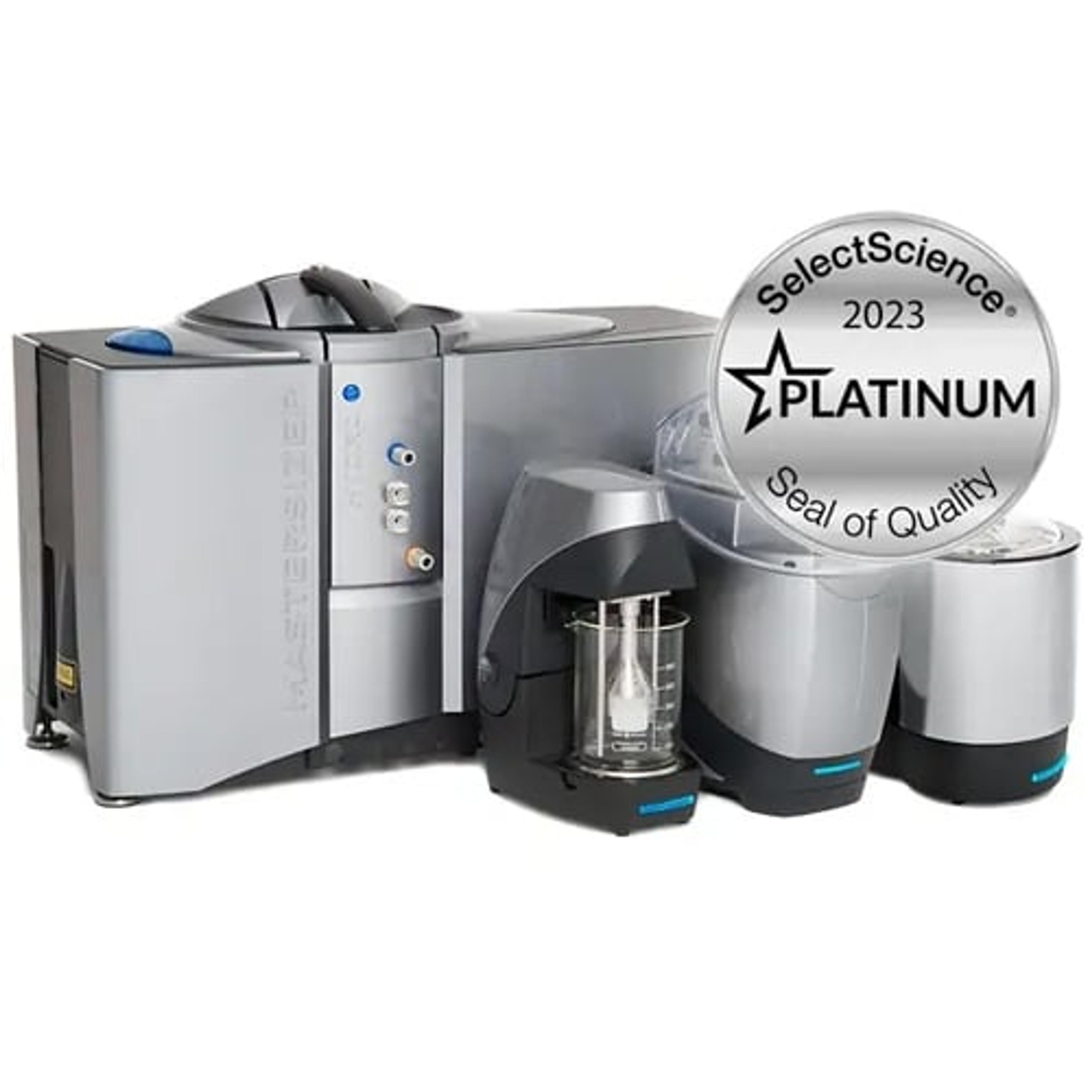
Mastersizer 3000
Malvern PanalyticalWorld’s most widely used particle size analyzers, the smartest way to measure particle size. There is a newer version of this product avilable, the Mastersizer 3000+ Ultra.