Luminex files for emergency use of expanded NxTAG Respiratory Panel test

Syndromic testing will streamline respiratory infection diagnosis as COVID-19 pandemic collides with start of flu season

25 Aug 2020

Diane Li
Assistant Editor

Product news

Luminex Corporation has announced that it has submitted an EUA request to the FDA for a new expanded version of its NxTAG® Respiratory Pathogen Panel (RPP) to include the SARS-CoV-2 virus for high-throughput COVID-19 testing. The new test is a combination of the company's original NxTAG RPP, an FDA-cleared in vitro diagnostic for syndromic respiratory infection testing, and the most relevant circulating pathogen today, SARS-CoV-2.

Respiratory infections such as COVID-19 and influenza can be challenging to differentiate and diagnose accurately because they feature many of the same symptoms. NxTAG RPP is a multiplex, high-throughput test designed to enable simultaneous detection of the most common respiratory pathogens for a fast, syndromic testing approach. With the addition of the SARS-CoV-2 virus, the panel now includes 19 viral and 2 bacterial targets, combining the most common respiratory pathogens in one panel to help facilitate the rapid identification of various individual and co-occurring infectious pathogens.

NxTAG RPP provides scalable throughput, allowing clinical labs to run up to 96 samples at a time and generate results in approximately four hours with minimal hands-on time. The test runs on Luminex's easy-to-use, compact MAGPIX® System and is designed for use in high-complexity molecular laboratories.

"Clinical laboratories are straining under the pressure of COVID-19 testing, and the unfortunate reality is that even in these incredibly challenging conditions, labs must now look ahead to the coming flu season," said Nachum "Homi" Shamir, President and CEO of Luminex. "We believe that syndromic respiratory testing will be a critical tool for dealing with the seasonal flu outbreak that is coming on top of a global pandemic. We incorporated the SARS-CoV-2 virus into our trusted NxTAG RPP panel to alleviate laboratory capacity constraints and improve the ease of testing."

Since the start of the COVID-19 pandemic, Luminex has focused on expanding capacity for SARS-CoV-2 diagnostic testing across all of its molecular platforms. The company previously launched the NxTAG CoV Extended Panel under an EUA from the FDA and an Authorization for Import or Sale with Conditions from Health Canada, and also received FDA EUA for its ARIES® SARS-CoV-2 Assay. Earlier this month, the company announced it had received FDA EUA for its xMAP® SARS-CoV-2 Multi-Antigen Immunoglobulin G (IgG) Assay, a new serology test that can be run on any of Luminex's xMAP-based high-throughput, gold-standard multiplex platforms. The test detects IgG antibodies, which are an important component of an adaptive immune response and typically reflect sustained immunity to a given pathogen.

Want more of the latest science news straight to your inbox? Become a SelectScience member for free today>>

xMAP® SARS-CoV-2 Multi-Antigen IgG Assay (RUO)

Luminex

The xMAP® SARS-CoV-2 Multi-Antigen IgG Assay is a serological, multiplexed microsphere-based assay to measure the presence of IgG antibodies directed against the nucleocapsid protein (N), Receptor-Binding Domain (RBD) of the spike protein, and the S1 subunit of the spike protein (S1) of SARS-CoV-2 in human serum or plasma. The xMAP SARS-CoV-2 Multi-Antigen IgG Assay features: Broad Coverage: Detects IgG antibodies against 3 SARS-CoV-2 antigens, providing comprehensive results: S1 subunit of the spike protein Receptor Binding Domain (RBD) of the spike protein Nucleocapsid protein Flexible Throughput: Test up to 96 samples per run in less than 3 hours to meet your throughput needs. Versatile System Options: Can be used on MAGPIX®, Luminex® 200™, and FLEXMAP 3D® Systems, so you can use the platform that best fits your lab. Common Sample Types: Designed for use with plasma and serum samples, eliminating the need to implement additional collection protocols. For Research Use Only.  Not for use in diagnostic procedures.  
(0)

ARIES® MRSA Assay

Luminex

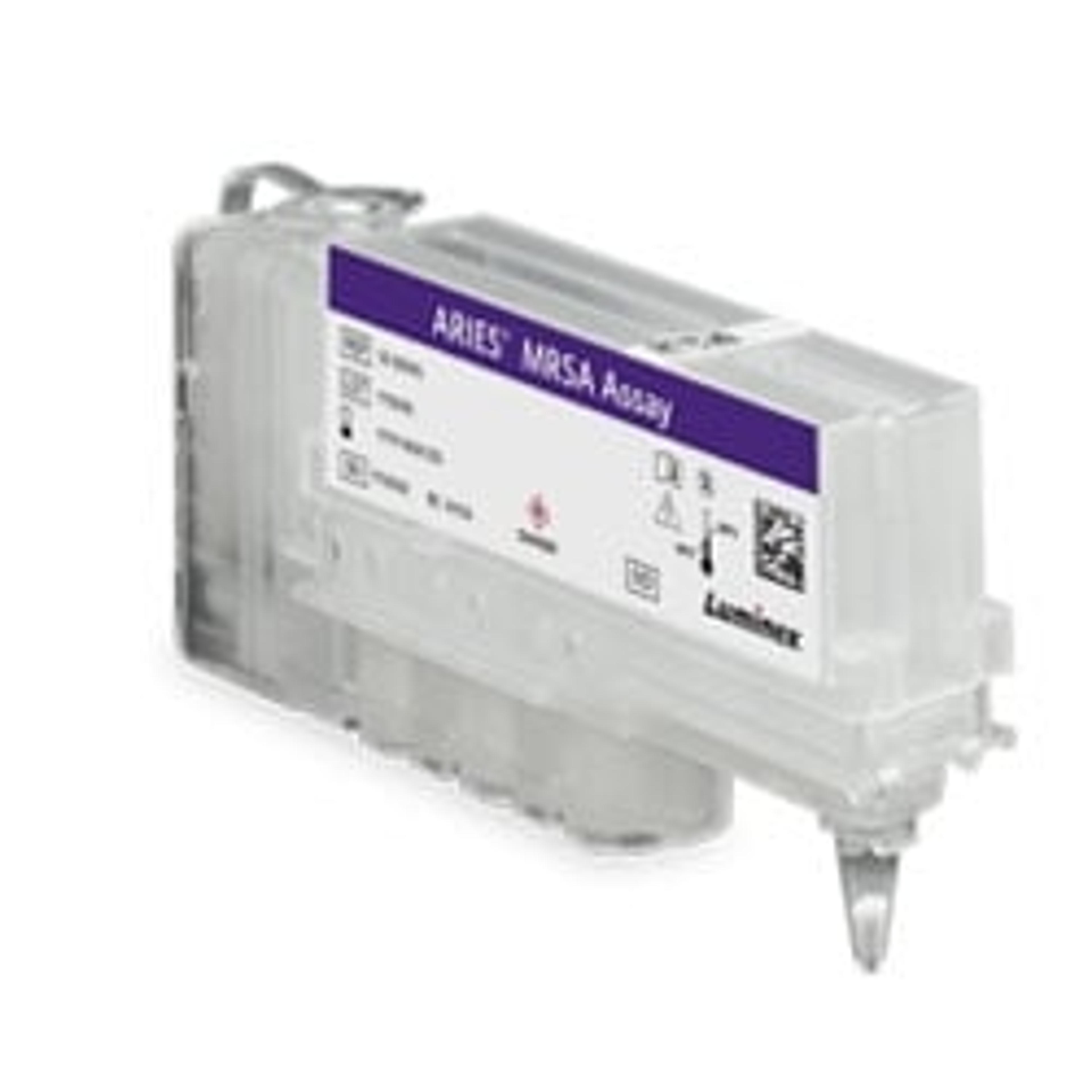
The ARIES ® MRSA Assay is an easy to use, in vitro diagnostic test for the direct detection of methicillin–resistant Staphylococcus aureus (MRSA) DNA in nasal swabs from patients at risk for nasal colonization, in under two hours.

(1)

Links

Tags

AntibodiesAntibodies are used in techniques such as confocal and fluorescence microscopy, flow cytometry, ELISA, ELISPOT, immunohistochemistry, western blotting and immunopreciptation. Select specific antigen reactivity, high specific affinity, low non-specific binding, monoclonal or polyclonal, primary or secondary antibodies and associated conjugates such as an enzyme or dye for visualization.Data AnalysisData analysis hardware and software is available to make data processing straight-forward yet powerful. Data software can be used for math and stats, technical graphing and image analysis. In addition, software is available for specific data analysis of electrophoresis, densitometry, ELISA and DNA sequencing.HematologyIn Haematology / Hematology, complete blood cell counts (or full blood counts) are obtained using automated blood count analyzers to enumerate blood cell types.  Hematology also encompasses haemostasis and coagulation, thrombophilia and hemophilia, plasma viscosity and ESR analysis, hemoglobinopathies, cell morphology and haematinic measurement.ImmunologyImmunological techniques measure and characterize immune responses. Immunology kits and analysis systems often use techniques such as ELISA, radioimmunoassay (RIA) and immunodiffusion assays, Immunohistochemistry, and flow cytometry. Immunologists use equipment such as flow Cytometers, plate readers, plate washers and fluorescent microscopes.Cellular PathologyCellular Pathology deals with the microscopic analysis of tissue samples and cells. Sample preparation and processing includes fixation, staining, sectioning and slide mounting, using equipment such microtomes and cryostats. In choosing immunohistochemistry and immunocytochemistry kits, consider chromogens, staining method, antibodies, microscopes and imaging.Point-of-CarePoint-of-Care Testing (POCT) or Near Patient Testing (NPT) products are available for urine, blood and other clinical chemistry analyses. POCT includes: blood glucose testing, blood gas and electrolytes analysis, rapid coagulation testing (PT / INR), rapid cardiac markers diagnostics, drugs of abuse screening, urine strips testing, pregnancy testing, fecal occult blood analysis, food pathogens screening, hemoglobin diagnostics, infectious disease testing and cholesterol screening.Biopharmaceutical AdvancesBiopharmaceutical advances follow the development of pharmaceuticals derived from biotechnology, also known as biotechnology medicines. Biopharmaceuticals may be produced from cell lines, plants, or microbial cells. Important considerations of biopharmaceutical use include application, cost, production process and purification.Clinical TrialsClinical Trials, an essential part of drug discovery process, assess the safety and effectiveness of a new medication or device in the pharmaceutical industry. Clinical Trials are a phased process (Phase 0, Phase I, Phase II, Phase III and Phase IV) which begins after initial preclinical testing.Clinical ChemistryBiochemistry (or clinical chemistry) involves the analysis of bodily fluids using chemical tests. Techniques used include HPLC, chromatography, spectroscopy, mass spectrometry, immunochemical, electrophoresis, turbidometric / spectrophotometric assay, MRI and ISE analysis. Tests are often carried out on plasma or serum but urine (urinalysis) and fecal specimens are also processed.Clinical MicrobiologyMicrobiology is the study of microorganisms including protists, prokaryotes, fungi, and, often, viruses. Microorganisms are a useful research tool as genetic vectors and, in immunology, for antibiotic susceptibility testing, cellular biology and genetics. Microorganisms commonly grow readily in incubators with microbial culture media; this can contain chromogenic supplements to differentiate between cell lines. Estimate your culture’s density of microorganisms with colony counters, or screen and select colonies for desirable clones with automated colony pickers. Additionally, equipment is available to monitor environments for the presence of microbes and identify with microbial identification instruments. Find the best microbiology products in our peer-reviewed product directory: compare products, check customer reviews and receive pricing direct from manufacturers.Drug DeliveryDrug Delivery refers to dosage form, route of administration, formulations, technologies, and systems for transporting a pharmaceutical compound in the body as needed to safely achieve its desired therapeutic effect. Drug delivery is often approached via the biopharmaceutical or small molecule drug's formulation, but it may also involve medical devices or drug-device combination products. Considerations include instrumentation, software and services. RegulatoryPharmaceutical regulations impact on all areas of drug development, manufacture and control and supply. Services are provided from the early stages of drug development and clinical trials through to dossier submission, approval and marketing. Regulatory also includes submission of analytical studies from the pharmaceutical product and safety. Respiratory InfectionsRespiratory infections are caused by pathogens such as bacteria, viruses, and fungi, leading to diseases like pneumonia, tuberculosis, and COVID-19. It is important to identify respiratory infections quickly in patients to ensure appropriate treatment and care, and to prevent sepsis. Browse our peer-reviewed product directory to find the best tools for respiratory infection detection, compare products, check reviews, and get pricing directly from manufacturers.Microbial DetectionMicrobial detection is crucial for identifying and quantifying bacteria, viruses, fungi, and other microorganisms. This process is essential for food safety, environmental monitoring, clinical diagnostics, and pharmaceutical manufacturing. Explore the best microbial detection tools in our peer-reviewed product directory; compare products, check reviews, and get pricing directly from manufacturers.Pathogen DetectionPathogen detection is the process of identifying harmful microorganisms, including bacteria, viruses, and fungi, that can cause diseases. Accurate pathogen detection is critical for food safety, public health, and clinical diagnostics. Explore pathogen detection products in our peer-reviewed product directory; compare products, check reviews, and get pricing directly from manufacturers.