Lumen Dynamics Announces the New X-Cite® 200DC Offering the Ultimate Combination of Optical Performance, Stability and Speed

18 Jul 2011
bridget bridget
Laboratory Director

Product news

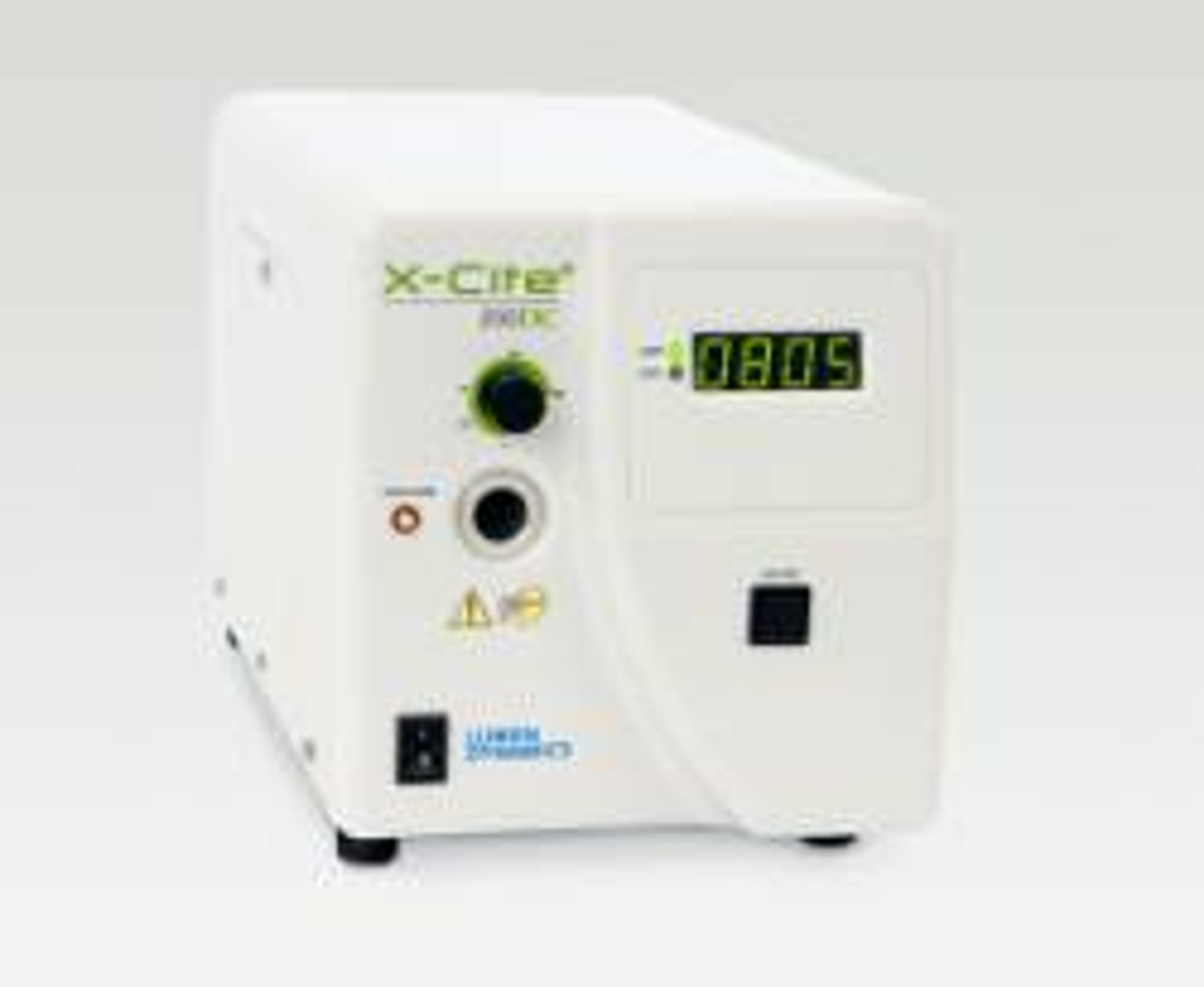
Lumen Dynamics introduces the new X-Cite® 200DC - the latest in X-Cite® illuminators for fluorescence microscopy. The X-Cite® 200DC brings together the most valued X-Cite® features and delivers them in one single system. Designed with a 200-watt DC lamp, the X-Cite® 200DC provides outstanding stability from short to long term with a high speed internal shutter for optimum image quality.

“Since X-Cite® was first introduced in 2002, we have expanded our X-Cite® product line to offer unique features with each new addition pushing the boundaries of innovation to provide highest value for our customers,” stated Allan Firhoj, President and CEO of Lumen Dynamics. “The X-Cite® 200DC follows this tradition – it offers an incomparable combination of extreme stability, a high speed shutter and light guide auto-detector that allows researchers to optimize image quality while enjoying convenience and a cost-effective solution.”

The new X-Cite® 200DC is designed for imaging applications that require stability on the millisecond timescale and high speed shuttering via TTL. Enhancements unique to X-Cite® 200DC include improved spectral output at wavelengths up to 800nm and 0-100% intensity control with ultra-smooth, detent-free motion providing 0.1% resolution, giving researchers more flexibility than ever before. With its light guide auto-detection safety feature, operators obtain immediate confirmation of a complete optical/mechanical connection that will ensure the X-Cite® 200DC is running at its peak performance, maximizing both component lifetime and light delivery to the microscope.

With the addition of the new 200DC, X-Cite® brings more choice, innovation, flexibility and maximum value to researchers around the world with the finest, most extensive lamp-based product portfolio for microscopy illumination. Researchers can select from a wide range of X-Cite® light sources to best suit their specific applications and get the most out of their research while enjoying the convenience of an X-Cite® with easy installation and pre-aligned long-life Intelli-Lamps®, as well as a 2000 hour warranty. To find out which X-Cite® system is ideal for your application, visit the company article page.

X-Cite® 200DC

Lumen Dynamics

The X-Cite® 200DC offers the ultimate combination of optical performance, short term stability and a built-in fast shutter. With the convenience and superior illumination uniformity found in all X-Cite® systems, the X-Cite® 200DC's intuitively easy-to-use design also includes light guide auto-detection to ensure optimized light coupling - every time. Novice and experienced microscopists will enjoy the flexibility provided by the smooth 0-100% intensity adjustment and expanded spectral range.

(0)

Links

Tags

AntibodiesAntibodies are used in techniques such as confocal and fluorescence microscopy, flow cytometry, ELISA, ELISPOT, immunohistochemistry, western blotting and immunopreciptation. Select specific antigen reactivity, high specific affinity, low non-specific binding, monoclonal or polyclonal, primary or secondary antibodies and associated conjugates such as an enzyme or dye for visualization.Gel Doc / Image AnalysisGel documentation (gel doc) or gel imaging systems are used for the analysis of proteins, antibodies and nucleic acid immobilized in polyacrylamide or agarose gels, membranes or microarrays. Explore a range of a gel imaging systems, densitometers, scanners, transilluminators or UV lamp + CCD cameras for your image analysis solutions. Colorimetric, fluorescent and/or radioisotopic samples can be visualized and documented for further analysis. See gel doc / Image analysis software for quantitative 1D and 2D analysis of your samples. Find the best gel doc / image analysis products in our peer-reviewed product directory: compare products, check customer reviews and receive pricing direct from manufacturers.Cell-Based AssaysCell-based assays are used to monitor the presence, quantity and activities of a desired cellular analyte including drug molecules or biomarkers. This can reveal information on cell health (apoptosis, cytotoxicity, viability and proliferation assays), cell metabolism, cell migration and cell signaling mechanisms. Find the best cell-based assay products, kits and equipment with our peer reviewed product directory: compare products, check customer reviews and receiving pricing direct from manufacturers.Protein PurificationProtein purification is a vital step in drug discovery, therapeutics, biotech and life science research. The purification process typically involves subcellular or membrane protein extraction with cell lysis kits, separation of proteins from cell debris by filtration or spin columns, and the isolation of proteins of interest from other proteins and impurities with affinity purification (including fusion protein tags and antibody binding proteins A, G and L), immunoprecipitation or chromatographic methods, such as ion exchange, size exclusion and immobilized metal affinity chromatography. All purification methods come in multiple formats for your laboratory needs, including agarose or magnetic beads, resins, columns and filter plates. Find the best protein purification equipment in our peer-reviewed product directory: compare products, check customer reviews and receive pricing direct from manufacturers.BiomarkersBiomarkers are biological markers which can be measured and evaluated to indicate a biological state. The use of biomarkers in research and diagnosis can indicate a normal or disease state or drug response of cells / tissues. Biomarkers include genetic markers, cell surface markers such as antigens, antibodies or receptors and secreted molecules such as cytokines. An assay system is required for identification of biomarkers. :Light MicroscopyLight microscopes or optical microscopes are used to visualize microscale objects under magnification, including cells, clinical specimens and materials. Lab equipment for light microscopy includes confocal microscopes, fluorescence microscopes, zoom and stereo microscopes. Microscope slides and imaging reagents are available for visualizing samples, as well as various microscope stages and incubators for large or temperature-sensitive samples. Find the best light microscopes in our peer-reviewed product directory: compare products, check customer reviews and receive pricing direct from manufacturers.
Lumen Dynamics Announces the New X-Cite® 200DC Offering the Ultimate Combination of Optical Performance, Stability and Speed