Low-carbon labware: Setting the standard for product transparency and sustainability

SelectScience caught up with biotech manufacturer Labcon to hear how scientists and suppliers were starting to shift their mentality on sustainable labware choices.

25 Oct 2024

Cameron Smith-Craig
Cameron Smith-Craig
Pharma and Applied Sciences Editor

Editorial article

As many scientists will understand, seeking out the best plastic consumables for your research is already a challenge. One must ensure high resistance to chemicals, the right purity to avoid contamination, and precise product design and function, among other considerations. This is why environmental factors like a product’s carbon footprint and recyclability were often an afterthought, especially as the necessary depth of environmental information was typically difficult to find. But biomedical and research organizations both large and small are beginning to set annual targets to achieve sustainability goals with the aim of reducing their environmental impact. This rapid shift in mentality towards better labware is being supported by new systems that quantify carbon use in lab products and manufacturing.

Leading by example

Back in September 2021, SelectScience interviewed Labcon’s Lead Scientist Scott Weitze to learn more about the California-based company’s long-standing commitment to reducing the carbon intensity and environmental impact of its labware and manufacturing operations, which resulted in an 89% reduction in greenhouse gases produced per case of product.
ACT Label

Weitze highlighted some of the industry-leading steps Labcon had taken over the past 20 years to reduce its energy consumption, limit waste output, and improve product designs. This included locating all operations—including product design, manufacturing, packaging, and sterilization—to the same location in Northern California, the construction of a 870 kilowatt solar facility, improved packaging, the adoption of a circular waste management plan, and upgrading to energy efficient automation systems. To quantify these improvements, Labcon had been registering numerous products with the ACT Environmental Impact Factor label from My Green Lab.

The ACT (Accountability, Consistency, and Transparency) label aimed to take a holistic look at what makes a lab product sustainable, scoring various aspects of design and manufacturing to give an overall Environmental Impact Factor (EIF). At the time of the first interview, Labcon had already certified many of its products with the ACT label, with its ZAP™ Aerosol Filter Pipet Tip achieving the best score of all the consumables enrolled in the program at the time. Since then, it has built on the first round of certifications with newly certified labware. We reached out to Scott Weitze and Frédéric Laboroi, Regional Manager for Labcon, to learn how their ACT-certified product offerings have evolved and expanded.

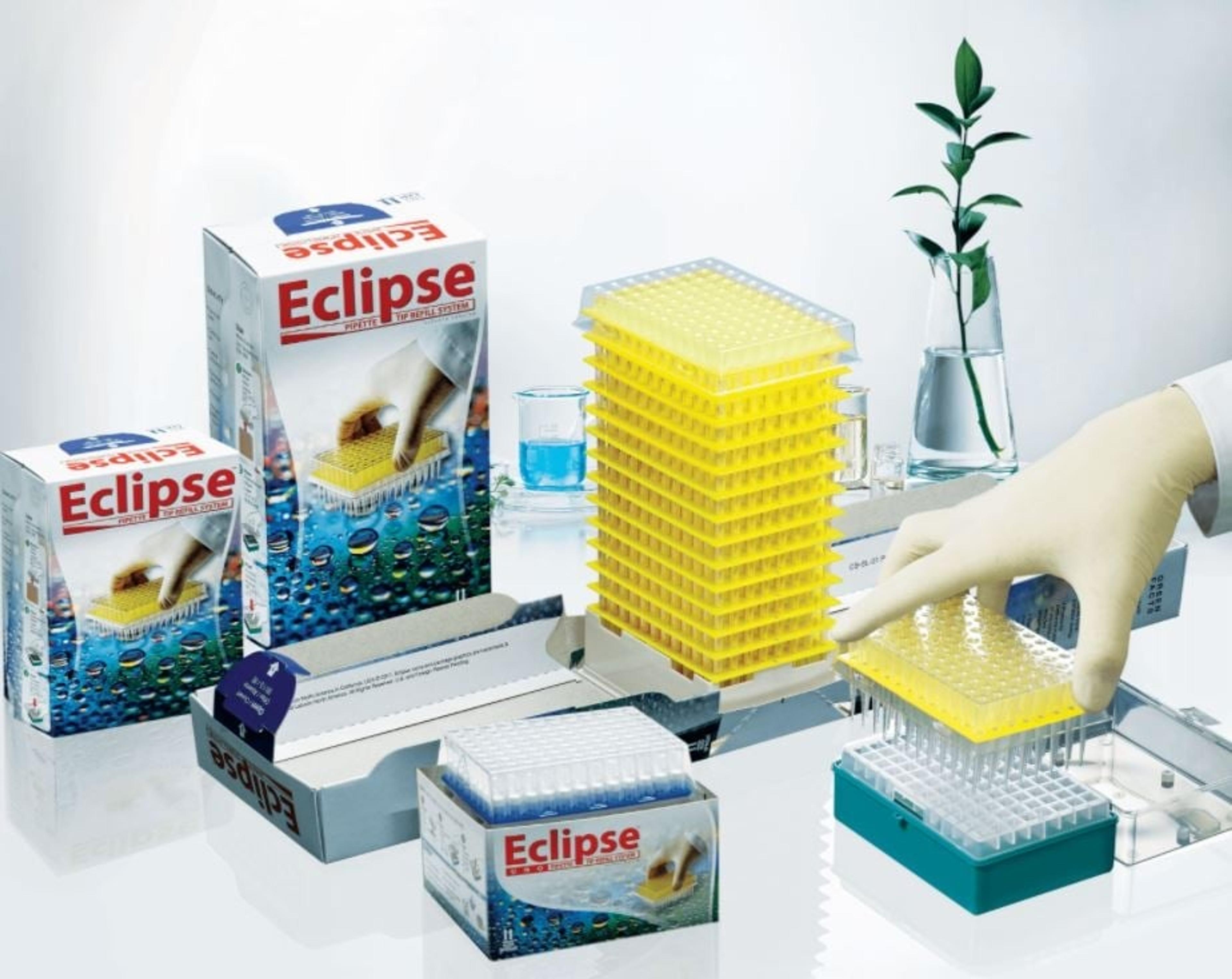
Eclipse Pipette Tip Refill System

A warm reception

Following the launch of its first wave of ACT labels, Labcon saw more distributors and end-user customers coming to them when looking for the kind of information and transparency that the ACT certification offers. “In the last few years, we’ve seen an incredible number of seminars and conferences that have been organized on sustainability, a huge amount of which are driven by Ph.D. students. It’s these younger individuals who are going to lead the labs of the future, and they have shown a huge interest in the information that the ACT label provides for Labcon products,” explains Laboroi.

Weitze expanded: “We have definitely noticed that a lot of the customers, be it Ph.D. students, postdocs, or purchasing managers, really care about this, perhaps even more than the current generation of scientists. We certainly get established labs coming to us that care about ACT scoring and sustainability, but the response has been especially enthusiastic amongst younger scientists who have more awareness of the environmental impact of labs and single-use plastics.”

The ACT label provides purchasing managers and, increasingly, newly hired sustainability managers with a simplified way to source more sustainable products without adding to their workload, and distributors are starting to catch on. “We know that various distributors have started to use the ACT label and other environmental metrics to contribute to their decisions. This is great news, as it’s the people that control purchasing decisions that need to realize how much better some suppliers are at environmentalism and lower carbon products,” says Weitze.


The ACT label has been really effective for us because it validates decisions Labcon made more than a decade ago, before the current environmental trends, and it continues to validate choices we are making today


Expanding the certification

With the second round of product certifications Labcon continued to expand its place in the lab sustainability movement. Expanding the geographic reach of its previously certified products, many Labcon products now have the ACT UK label and ACT EU label certifications. Several new products have also been added to support additional lab protocols. “With this second audit we’ve been able to offer labware such as filter tips and specialized tubes like our MetalFree® Centrifuge Tubes. The MetalFree® Centrifuge Tubes are very popular in Europe for assays used in areas like environmental testing, as we certify 21 different elements down to one part per billion (ppb) instead of one part per million (ppm), meaning scientists don’t need to worry about rogue peaks in their ICP-MS tests. We've also ACT-scored our deep-well plates, and we're actually the only company to offer a series of deep-well plates with ACT scoring,” explains Weitze.

In 2024, Labcon expanded its ACT Label portfolio to 251 products with 753 labels across the US, UK, and EU regions. This means we now hold the largest number of labels with My Green Lab, demonstrating our commitment to transparency. This renewal and extension included the addition of culture tubes and automation pipette tips. As a result, Labcon was honored with the Product Transparency Award at the 2024 My Green Lab Summit recognizing our commitment to eco-conscious manufacturing.

As Labcon has evolved, so has the ACT label. Weitze explains that My Green Lab and its independent auditor SMS Collaborative, LLC (SMSC), has increased its understanding of what sustainable labware is and can be, with factors like reusability now included in its scoring rubric. As a result, Labcon’s refillable tip products such as the Eclipse Pipette Tip Refill System have received even better scores, after already being previously recognized by The Golden Arrow Award from the California Product Stewardship Council.

My Green Lab Ambassador

In an effort to expand their understanding and support continued improvements to their range of certified products, Regional Manager for Labcon Frédéric Laboroi has also taken part in the My Green Lab Ambassador Program. The program is an online learning course designed to give scientists and laboratory professionals tools to make their labs more sustainable, while providing a platform for them to share ideas. “The course has really helped me to communicate with our end users,” Laboroi explains. “We like to take a more holistic approach to how we support our customers with their sustainability goals, and so the course has allowed us to offer valuable advice in addition to the solutions that we offer.”

A new normal for product transparency

With carbon intensity and sustainability information now available in a more accessible manner, Weitze explains it won’t be long before scientists, purchasing agents, and sustainability managers will come to expect this level of transparency from all manufacturers. Questions such as where your lab products are made and how they are made are starting to become more commonplace. “Transparency is at the core of the ACT label, which means scientists can make choices that will actually hold up to scrutiny. It gives you a better understanding of where those environmental scores come from and how they're produced, so you can look at the subcategories and decide what’s important to you,” explains Weitze. “Labcon is an industry leader in the green biotechnology sector, and we’ve gained that reputation by creating good solutions to the environmental questions that matter. We really aim to set the bar for everyone else, because we would like to see the entire biotech manufacturing field move forward.”

Want the latest science news straight to your inbox? Become a SelectScience member for free today>>


Eclipse™ Refills Pipet Tips

Labcon North America

Eclipse™ refills offer the ultimate sustainable solution for pipetting. With a simple lift and snap, you can refill and reuse Labcon 96 tip racks. Shipped in 100% renewable packaging with carbon-sequestering bioplastic and minimal plastic content, Eclipse™ refill reduce waste and meet the environmental sustainability goals of your lab. Eclipse™ refills are available validated sterile with sterile transfer of tips into racks.
(3)

MetalFree® Centrifuge Tubes

Labcon North America

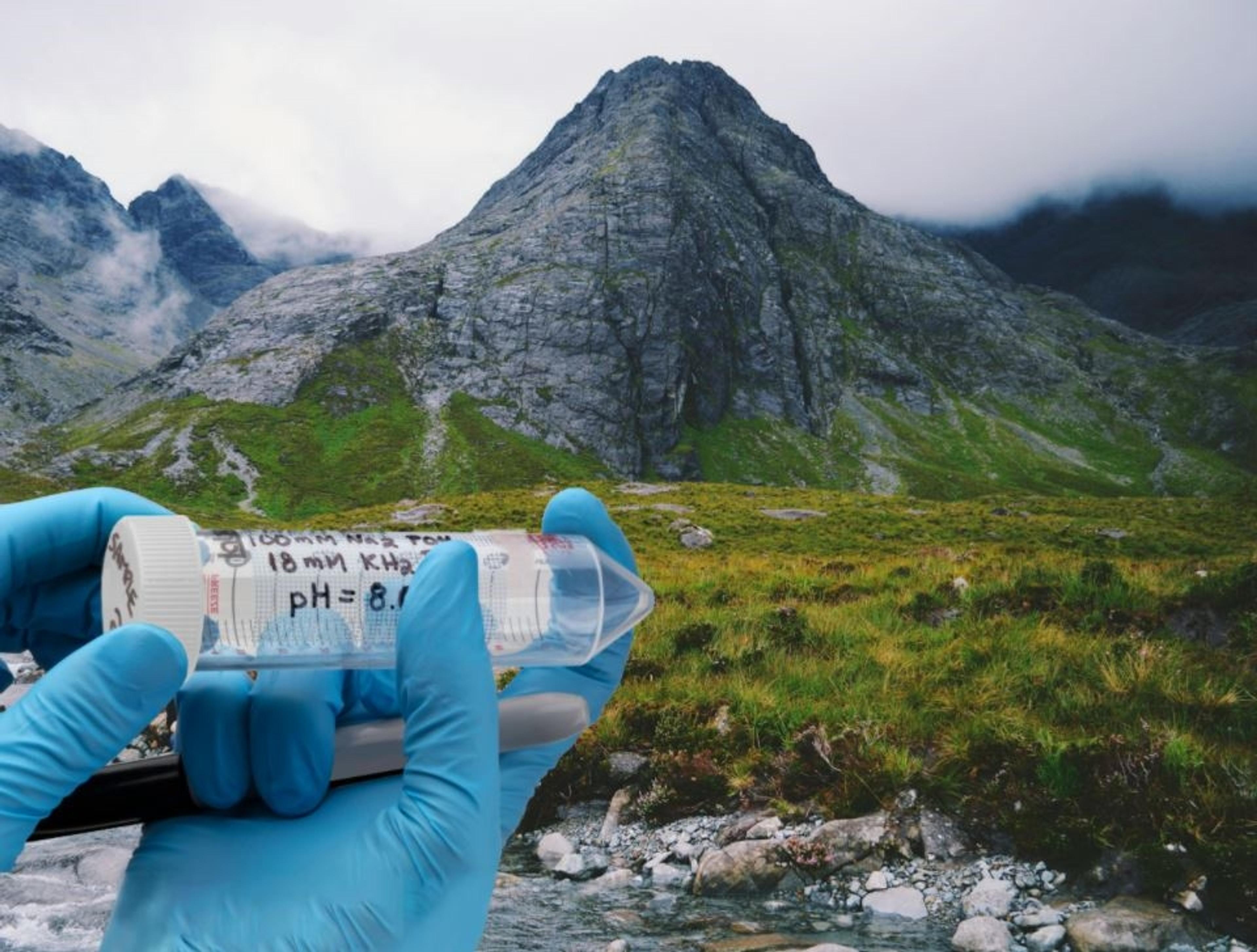
MetalFree ® Centrifuge Tubes are specialized for applications requiring the assurance of low background metals. Certified below one part per billion (<1ppb) for trace metals with natural colorant-free flat caps, these tubes come in all packaging options and are sterilized with a validated and approved ISO 11137 method.

(0)

Links

Tags

Gas ChromatographyGas chromatography (GC) is an analytical technique used to separate and quantitate mixtures of small and volatile compounds. Gas chromatographs or GC systems include components such as GC columns, detectors, pumps and autosamplers. Choose from packed or capillary GC columns, flame ionization (FID), photoionization (PID) electron capture detectors and selective or non-selective detectors. Find the best gas chromatographs in our peer-reviewed product directory: compare products, check customer reviews and receive pricing direct from manufacturers.UHPLC and HPLCHigh performance liquid chromatography (HPLC) and ultra high performance liquid chromatography (UHPLC), also known as UPLC, are analytical techniques used to separate, identify and quantitate components of complex mixtures including biological samples such as proteins and lipids as well as chemical mixtures of pesticides, drugs and oils. Both techniques are liquid chromatographic methods but differ by operating pressures (HPLC < 6000 psi < UHPLC ). Components of HPLC and UHPLC systems include columns, detectors, pumps, autosamplers and column heaters. Explore a range of UHPLC and HPLC columns for your specific sample needs including reverse phase, normal phase, ion exchange, HILIC, ion exclusion and size exclusion columns. For more specialized HPLC, explore FPLC, countercurrent LC and simulated moving bed systems. Find the best UHPLC and HPLC equipment in our peer reviewed product directory: compare products, check customer reviews and receive pricing direct from manufacturers.Atomic Absorption / Emission SpectroscopyAtomic absorption spectroscopy (AAS) and atomic emission spectroscopy (AES) — also called optical emission spectroscopy (OES) — are used to detect the elemental constituents in samples. Both techniques involve the atomization of a sample. Atomic absorption spectrometers may use a flame or furnace to create an atomic vapor of the sample before irradiation with spectral light. Optical emission spectrometers may use a flame, inductively coupled plasma (ICP), microwave plasma (MP) or spark arcs to atomize and excite the sample. At higher excitation energies, electrons can be emitted instead of photons, which can be useful for samples that can’t be atomized and for surface analysis. Explore electron spectroscopy equipment such as Auger spectrometers and photoelectron spectrometers for surface elemental analysis of samples. Find the best atomic absorption, photoelectron and optical emission spectrometers in our peer-reviewed product directory: compare products, check customer reviews and receive pricing direct from manufacturers.LC-MSLC-MS (liquid chromatography-mass spectrometry) systems and equipment are used for separation and quantitative analysis of complex mixtures, combining liquid chromatography and mass spectrometry. Quantify proteins, contaminants, pesticides or screen for drug metabolites with a high level of sensitivity. LC-MS systems and equipment include reverse phase, normal phase and specialized columns integrated with various MS detectors such as time-of-flight (TOF), quadrupole, orbitrap or ion trap mass analyzers. LC-MS/MS instruments equipped with a qTOF or triple quadrupole analyzer give greater sensitivity and resolving power to your analysis. Find the best LC-MS equipment in our peer-reviewed product directory: compare products, check customer reviews and receive pricing direct from manufacturers.Mass SpectrometryMass spectrometry (MS) is a powerful analytical technique used to identify and quantify molecules based on the mass-to-charge ratio of gas-phase ions. It provides detailed information about the structure, composition, and properties of compounds and is widely used across fields such as environmental monitoring, materials science, drug discovery and development, food and beverage testing, and wider chemical research. Key MS techniques include tandem mass spectrometry (MS/MS), liquid chromatography–mass spectrometry (LS-MS) and inductively coupled plasma (ICP-MS). Choosing from these wide range of techniques and technologies can be a daunting task, so keep up to date with scientific applications, performance expectations, and customer reviews here all in one place. Visit our product directory to receive quotes direct from the manufacturer. MicroplatesMicroplates are multi-well plates used to increase the throughput of biological investigations. The number of wells microplates contain can range from 6 to 3243 wells, with the 96-well format being the most commonly used. Microplates can come tailored for a range of applications including cell culture, PCR, filtration, storage, non-binding surface, protein crystallization, as well as pre-coated, deep well and normal Standard microplates. Additionally, options for microplate colors include clear , black, white or black with clear bottom and white with clear bottom for absorbance microplate reader applications. Find the best microplates for your lab in our peer-reviewed product directory: compare products, check customer reviews and receive pricing direct from manufacturers.Pipettes and DispensersPipettes and dispensers are essential lab equipment used to dispense measured volumes of liquid accurately. Explore a range of manual and electronic pipettes, including single and multichannel, serological and volumetric pipettes, as well as a range of pipette tips. Bottle-top dispensers are also available for simple and fast solvent dispensing. Find the best pipettes & dispensers in our peer-reviewed product directory: compare products, check customer reviews and receive pricing direct from manufacturers.Shakers, Stirrers and MixersShakers, stirrers and mixers are used for mixing liquids and solids for laboratory applications. There is a wide range of laboratory mixing equipment available, including magnetic stirrers, orbital shakers, linear shakers, microplate shakers, 3D gyratory rockers, rotators & vortexers. Additional platforms and clamps can also be attached to shakers to increase capacity. Find the best shakers, stirrers and mixers in our peer-reviewed product directory: compare products, check customer reviews and receive pricing direct from manufacturers.Labware and Lab SuppliesLabware and lab supplies include various forms of glassware, plasticware, reagents and personal protective equipment (PPE) and are used across all scientific laboratories, enabling daily tasks to be performed. Explore a range of flasks and beakers, petri dishes, carboys and storage bottles. Labware such as condensers, desiccators and burettes are also available for more specific tasks. Find the best labware and lab supplies in our peer-reviewed product directory: compare products, check customer reviews and receive pricing direct from manufacturers.Sample ManagementSample management systems include sample storage devices such as freezers and plate storers, sample environment enclosures and sample organization, retrieval and sorter systems. Useful system features include high-throughput, automation, robotic arms, automated liquid handling and associated database systems. Accessories in sample management include barcode scanners, heat sealers and tubes.Cell-Based AssaysCell-based assays are used to monitor the presence, quantity and activities of a desired cellular analyte including drug molecules or biomarkers. This can reveal information on cell health (apoptosis, cytotoxicity, viability and proliferation assays), cell metabolism, cell migration and cell signaling mechanisms. Find the best cell-based assay products, kits and equipment with our peer reviewed product directory: compare products, check customer reviews and receiving pricing direct from manufacturers.Environmental Monitoring and TestingEnvironmental monitoring and testing uses handheld portable analyzers, kits, spectrometers or chromatography systems for air, water, soil, food and other sample testing. Useful features of analyzers such as BOD and COD include portability, easy calibration, automation and sensitivity.  Environmental test kits for pH, water, moisture, etc, should be accurate, sensitive, reliable, fast and easy to use.Particle CharacterizationParticle characterization instruments are used to determine particle size distribution, shape, surface area, zeta potential, density and porosity of particles and materials. Multiple tecchniques are available for determining particle size, shape and count including dynamic light scattering (DLS), laser diffraction, electrozone (Coulter technique), imaging particle analysis and single particle optical sensing. Determine the density of your material with a gas pycnometer or examine its surface area and porosity with gas adsorption analyzers and mercury porosimeters. Find the best particle characterization instruments in our peer-reviewed product directory: compare products, check customer reviews and receive pricing direct from manufacturers.GC-MS GC-MS (gas chromatography-mass spectrometry) instruments and equipment are used to separate, quantify and identify mixtures of small and volatile compounds, such as polycyclic aromatics, fatty acids and alcohols. Often used in drug detection, forensic investigation and environmental analysis for pesticides and contaminants, GC-MS is a powerful addition to your lab’s analytical capabilities. GC-MS/MS instruments equipped with a qTOF or triple quadrupole analyzers can give greater sensitivity and resolution to your analysis. Find the best GC-MS instruments and equipment in our peer-reviewed product directory: compare products, check customer reviews and receive pricing direct from manufacturers.Laboratory ManagementLaboratory management involves overseeing the operations of a lab, ensuring compliance with safety regulations, optimizing workflows, and maintaining equipment. Efficient lab management is key to ensuring accurate results and minimizing downtime. Technologies like laboratory information management systems (LIMS) and automated lab equipment are helping labs streamline operations. Browse our peer-reviewed product directory to find the best laboratory management tools, compare products, read reviews, and get pricing directly from manufacturers.
Low-carbon labware: Setting the standard for product transparency and sustainability