
Lonza and CN Bio announce new distribution agreement
The agreement will provide prevalidated hepatocytes for use on innovative organ-on-a-chip range
28 Jul 2021
Industry news
Lonza and CN Bio have entered into a distribution agreement whereby Lonza will supply a selection of hepatic cells to be prequalified by CN Bio for use in their PhysioMimix™ Single-and Multi-Organ MPS to transform the way human-relevant pre-clinical data is generated.
With prequalified cells, customers can avoid having to trial numerous cell types in order to be assured of finding ones that will grow and behave functionally in 3D culture and fast-track their route to generating reliable and robust data.
The use of physiologically relevant in vitro models plays an important role in driving down attrition rates and boosting the efficiency and success of drug discovery programs. It is increasingly clear that standard 2D cell culture fails to accurately reflect the complex interactions that take place in the living body, while animal models are slow, expensive and don’t always correlate to the same interactions in humans. Innovative models, such as OOC, offer the way forward and this agreement is a critical step in realizing that vision to bring more physiologically relevant models to the industry.
Maureen Bunger, Senior Product Manager, ADME-Tox Solutions, Lonza Cell and Gene, commented: “Today’s drug discovery success is hugely dependent on performing experiments using the right biological model to best reflect in vivo environments. This new agreement with CN Bio further demonstrates Lonza’s commitment to supporting innovation and to the development of the most advanced cell models for enhanced drug discovery and development success.”
The PhysioMimix™ Single and Multi-Organ MPS allow researchers to recreate an environment that more accurately represents the human body in the laboratory to generate translationally relevant pre-clinical data. Until now, the widespread adoption of OOC technologies has been hampered by a lack of quality control and performance criteria for consistent use of the devices and reproducibility of results between experimental sites. These have posed significant limitations for translational experiments using OOC technology in contexts of use in drug development. To address this, the FDA has worked with CN Bio to demonstrate the robustness and reliability of their technology for drug metabolism and safety toxicity applications.
Dr. Tomasz Kostrzewski, Director of Biology, CN Bio, commented: “We’re delighted to be working with Lonza, a world-leading cell supplier, to ensure that the prevalidated cells we supply for use with our PhysioMimix™ Single-and Multi-Organ MPS are of reliably high quality and are well-suited to culture in 3D. Using prequalified cells will save our customers valuable time and resource, further helping to accelerate their drug development journey.”
Lonza hepatocyte cells meet the high standard of quality required by organ-on-a-chip systems. With a robust manufacturing process and excellent quality control, state-of-the-art facilities and Lonza’s decades of specialist experience and deep expertise, Lonza cells offer a great chance of reproducible success. Access to a wide variety of large-sized lots gives customers confidence in ongoing cell availability.
Want the latest science news straight to your inbox? Become a SelectScience member for free today>>
Related products
Request Quote for All Products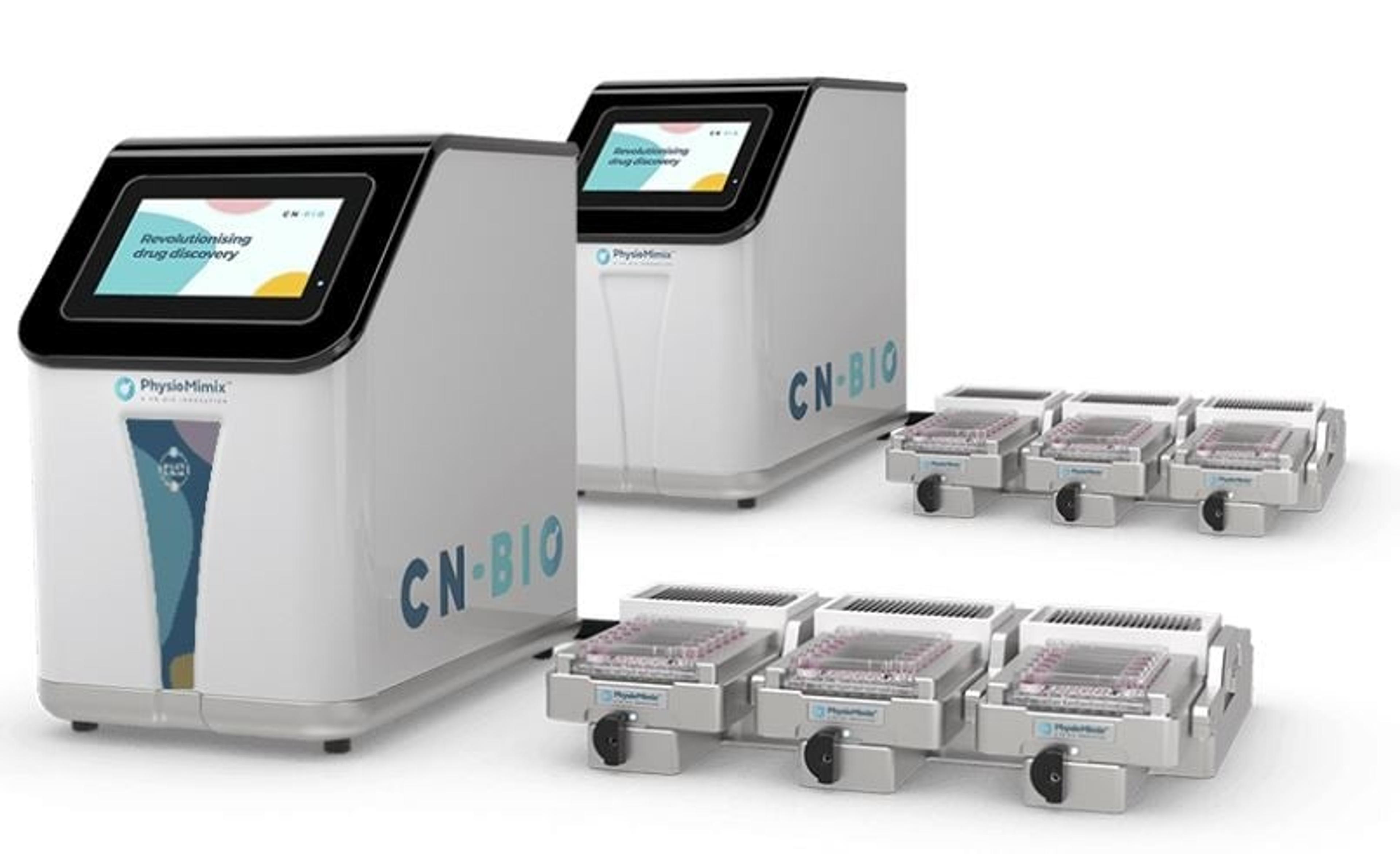
The PhysioMimix™ OOC Range of Single and Multi-organ Microphysiological Systems (MPS) by CN Bio
CN BioPhysioMimix™ microphysiological systems generate in vitro microtissues that mimic the structure and function of human tissues and organs. Through the simulation of human biological conditions, they bridge the gap between traditional cell culture and human studies, reliably predicting drug effects to facilitate the accelerated development of safe and efficacious therapeutics.