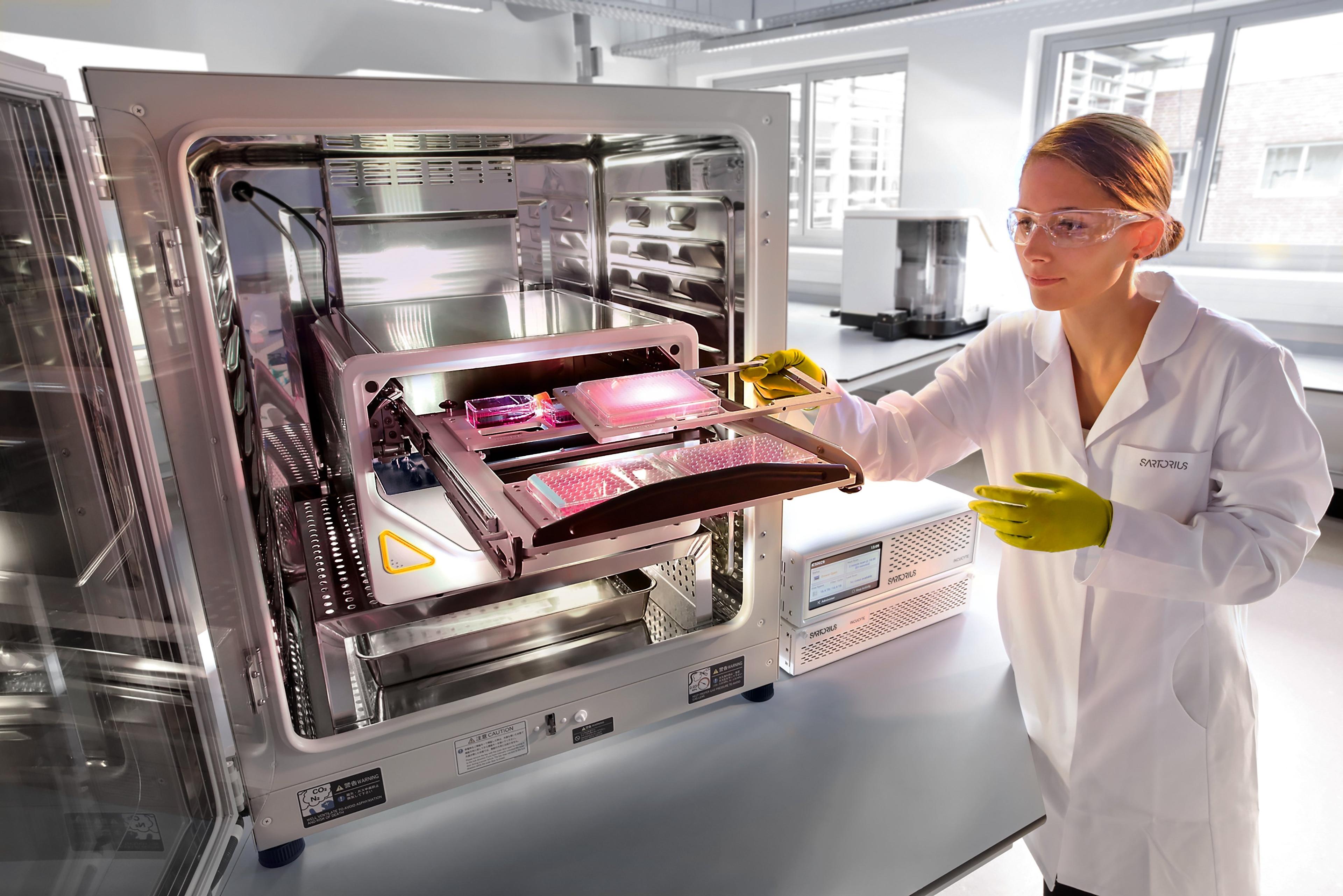
Live-Cell Analysis Handbook: New Edition Released

Discover a comprehensive guide to real-time live-cell imaging and analysis

9 Sept 2018
Frankie MacDonald
Administrator / Office Personnel

Industry news

Real-time live-cell analysis is redefining the possibilities and workflows of cell biology. However, most laboratories lack processes for continual monitoring of cells prior to, or during, analysis to capture crucial or rare events.

Important questions such as, “Are the cells supposed to look like that?” or “Have they grown, changed, or differentiated overnight?” are often overlooked or addressed subjectively, compromising the validity and reliability of any experimental observations and, ultimately, the reliability and integrity of your research.

The combination of ease of use, throughput, and non-invasive measurement within live-cell analysis enables researchers to monitor and measure cell behaviors at a scale and in ways that were previously not possible.

Live-cell analysis is ideally complementary to other cell analysis platforms, such as flow cytometry, analyte detection or RNA/DNA analysis methods, expanding on traditional end-point cell monitoring and analysis methods. It enables researchers to ask new questions, get new answers, improve productivity and protect precious cells.

The comprehensive live-cell analysis handbook covers topics including:

  • Cell culture quality control assays
  • Kinetic cell health and viability assays
  • Kinetic cell migration and invasion assays
  • Studying protein dynamics with IncuCyte® live-cell analysis (NEW!)
  • Kinetic assays utilizing complex models (NEW!)

Download the handbook online or reserve your printed copy here >>

Links

Tags

Cell / Tissue CultureCell culture or tissue culture is used to study the biology of cells or tissues and to isolate cellular products in an environment which can be manipulated and well defined. Accurately control your culture environment with bioreactors or culture incubators, bind your cells to a surface or together with an extracellular matrix. Distinguish cell types with differential media or proliferate cells with certain characteristics using selective media. Enrich your media with supplements such as growth factors, sera and vitamins. Find the best cell and tissue culture products, kits and equipment in our peer-reviewed product directory: compare products, check customer reviews and receive pricing direct from manufacturers.Cell-Based AssaysCell-based assays are used to monitor the presence, quantity and activities of a desired cellular analyte including drug molecules or biomarkers. This can reveal information on cell health (apoptosis, cytotoxicity, viability and proliferation assays), cell metabolism, cell migration and cell signaling mechanisms. Find the best cell-based assay products, kits and equipment with our peer reviewed product directory: compare products, check customer reviews and receiving pricing direct from manufacturers.In Vivo Imaging Systems<i>In vivo</i> imaging systems, including pre-clinical imaging systems and medical imaging systems are used to non-invasively visualize and capture images of live animals and plants. Monitor the natural processes or diseases of your subjects using small-animal pre-clinical imaging systems, including single photon positron emission tomography (SPECT), positron emission tomography (PET), computed tomography (micro-CT), magnetic resonance imaging (MRI), X-ray radiography, ultrasound, fluorescence and bioluminescence imagers. Multimodal systems and software solutions are also available for correlative analysis of organ, tissue, cell, or molecular-level processes. Find the best in vivo imaging products in our peer-reviewed product directory: compare products, check customer reviews and receive pricing direct from manufacturers.Cell AnalysisThe analysis of cells allows researchers to understand the factors which contribute to cell health and function. These influencing processes can then be predicted and altered, leading to the development of medication and disease treatments.ImagingImaging techniques are essential for obtaining visual representations of samples to understand structures, processes, and function in biological, chemical, and physical research. These tools range from traditional light microscopy to advanced imaging modalities like MRI and electron microscopy, providing researchers with valuable data for diagnostics, drug discovery, and material analysis. Explore imaging solutions in our peer-reviewed product directory to compare products, check reviews, and get pricing directly from manufacturers.Live Cell ImagingLive cell imaging is the study of living cells using microscopes and high-content imaging systems. This technique provides in-depth insight into fast and complex biological processes, by allowing dynamic imaging of living cells instead of acquiring an individual image at a single point in time.