
Linkam highlights Optical DSC450 at AAPS 2019 Pharmsci 360
The Optical Differential Scanning Calorimeter will be showcased at booth #1054, November 3-6
15 Oct 2019
Product news
A market leader in temperature controlled microscopy, Linkam Scientific Instruments, will be showcasing its Optical Differential Scanning Calorimeter for the simultaneous measurement visualisation of thermal transition experiments for improved materials characterisation.
The Optical DSC450 enables the user to measure melting behaviour and glass transitions of a wide range of substances whilst providing simultaneous image capture with the optional LINK Digital Imaging module. The image data provides information of colour or morphological changes that can be correlated with temperature and phase transitions. Combining image and thermal analysis data can provide additional insights into the properties of the materials. The temperature of the DSC450 can be accurately controlled from -150 °C (with the optional LNP96) to +450 °C and the atmosphere of the stage can also be gas purged.
TASC (Thermal Analysis by Surface Characterisation) is a new image analysis technique which enables localised structural changes in samples to be tracked and quantified optically, with temperature. It has the unique ability to measure local transition temperatures allowing different points on a sample to be identified.
Combining the DSC450 with imaging and TASC provides a unique solution for the characterisation of the thermal properties of materials.
Peter Grocutt, R&D Director, commented: “Nearly all DSCs are large benchtop devices and are not primarily suited to microscope imaging. In addition, if cooling is required to lower temperatures (-150°C), large Dewars and complex cooling systems are required. The DSC450’s compact size lends itself to performing fast experiments and can be setup for cooling or heating in minutes. For cooling, it uses a small pump unit and a 3 litre Dewar, which once filled, can be used to cool the DSC450 immediately at the pre-set rate.
“The Thermal Analysis Sample Characterization software can reveal transitions that are difficult or impossible to measure easily by DSC alone, as smaller samples do not result in reduced sensitivity.”
The Optical DSC450 has recently been used to study phase transitions in pharmaceuticals, where the power of the complementary technique is particularly evident. The combination of optical microscopy and differential scanning calorimetry delivers increased sensitivity for detecting subtle characteristics such as solid-solid transitions.
Combining the DSC450 with spectroscopic techniques such as Raman and FTIR provides an ideal solution for the study of molecular changes such as Polymorphism.
Do you want more of the latest science news straight to your inbox? Become a member of SelectScience for free today>>
Related products
Request Quote for All Products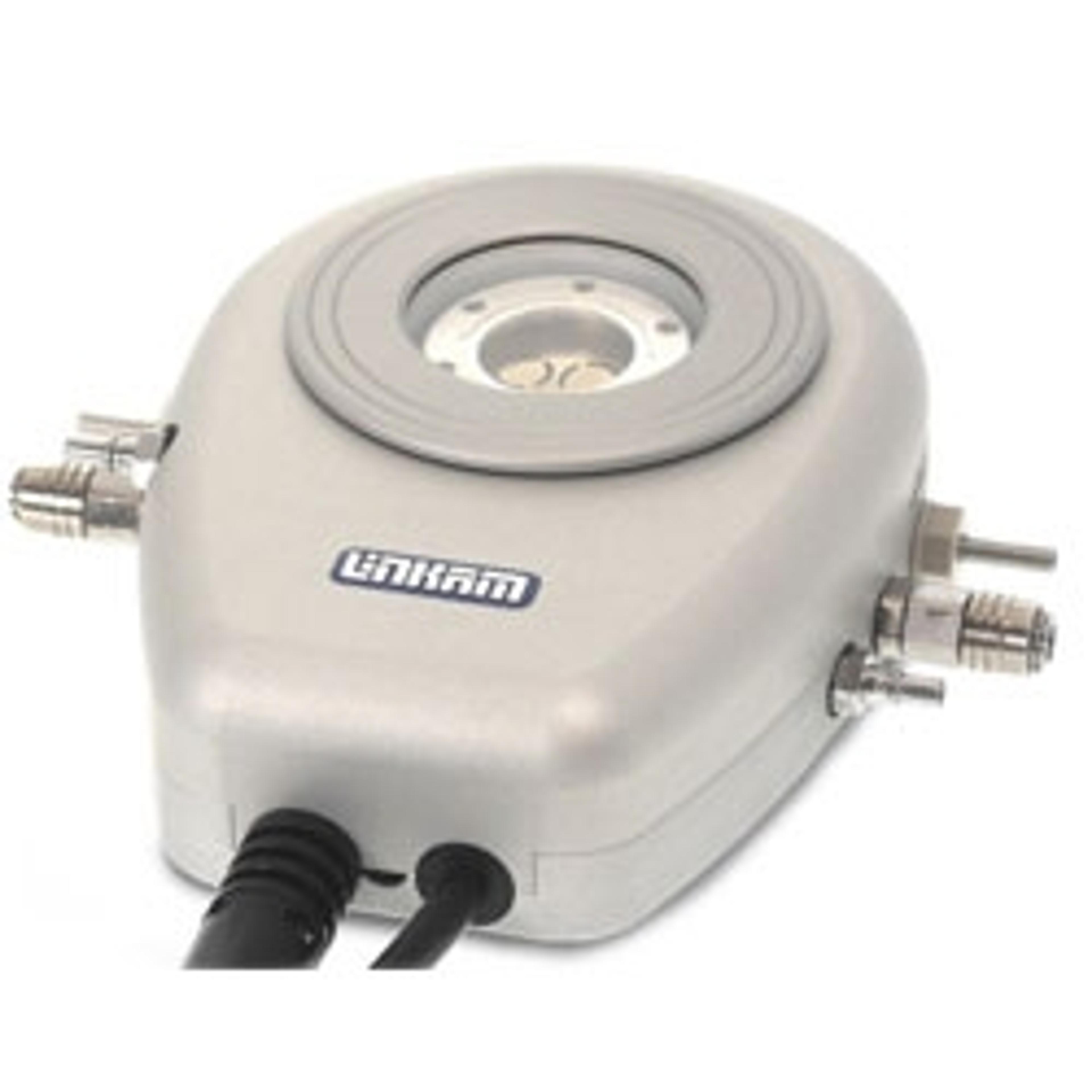
Optical DSC450
Linkam Scientific Instruments LimitedThe optical DSC450 system has been optimized for those wishing to measure the transition temperatures and enthalpy changes of their samples. The design allows mounting of the stage on a microscope, enabling image and time-lapse recording of sample transitions at high resolution.