Learn from the Experts: Watch Siemens Presentations from AACC 2015

Clinical experts discuss a range of clinical, scientific and laboratory topics

28 Oct 2015
Sonia Nicholas
Managing Editor and Clinical Lead

Editorial article

During the AACC 2015 Annual Meeting and Clinical Lab Expo, experts from Siemens Healthcare Diagnostics gave a series of In-Booth Clinical Briefs, designed to discuss a range of topical clinical laboratory subjects. Watch the video series to learn more about troponin assays, hormone standardization, hemostasis sample integrity and more.
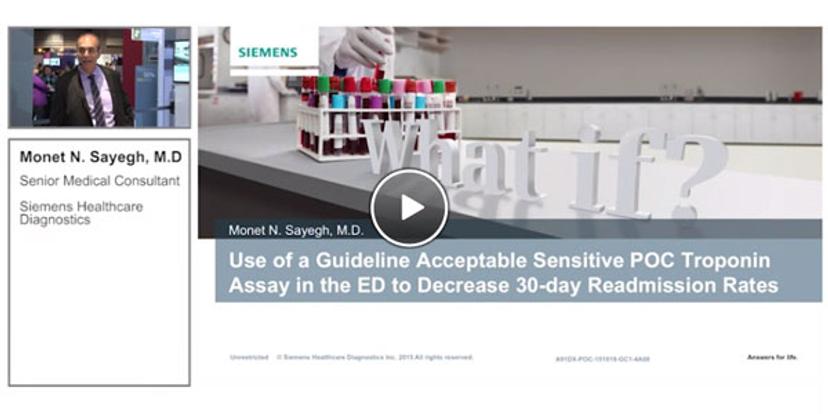
1. Use of a Guideline Acceptable Sensitive POC Troponin Assay in the ED to Decrease 30-day Readmission Rates

Monet N. Sayegh, M.D., Senior Medical Consultant, Siemens Healthcare Diagnostics, presents on a guideline acceptable POC troponin assay for earlier diagnosis of MI

2. Importance of Hormone Assay Standardization in Laboratory Medicine

Paul E.C. Sibley, PhD, Associate Director of Global Commercial Assay Marketing, Siemens Healthcare Diagnostics, discusses the importance of hormone assay standardization 

3. Hemostasis Sample Integrity - It Matters: Central Lab to Point of Care

Sandra Gardner, BS, MT (ASCP), Hemostasis Reagent Marketing, Siemens Healthcare Diagnostics, discusses the proper coagulation sample collection technique and the effect of improper capillary sample collection

4. Reducing LOS and Improving MI Diagnosis Using Guidance-Acceptable cTn Assays

Katherine Soreng, PhD, Director of Clinical and Scientific Marketing at Siemens Healthcare Diagnostics, discusses the use of troponin as a marker of myocardial damage and its appropriate use in MI diagnosis 

5. The Epidemic of Chronic Diseases: The Role of IVD Testing

Lauren Foohey, MT, MPH, Senior Director, Marketing Point of Care, Siemens Healthcare Diagnostics, discusses the global increase of chronic diseases, as well as the challenges and opportunities that this presents 

6. Meaningful Use: The Lab's Role in Attesting Stage 2 and 3
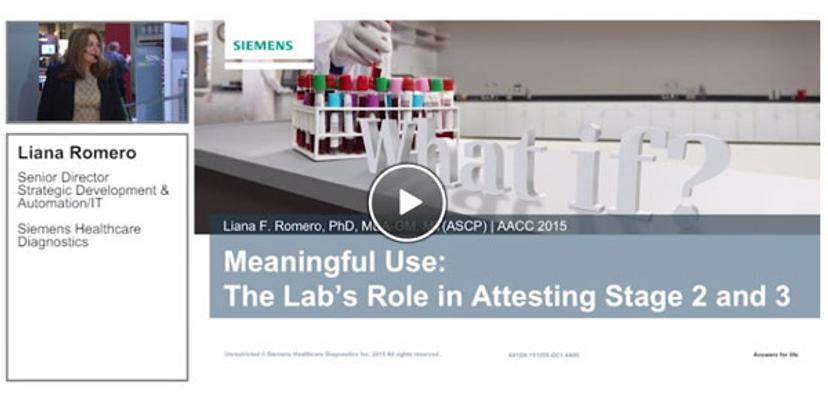
Liana F. Romero, PhD, MBA-GM, MT (ASCP), Senior Director of Strategic Development & Automation/IT at Siemens Healthcare Diagnostics, discusses meaningful use and healthcare reform and how the laboratory can attest MU2 and MU3

Links

Tags

HematologyIn Haematology / Hematology, complete blood cell counts (or full blood counts) are obtained using automated blood count analyzers to enumerate blood cell types.  Hematology also encompasses haemostasis and coagulation, thrombophilia and hemophilia, plasma viscosity and ESR analysis, hemoglobinopathies, cell morphology and haematinic measurement.ImmunologyImmunological techniques measure and characterize immune responses. Immunology kits and analysis systems often use techniques such as ELISA, radioimmunoassay (RIA) and immunodiffusion assays, Immunohistochemistry, and flow cytometry. Immunologists use equipment such as flow Cytometers, plate readers, plate washers and fluorescent microscopes.Point-of-CarePoint-of-Care Testing (POCT) or Near Patient Testing (NPT) products are available for urine, blood and other clinical chemistry analyses. POCT includes: blood glucose testing, blood gas and electrolytes analysis, rapid coagulation testing (PT / INR), rapid cardiac markers diagnostics, drugs of abuse screening, urine strips testing, pregnancy testing, fecal occult blood analysis, food pathogens screening, hemoglobin diagnostics, infectious disease testing and cholesterol screening.Clinical ChemistryBiochemistry (or clinical chemistry) involves the analysis of bodily fluids using chemical tests. Techniques used include HPLC, chromatography, spectroscopy, mass spectrometry, immunochemical, electrophoresis, turbidometric / spectrophotometric assay, MRI and ISE analysis. Tests are often carried out on plasma or serum but urine (urinalysis) and fecal specimens are also processed.Clinical MicrobiologyMicrobiology is the study of microorganisms including protists, prokaryotes, fungi, and, often, viruses. Microorganisms are a useful research tool as genetic vectors and, in immunology, for antibiotic susceptibility testing, cellular biology and genetics. Microorganisms commonly grow readily in incubators with microbial culture media; this can contain chromogenic supplements to differentiate between cell lines. Estimate your culture’s density of microorganisms with colony counters, or screen and select colonies for desirable clones with automated colony pickers. Additionally, equipment is available to monitor environments for the presence of microbes and identify with microbial identification instruments. Find the best microbiology products in our peer-reviewed product directory: compare products, check customer reviews and receive pricing direct from manufacturers.TroponinPoint of Care SolutionsPoint of care solutions provide medical diagnostics and treatments at or near the site of patient care. These technologies offer rapid results, helping healthcare providers make quick decisions. From glucose monitors to molecular diagnostics, point of care solutions are transforming healthcare delivery by reducing wait times and improving patient outcomes. Explore the best point of care products in our peer-reviewed product directory, compare options, check reviews, and get pricing directly from manufacturers.AACCThe American Association for Clinical Chemistry (AACC) Annual Meeting and Clinical Lab Expo is the largest meeting for clinical laboratory professionals in the world. This year's meeting is being held in Atlanta, USA, July 26th-30th, 2015.Hemostasis
Learn from the Experts: Watch Siemens Presentations from AACC 2015