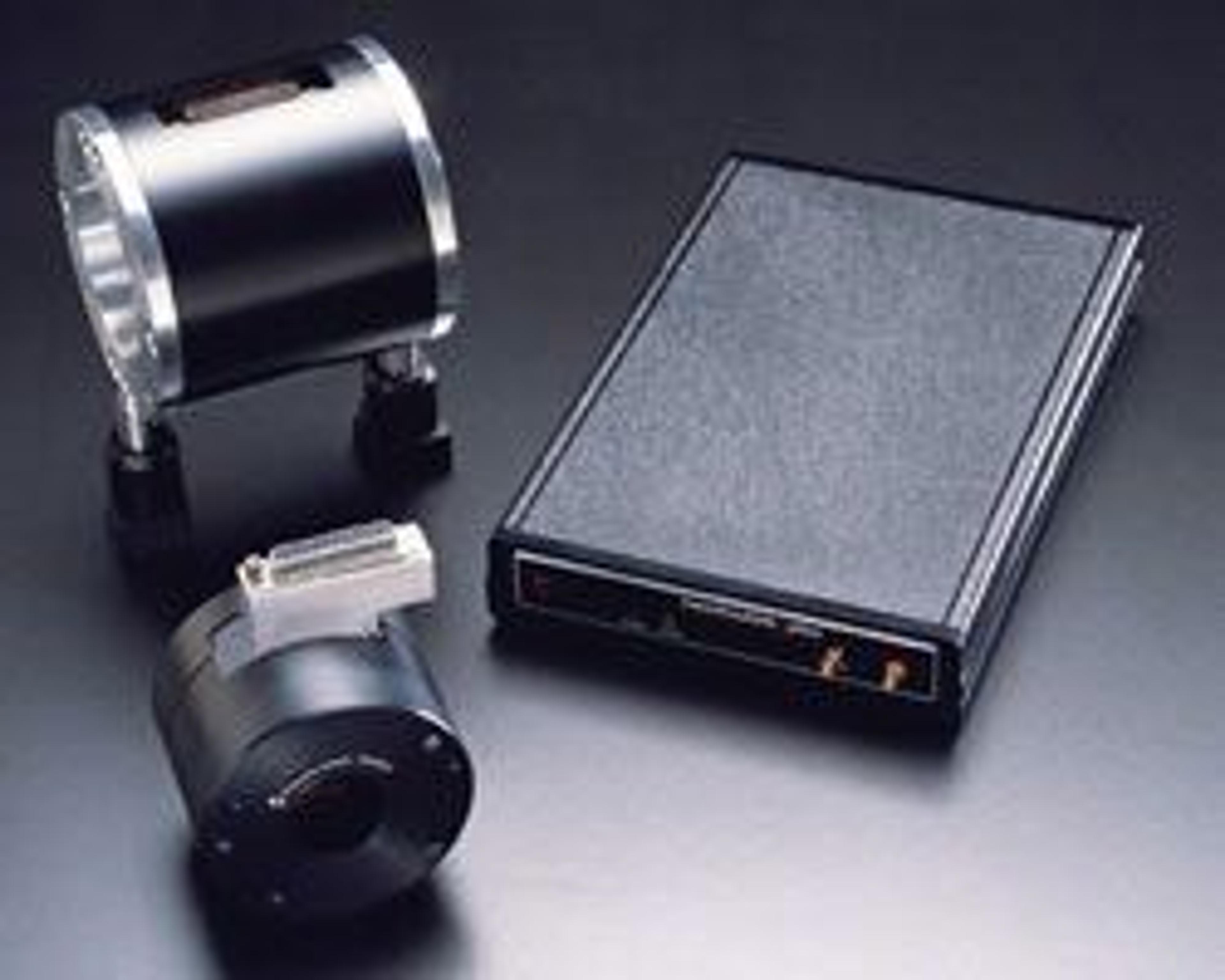
Laser Physics Uk Introduces Meadowlark Optics New Tri-Color Liquid Crystal Optical Filter

26 Sept 2012

Product news

Designed with the most compact package yet, Meadowlark Optics Tri-color liquid crystal optical filter offers 3 user selectable channels from a wavelength range of 420-780nm. Used in applications such as fluorescence microscopy, the Tri-color filter provides the user high transmission and full video filter switching speed and, since it has no moving parts, no vibrations are caused, unlike switching traditional filters.

The Tri-color filter head weighs just 71g and can be mounted in one of three ways; 8 - 32 thread holes, optional cage systems and optional C-mount interface.

Meadowlark Optics excels at providing customized filters for a variety of applications. The Tri-color filter is factory customizable to achieve different centre wavelengths, wavelength ranges and other specifications, for example, pseudo white state, or continual tuning.

Meadowlark Optics has also updated the Selectable Bandwidth Tunable Optical Filter, enabling it to be optical cage mounted. Continuously tunable over 420-730nm with 0.1nm resolution, this filter allows the user a choice of three different bandwidth sizes at each wavelength: narrow, medium and wide, allowing the user to acquire images at thousands of different wavelengths fast in applications including fluorescence, absorption and Raman microscopy and solar astronomy.
Meadowlarks Tunable Optical Filters can also be customized to achieve different bandwidths, wavelength ranges or other performance profiles to provide a solution that meets your needs.

Liquid Crystal Tuneable Optical Filter

Laser Physics UK Ltd

Meadowlark Optics’ Liquid Crystal Tuneable Optical Filters facilitate spectral analysis of not only a collimated beam, but of an entire object. With no moving parts, a resolution down to 0.001nm and a tuning rate of less than 100ms, these robust filters are calibration free and can replace literally 1000s of filters for applications including fluorescence and absorption microscopy, Raman spectroscopy and solar astronomy. At 38 x 67 x 15mm and less than 60g, the Tri-Color LC optical filter is the smallest LC filter package yet and stepping between 3 design wavelengths at full video rate without introducing vibration, it easily integrates in to your imaging system via post, cage or c-mounts. Stock filters are RGB, but this filter can be customised for different centre wavelengths, wavelength ranges, pseudo white state or continual tuning. With continual tuning range over the visible spectrum at 3 selectable bandwidths, the TOF-SB-VIS tuneable filter allows the user to switch between or continuously through any wavelength from 420 to 730 nm with 0.1nm tuning resolution. Just as easy to mount into your imaging system, with its 2cm clear aperture and 6° half angle, this filter replaces thousands of filters, saving space and time between images and without introducing any vibration. Again Meadowlark Optics’ LC TOFs can be customised complete or as an OEM to suit your application needs.

(0)

Links

Tags

Atomic Absorption / Emission SpectroscopyAtomic absorption spectroscopy (AAS) and atomic emission spectroscopy (AES) — also called optical emission spectroscopy (OES) — are used to detect the elemental constituents in samples. Both techniques involve the atomization of a sample. Atomic absorption spectrometers may use a flame or furnace to create an atomic vapor of the sample before irradiation with spectral light. Optical emission spectrometers may use a flame, inductively coupled plasma (ICP), microwave plasma (MP) or spark arcs to atomize and excite the sample. At higher excitation energies, electrons can be emitted instead of photons, which can be useful for samples that can’t be atomized and for surface analysis. Explore electron spectroscopy equipment such as Auger spectrometers and photoelectron spectrometers for surface elemental analysis of samples. Find the best atomic absorption, photoelectron and optical emission spectrometers in our peer-reviewed product directory: compare products, check customer reviews and receive pricing direct from manufacturers.Fluorescence SpectroscopyFluorometers and spectrofluorometers (also called fluorescence spectrometers) are used to measure the intensity and wavelength of fluorescent light emitted from a sample after excitation by illumination. Spectrofluorometers utilize monochromators to select the desired wavelengths, whereas filter fluorometers employ a set of filters. Spectrofluorometers for measuring steady-state fluorescence and lifetime fluorescence (or time-resolved fluorescence) are available, as well as fluorescence microscopes and microplate readers. Find the best fluorescence spectroscopy products in our peer-reviewed product directory: compare products, check customer reviews and receive pricing direct from manufacturers.Raman SpectroscopyRaman spectroscopy is used to discern the vibrational and rotational states of molecules and hence the chemical composition of a sample by measuring the inelastic scattering of monochromatic light. Explore a range of Raman spectrometers, including handheld/portable Raman spectrometers for QC/QA labs and in situ spectrometers for processes. Conduct Raman imaging for microanalysis of mixed samples using a Raman microscope. Raman spectrographs are also available. Find the best Raman spectroscopy products in our peer-reviewed product directory: compare products, check customer reviews and receive pricing direct from manufacturers.UV-Visible SpectroscopyUltraviolet-visible (UV-Vis) spectrophotometers are used to measure the interaction of UV and visible light with a sample, including transmission, reflectance & absorbance. The two major instrument classes are single-beam or double-beam spectrophotometers. More specialized equipment includes colorimeters, spectroradiometers and refractometers. Portable and microvolume spectrophotometers are also available. For the modular spectroscopy lab, explore a range of light sources for combination with a spectrograph/spectrometer and optics. Find the best UV-Vis spectroscopy products in our peer-reviewed product directory: compare products, check customer reviews and receive pricing direct from manufacturers.Light MicroscopyLight microscopes or optical microscopes are used to visualize microscale objects under magnification, including cells, clinical specimens and materials. Lab equipment for light microscopy includes confocal microscopes, fluorescence microscopes, zoom and stereo microscopes. Microscope slides and imaging reagents are available for visualizing samples, as well as various microscope stages and incubators for large or temperature-sensitive samples. Find the best light microscopes in our peer-reviewed product directory: compare products, check customer reviews and receive pricing direct from manufacturers.