Keeping Up to Date With Clinical Laboratory Automation

Laboratory automation is helping clinical laboratories to keep up with demand

23 Dec 2015
Sonia Nicholas
Managing Editor and Clinical Lead

Editorial article

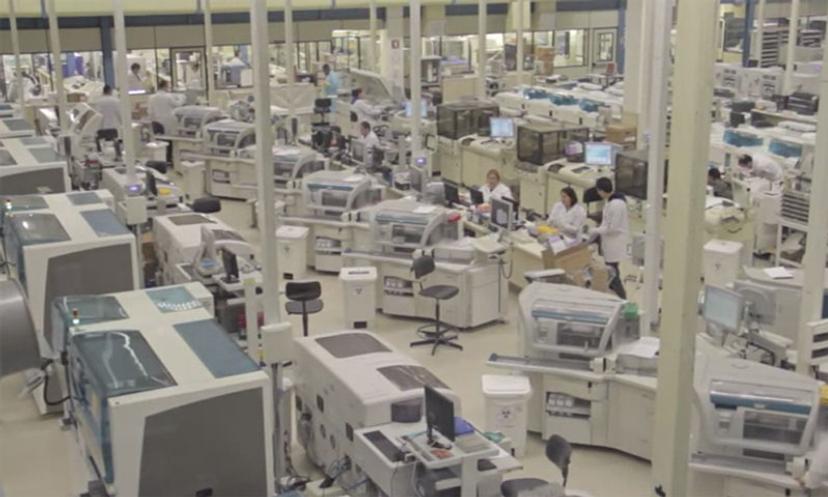
Large clinical laboratories like this one at DASA, Brazil, are benefiting from total automation systems


Clinical laboratories are under immense and relentless pressure to improve turnaround times, reduce human error rates, improve efficiency and make cost savings. This drive has seen the steady automation of most clinical laboratories. 

Changing times

As automation solutions continue to evolve, it can be difficult to keep up with current advances. Only a few decades ago, all laboratory work was carried out using manual procedures and techniques, in clearly separated laboratory departments. In modern laboratories of the developed world, many of these manual procedures have been automated and integrated, so that different departments are coupled together (for example clinical chemistry and immunology assays combined in a single analyzer).

Most analyzers are now automated so that you put a sample onto a loading rack, press go and wait to be presented with a test result (load and go). However modern automation encompasses so much more, and with the rise of total laboratory automation (TLA), clinical laboratories are becoming more efficient, more precise and more cost effective than ever before.

TLA automates the laboratory process from specimen receipt, to testing, right through to sample storage. Modern systems have tracks that can travel the length of corridors, around corners and even up and down floors.
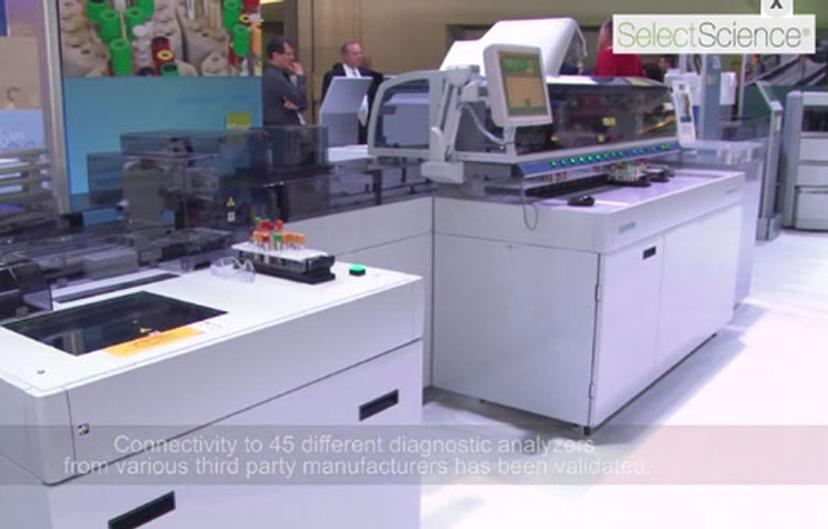
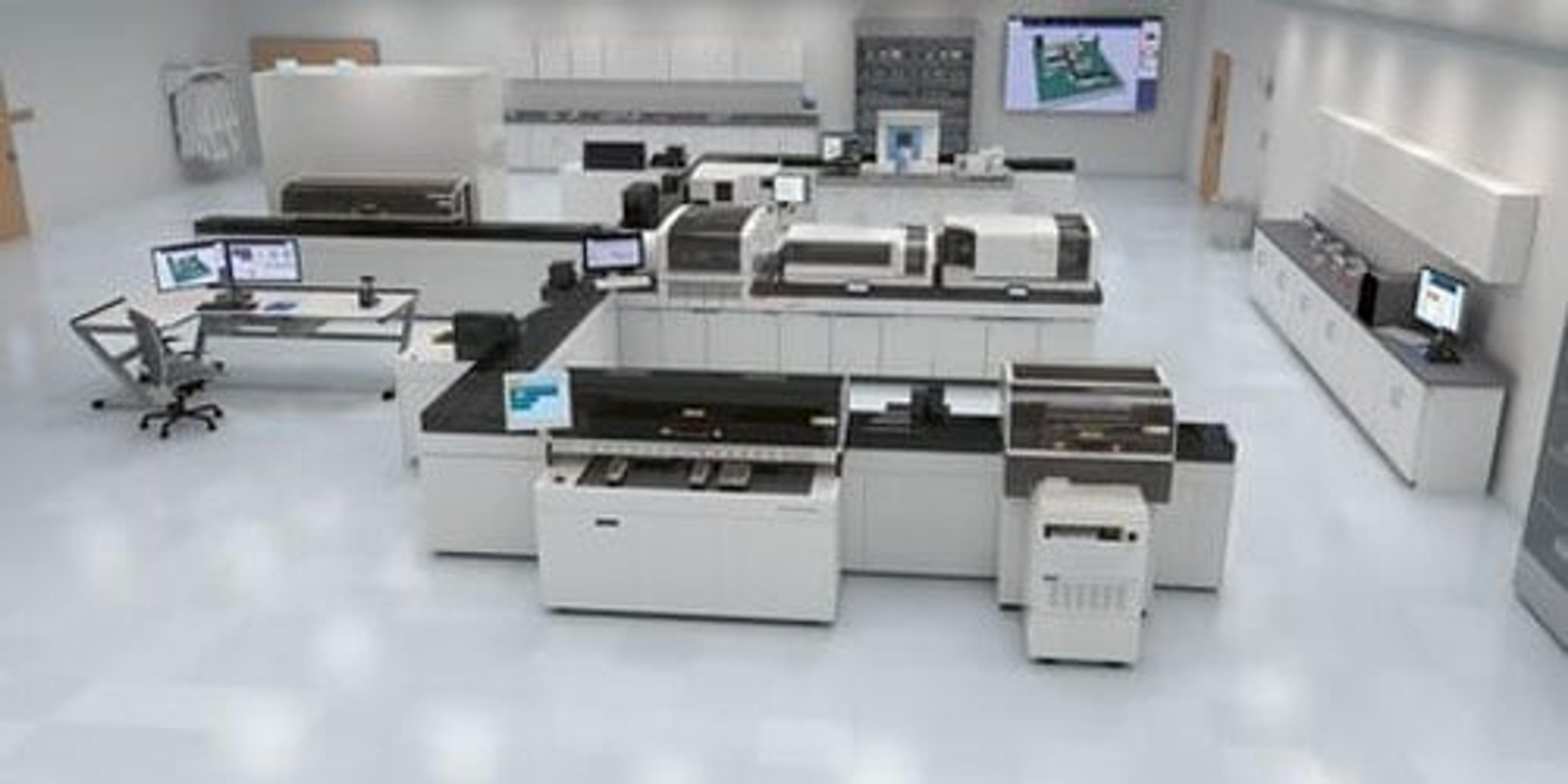
AptioTM Automation from Siemens Healthcare Diagnostics is an example of a total automation system


Pre- and post-analytical automation

Examples of pre-analytical systems include the cobas p 512 and 612 Pre-Analytical Systems and Beckman Coulter’s Power Processor Sample Handling System, both for use in clinical chemistry.

Following analysis, post-analytical modules can manage reflex testing as well as the storing and archiving of samples. Examples of post-analytical systems include the cobas p 501 / cobas p 701 Post-Analytical Units for clinical chemistry and the Sysmex XN-9000 Sorting & Archiving System for hematology.

An example of a TLA system comprising of both pre- and post-analytical modules is AptioTM Automation from Siemens Healthcare Diagnostics.

In smaller laboratories, with lower throughput, the complexity and cost of TLA may not be necessary or possible. In these cases it will be more cost effective to automate parts of the laboratory testing process. Pre-analytics automation, in particular, frees up the time of skilled staff by removing the unskilled, manual jobs involved in sample preparation.

For more information on clinical laboratory automation, download the free SelectScience Clinical Laboratory Automation Buying Guide.

Aptio® Automation

Siemens Healthineers

Aptio® Automation combines intelligent technologies with Siemens Healthineers workflow expertise to deliver flexible solutions that advance your laboratory’s productivity. Accelerate processing and achieve consistent turnaround time using intelligent routing, single-sample flow, and primary tube sampling technologies.Improve utilization of lab resources through data-driven simulations, optimization modeling, and best practices of an experienced partner. Position your laboratory for future expansion and rapid access to innovations in automation and diagnostics with a highly adaptable, multidisciplinary track.

(2)

Links

Tags

Blood TransfusionBlood Transfusion involves giving donor blood to a recipient patient. Screening is essential to avoid transfusion reactions. Blood banks use immunohematological techniques to determine rh and ABO blood group, and screen for antibodies using specific antisera. Blood Banks use Direct Coombs Tests (DCT) and Indirect Coombs Tests (IAT) to detect hemolysis and Haemolytic Disease of the Newborn (HDN).HematologyIn Haematology / Hematology, complete blood cell counts (or full blood counts) are obtained using automated blood count analyzers to enumerate blood cell types.  Hematology also encompasses haemostasis and coagulation, thrombophilia and hemophilia, plasma viscosity and ESR analysis, hemoglobinopathies, cell morphology and haematinic measurement.ImmunologyImmunological techniques measure and characterize immune responses. Immunology kits and analysis systems often use techniques such as ELISA, radioimmunoassay (RIA) and immunodiffusion assays, Immunohistochemistry, and flow cytometry. Immunologists use equipment such as flow Cytometers, plate readers, plate washers and fluorescent microscopes.Cellular PathologyCellular Pathology deals with the microscopic analysis of tissue samples and cells. Sample preparation and processing includes fixation, staining, sectioning and slide mounting, using equipment such microtomes and cryostats. In choosing immunohistochemistry and immunocytochemistry kits, consider chromogens, staining method, antibodies, microscopes and imaging.Point-of-CarePoint-of-Care Testing (POCT) or Near Patient Testing (NPT) products are available for urine, blood and other clinical chemistry analyses. POCT includes: blood glucose testing, blood gas and electrolytes analysis, rapid coagulation testing (PT / INR), rapid cardiac markers diagnostics, drugs of abuse screening, urine strips testing, pregnancy testing, fecal occult blood analysis, food pathogens screening, hemoglobin diagnostics, infectious disease testing and cholesterol screening.Clinical ChemistryBiochemistry (or clinical chemistry) involves the analysis of bodily fluids using chemical tests. Techniques used include HPLC, chromatography, spectroscopy, mass spectrometry, immunochemical, electrophoresis, turbidometric / spectrophotometric assay, MRI and ISE analysis. Tests are often carried out on plasma or serum but urine (urinalysis) and fecal specimens are also processed.Clinical GeneticsMolecular Genetics covers the analysis of hereditary genetic disease and chromosomal abnormalities. Genetics can be analysed using DNA, RNA, and protein microarrays, PCR, RT PCR and DNA sequencing. Genetic equipment includes genetic workstations, thermal cyclers, cooling blocks and electrophoresis products. Diagnostic kits are used for DNA / RNA extraction and purification.Clinical MicrobiologyMicrobiology is the study of microorganisms including protists, prokaryotes, fungi, and, often, viruses. Microorganisms are a useful research tool as genetic vectors and, in immunology, for antibiotic susceptibility testing, cellular biology and genetics. Microorganisms commonly grow readily in incubators with microbial culture media; this can contain chromogenic supplements to differentiate between cell lines. Estimate your culture’s density of microorganisms with colony counters, or screen and select colonies for desirable clones with automated colony pickers. Additionally, equipment is available to monitor environments for the presence of microbes and identify with microbial identification instruments. Find the best microbiology products in our peer-reviewed product directory: compare products, check customer reviews and receive pricing direct from manufacturers.Clinical Laboratory Automation